ID CHALLENGE 14 August Kindy by Janine Duffy
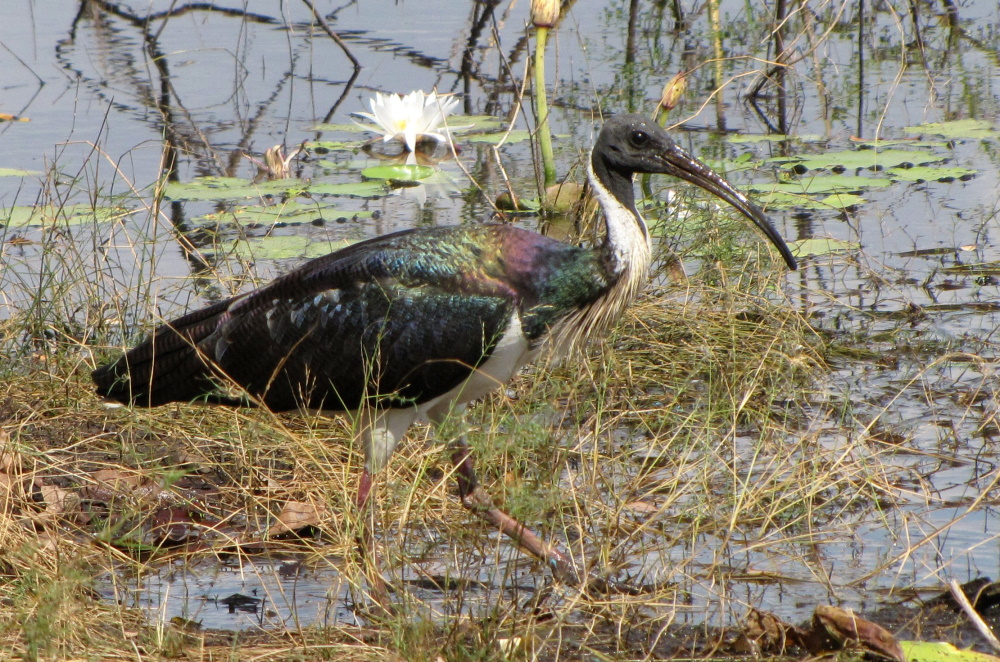
Who is this sparkly mardi-gras stunner? This one was seen in the Northern Territory Top End about this time of year (where I should be right now, sigh…) But this bird could be seen anywhere in Australia, except the SW of TAS.
Size: big
Behaviour & habitat: walking around the edges of a freshwater billabong, occasionally probing the mud with that long bill.
Kindy challenges are usually widespread birds, commonly encountered by the public, but not necessarily known well by the mainstream. Great for those just starting out, who might not have a comprehensive field guide or binoculars.. yet. I think it’s important for experienced birders to remember what it’s like to start out, and how hard it is to learn without resources!! Just learning to use a field guide is a skill in itself.
Solution:
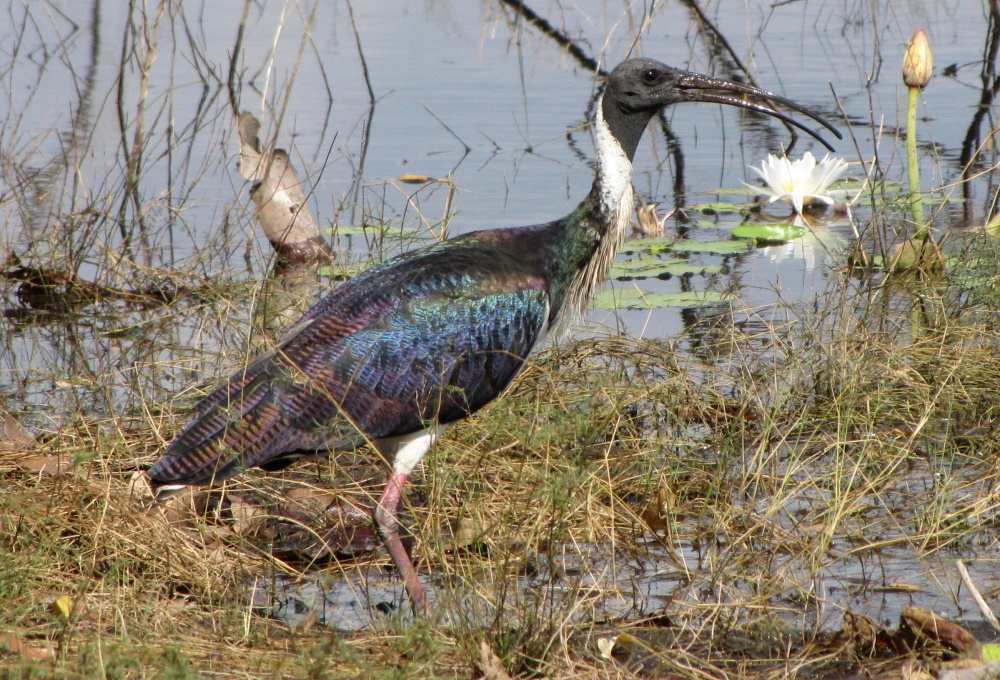
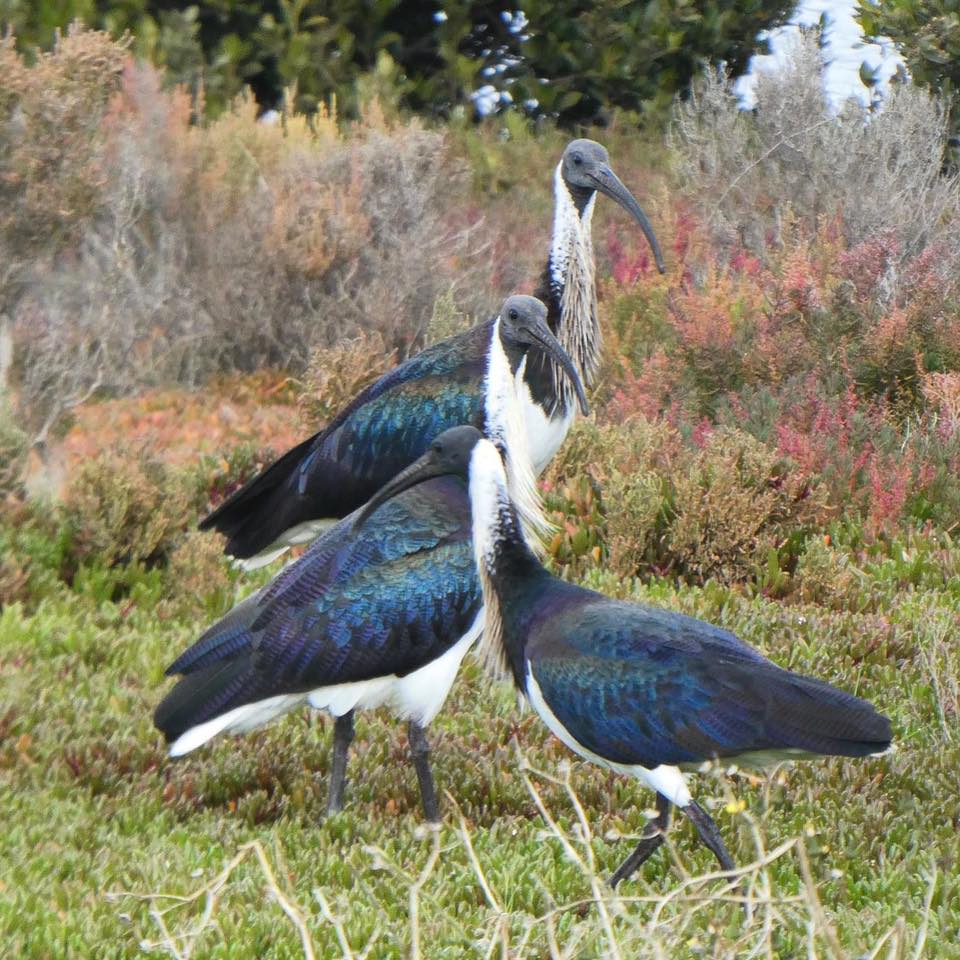
Straw-necked Ibis Threskiornis spinicollis
The first step here is to see that this is a waterbird. That’s partly because of its habitat, but also partly due to its shape and size.
Like many waterbirds, it has a long beak and long legs. It has a small head for its body, and a long neck. Also, I said it was a large bird, and many of the largest Australian birds are waterbirds.
Amongst the waterbirds there are ducks & geese, pelicans, herons & egrets, spoonbills & ibis, cranes, storks, rails & crakes. There are also a bunch of marine waterbirds like sandpipers, cormorants, gulls & plovers but they have quite a different shape.
Ducks & geese have short beaks, short necks and short legs. Pelicans have huge beaks. Herons & egrets have straight beaks that are medium length, and often very long necks. Cranes are a bit like oversize herons. Storks are oversize herons with enormous straight beaks. Rails and crakes (including swamphens, coots, moorhens) are like little chickens with short beaks.
Spoonbills & ibis are easy to remember because they all have very long, crazy beaks! Spoonbills have a straight beak that ends in a wide rounded tip, and ibis have a crazy long down-curved beak. They also have partly bare heads. Their legs are long, but not super long compared to herons and cranes.
Around the world there are 28 species of ibis and you’ll always know them from that crazy beak.
In Australia we have 3: the Australian White Ibis, the Straw-necked Ibis & the Glossy Ibis. Wibis & SNibis are related and similar: but SNibis have black wings, and Wibis are mostly white. Wibis are also called Bin Chickens!
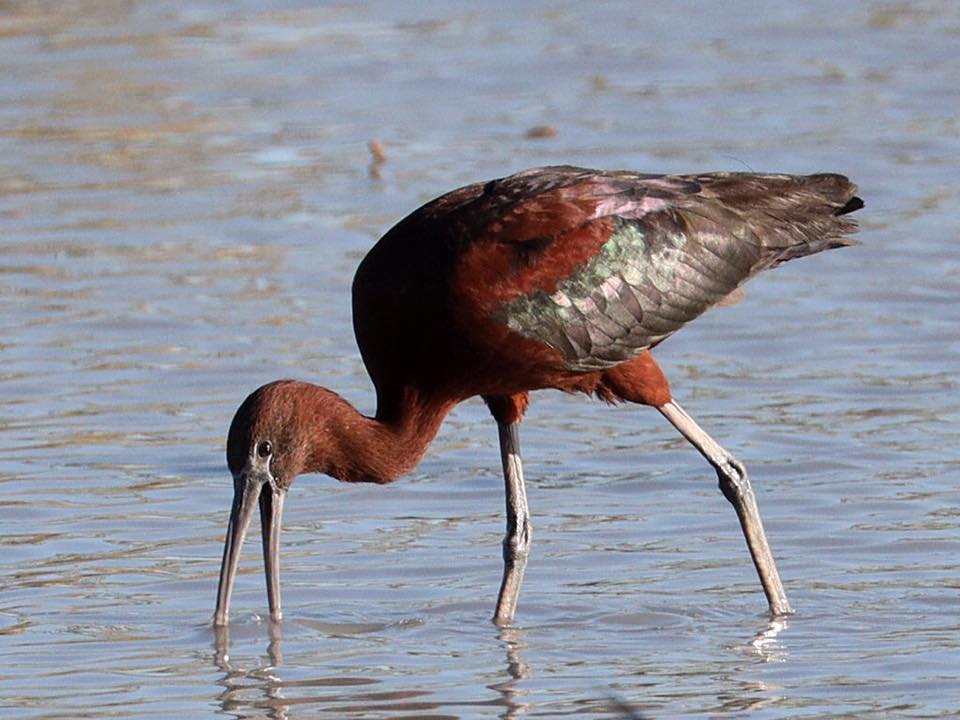
Glossy Ibis (Gibis? Glibis? Nah…just Glossies) are not as closely related to the other two. They are much smaller (half the size), with rich brown iridescent plumage all over, and they don’t have a bare head. They are found all around the world, in Europe, Asia, Africa & central America.
Marilyn Olliff: We have a few in Hobsons Bay from time to time, they are lovely to watch.
Jannette Manins: Here’s a Glossy Ibis
 Women Birders Australia