ID CHALLENGE Friday 23 October 2020: P Plate by Janine Duffy
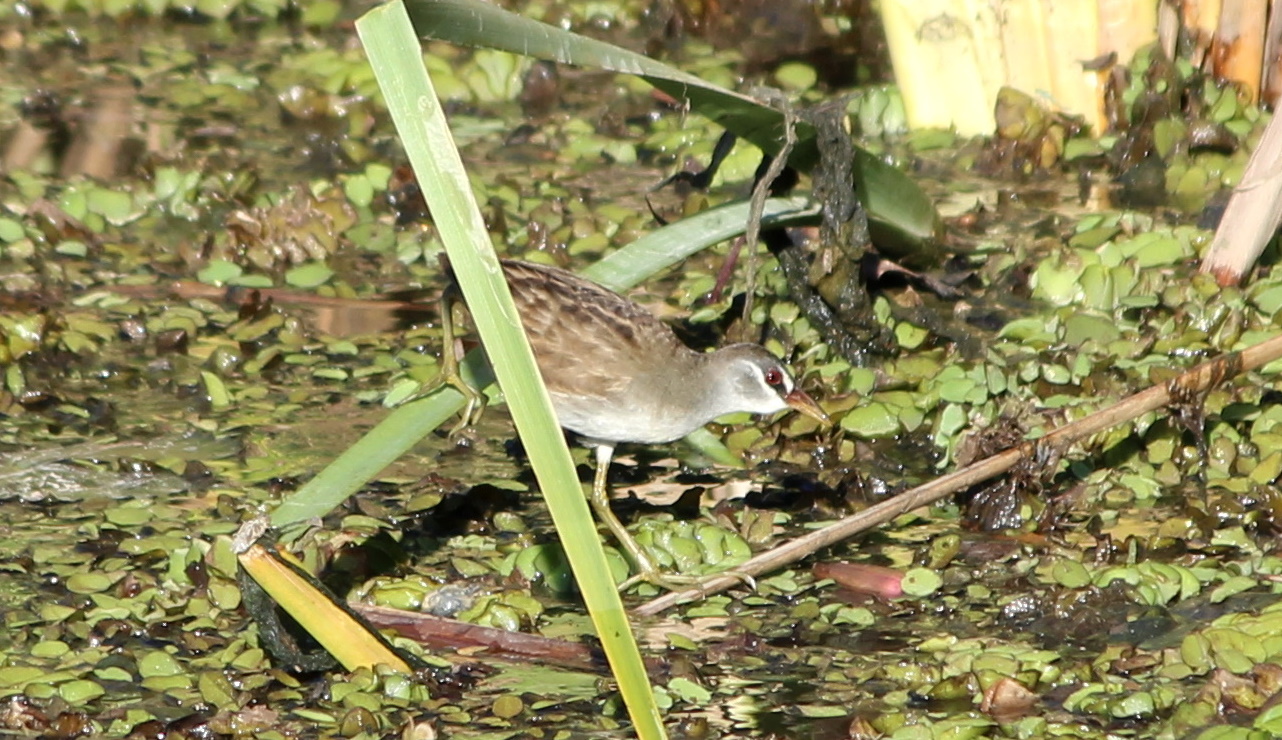
Who is this little cutie? Seen at Palmerston Golf Course, near Darwin NT in August.
Size: small
Behaviour: walking on edges of a wetland, appearing and disappearing amongst stalks of reeds and rushes.
Solution:
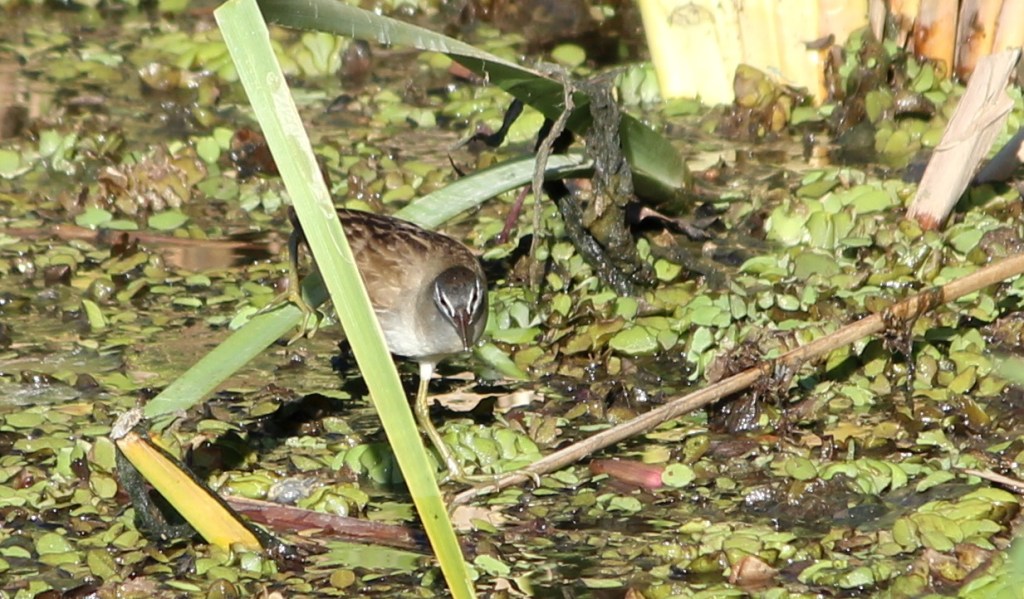
White-browed Crake Amaurornis cinerea
It took me many visits to the NT to see this lovely bird! Finally, the Palmerston Golf Course gave me satisfaction.
Crakes are an interesting family, very closely related to rails, swamphens, moorhens, bush-hens and coots. They have long legs, big feet and a rather short tail. They live in places that make them hard to see – especially the smaller ones – amongst reed beds and swamps.
There appears to be not much difference between a crake and a rail – some of the White-browed Crake’s closest relatives are called rails – and you have to scroll through the family a fair way before you come to Baillon’s Crake & Spotless Crake. The word crake seems to be used for small members of the family with short bills, though there are ‘rails’ with similarly short bills too.
White-browed Crakes are quite small in their family, but not as tiny as a Baillon’s Crake.
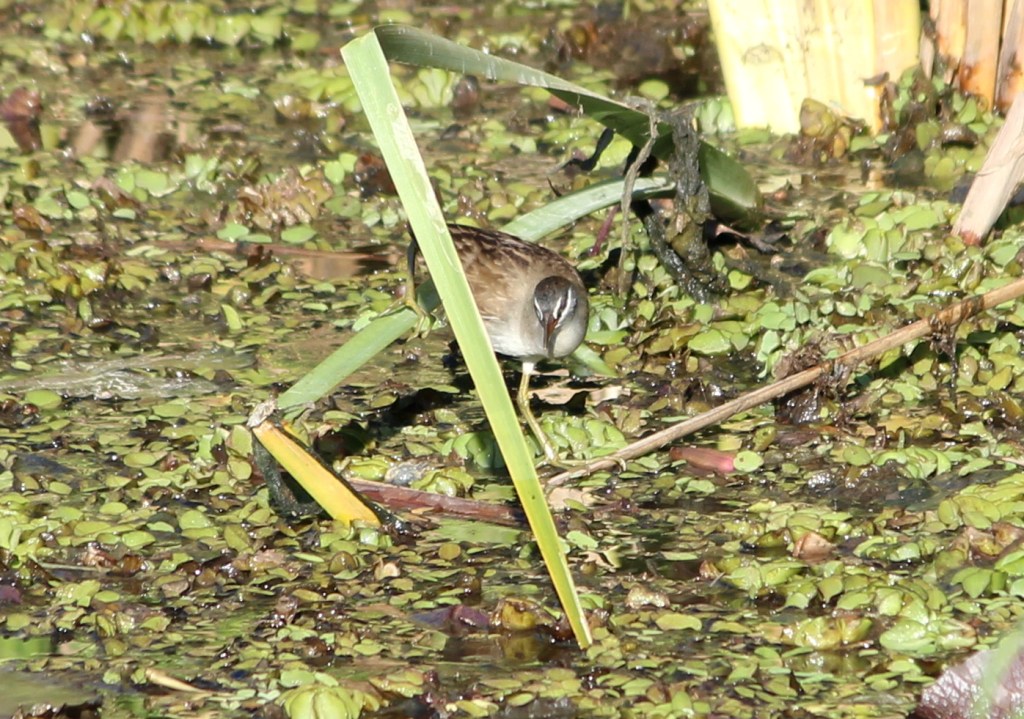
They are very distinctive, with that prominent red eye, white eyebrow and pale plumage.
They occur right through south-east Asia, and into Myanmar and Taiwan.
More pics & listen here: https://ebird.org/species/whbcra1
Like many in this family they have quite a fun call – one of their songs is like a yapping dog!
 Women Birders Australia