ID Challenge, October 20, 2020 L Plate by Sonja Ross
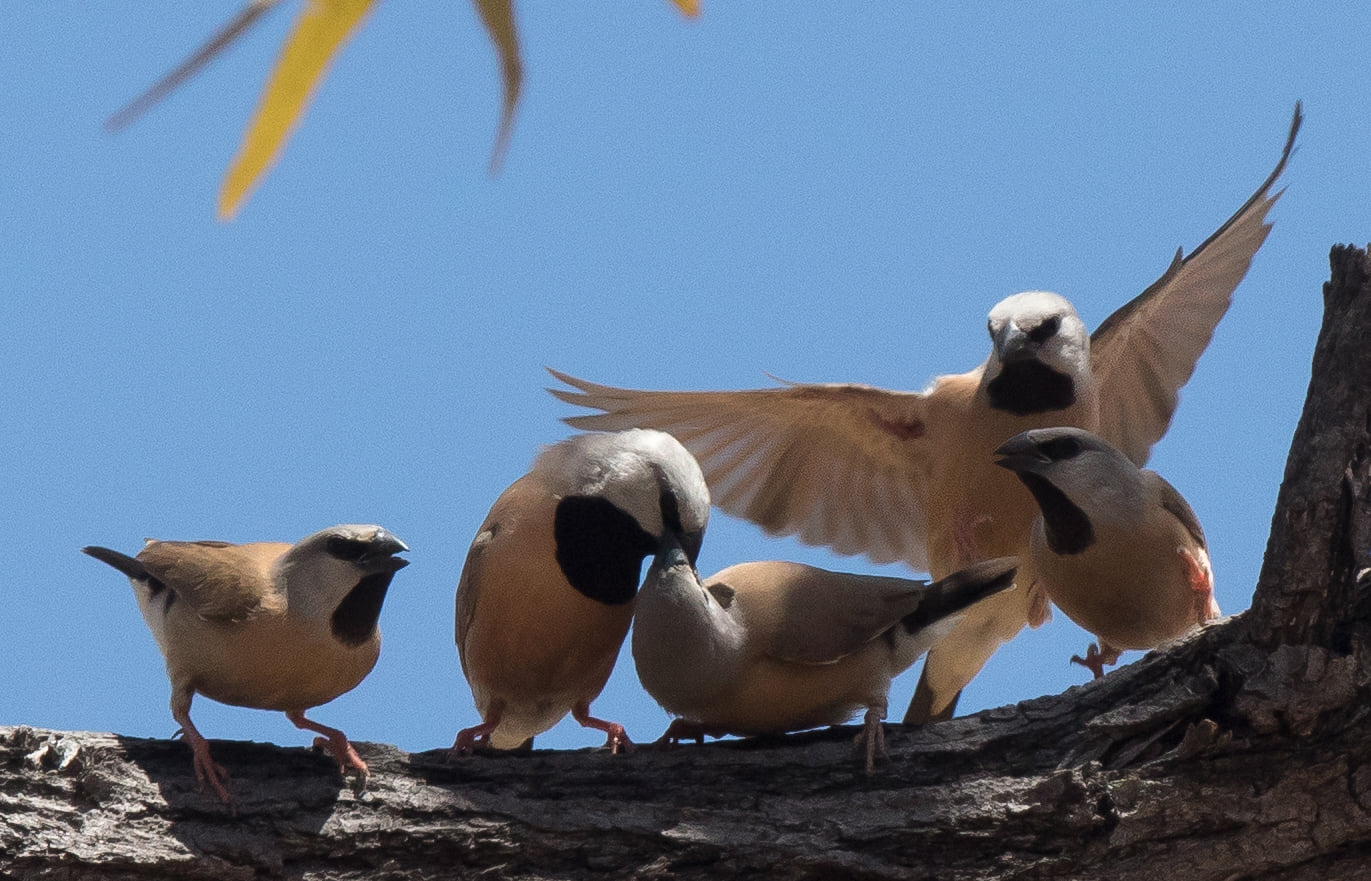
I photographed these birds just north of Cooktown. Most are distributed in that northern area of Queensland.
Solution:
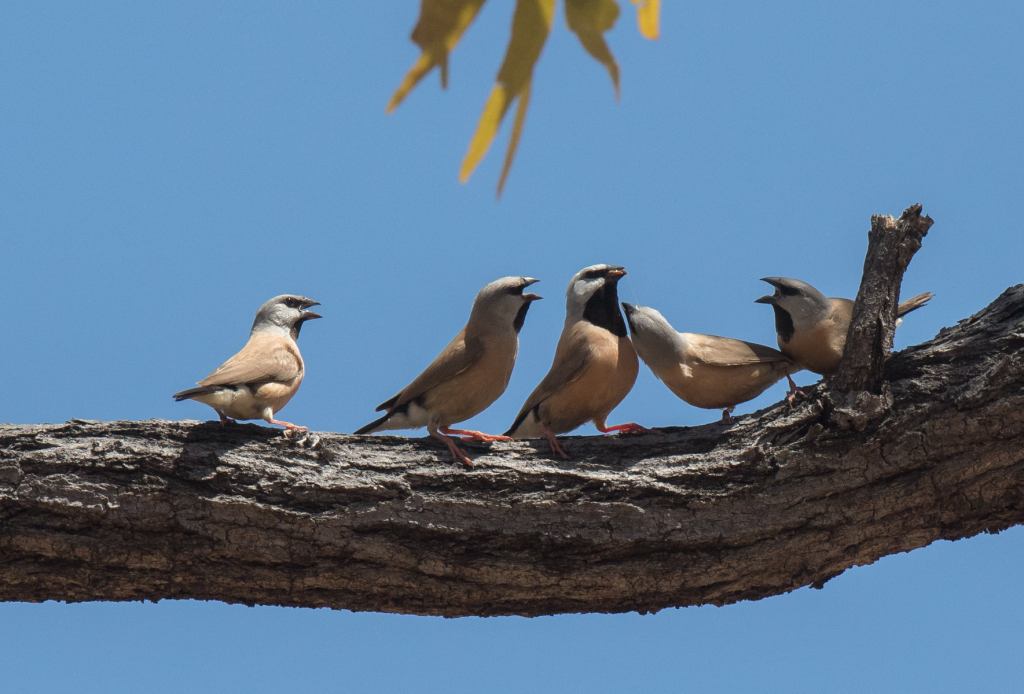
It seems most of you were able to recognize or work out that these are Black-throated Finches Poephila cincta, with the juveniles demanding food!
There are two subspecies, with this one being the northern race, atropygialis. The bill tells you that they are seed eaters – Finches, although strictly speaking they are Grass-finches, not the Finches of the northern hemisphere.
At a quick glance they might be thought to be Long-tailed Finches, which is probably the species Janine mentioned as the cousin she has seen, but only the juvenile of that species has a black bill. Its tail is longer though and it is a little more slender.
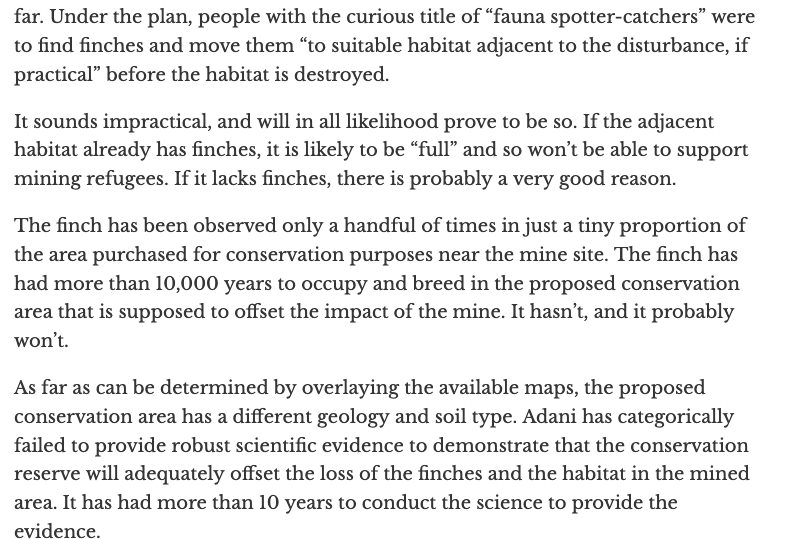
Some of you will have heard about the southern subspecies which was at the centre of the debate about the Adani coal mine in Queensland, as the proposed mine site was the last stronghold of the birds. It illustrates the need for the overhaul of our threatened species legislation graphically as the legislation allows for developers to offset the land they are wanting to use and offer other land as proposed habitat for wildlife, plants etc. I’ve screen-saved a section of the thoughts of the expert panel who opposed the offset so that you can better understand the problem with offsetting.
Read the report by the Black-throated Finch Recovery Team: https://www.birdlife.org.au/documents/NEWS-Black-throated_Finch_Recovery_Team_Position_Statement_Galilee_Basin.pdf
Visit their site: http://www.blackthroatedfinch.com/
 Women Birders Australia