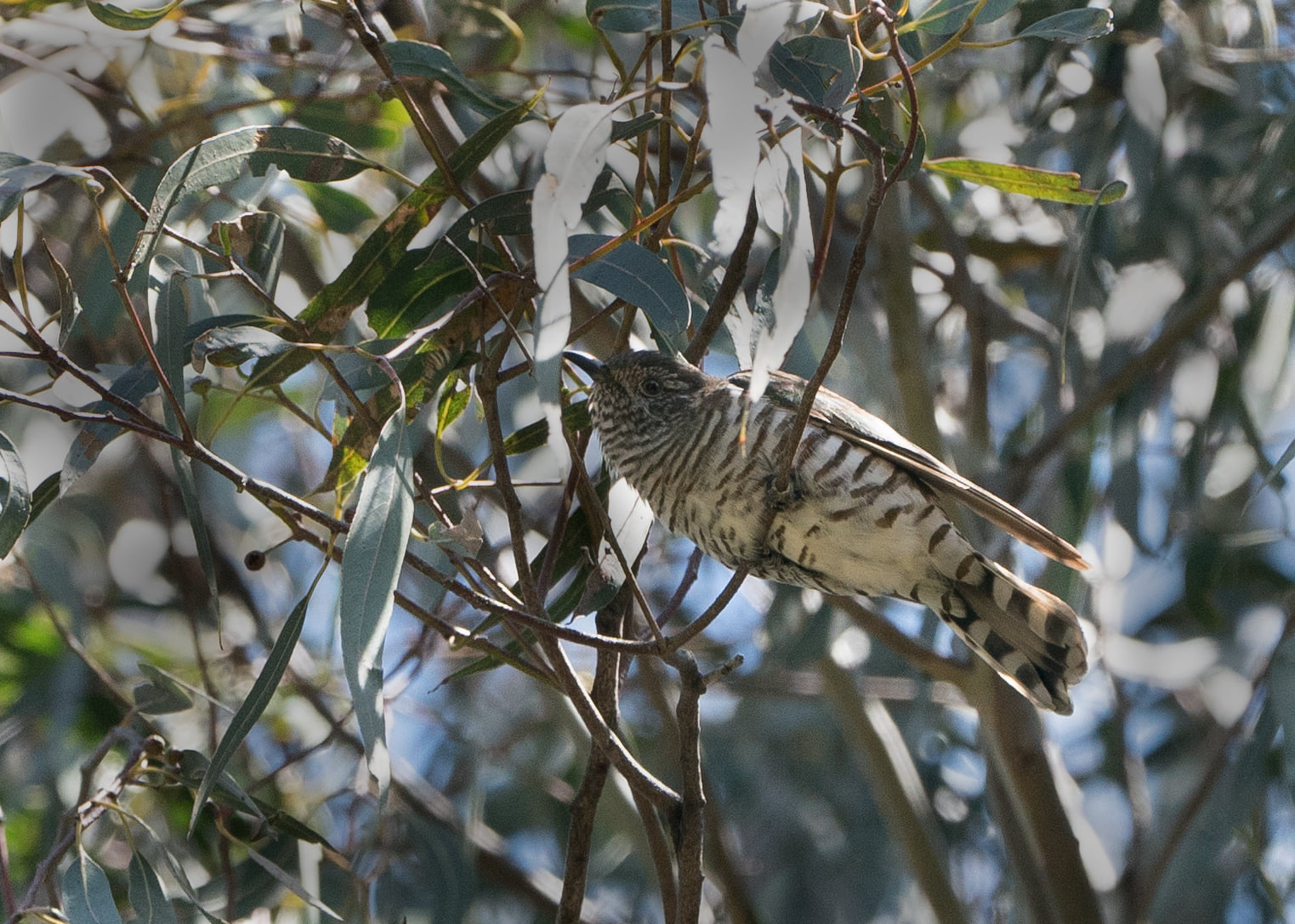
ID Challenge, Thursday, October 15, 2020 P Plate by Sonja Ross
I photographed this bird at Banyule Flats in Melbourne but they can be seen over much of eastern Australia and a considerable part of south-western Western Australia. In Melbourne they are migratory, returning in Spring. It’s one of the smaller members of its family.
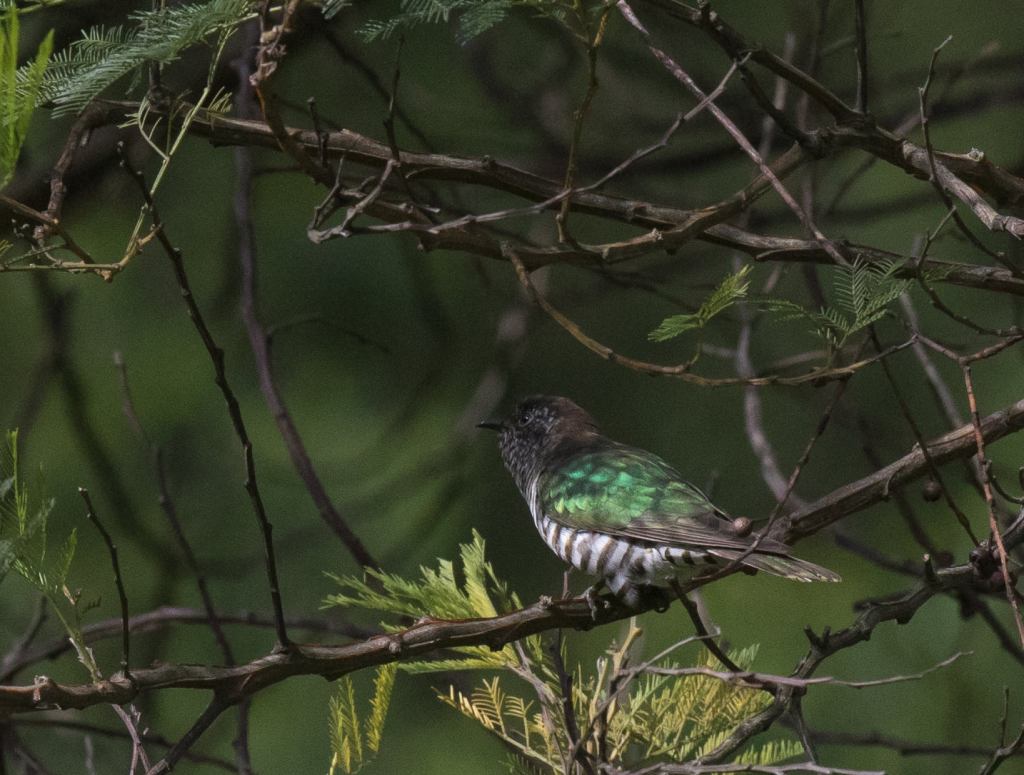
Solution:
Shining Bronze-Cuckoo Chrysococcyx lucidus
Recognising that the bird was a cuckoo was the first step, so well done to those who got that far.
Pallid, Fan-tailed and Brush Cuckoos are all fairly large. They have plain breasts. The smaller cuckoos – the bronze-cuckoos – all have horizontal barring on their front.
The main thing to look for between Shining and Horsfield’s Bronze-Cuckoo is the depth of colour – the green on a Shining Bronze-Cuckoo is much stronger and a richer green.
See more pics: https://ebird.org/species/shbcuc1
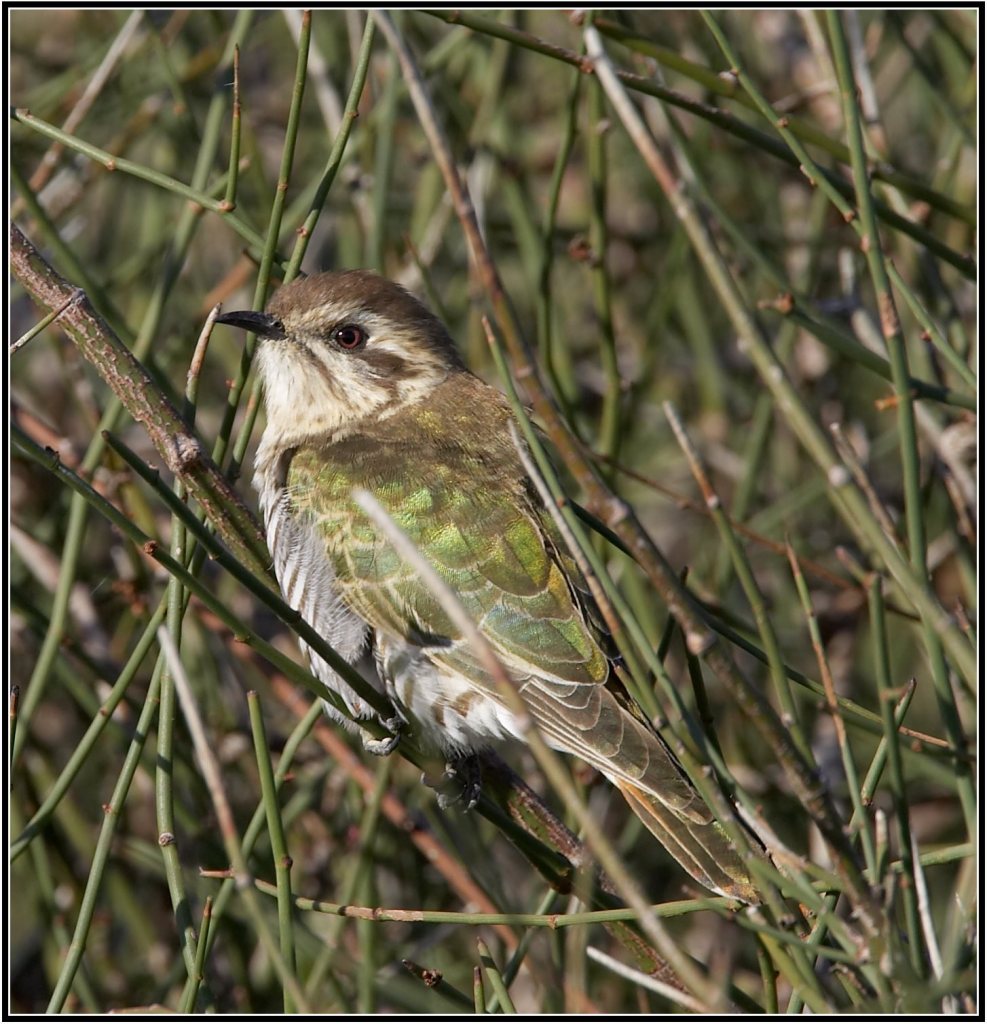
If you can’t see that, the area to look at is the face. Shining Bronze-Cuckoos have a “spotty” face, while Horsfield’s Bronze-Cuckoos have a distinctive brown mask through the eye and down the neck.
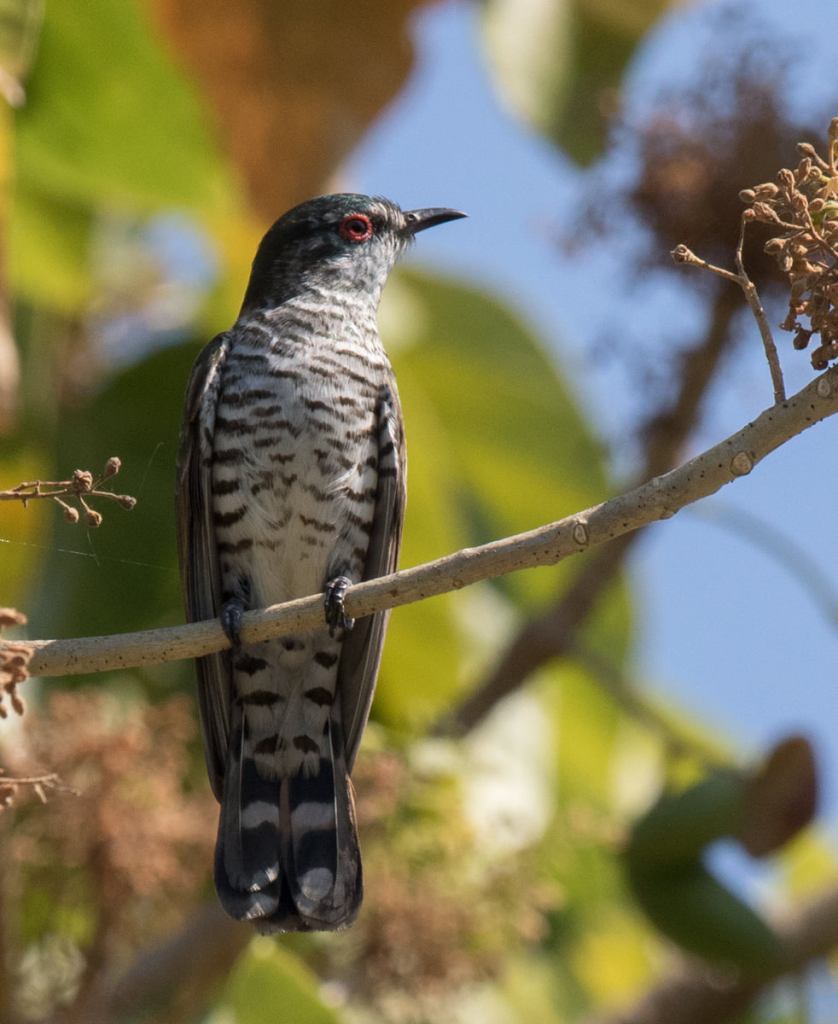
A Little Bronze-Cuckoo can be ruled out as they are a northern bird, and one of the sub-species have a distinctive red eye ring as you can see in the last photo.
There are two sub-species of Shining Bronze-Cuckoo and Jannette correctly identified this one as plagosus. The second species breeds in New Zealand but does migrate through parts of eastern Australia, and has more iridescent green, lucidus.
Their calls are different, so worth learning if you are interested in distinguishing between the Shining and Horsfield’s Bronze-Cuckoo. As they aren’t always easy to see, and the calls do carry.
Learn more: https://birdlife.org.au/bird-profile/Shining-Bronze-Cuckoo
 Women Birders Australia