ID CHALLENGE Monday 5 October 2020 L Plate by Karen Weil
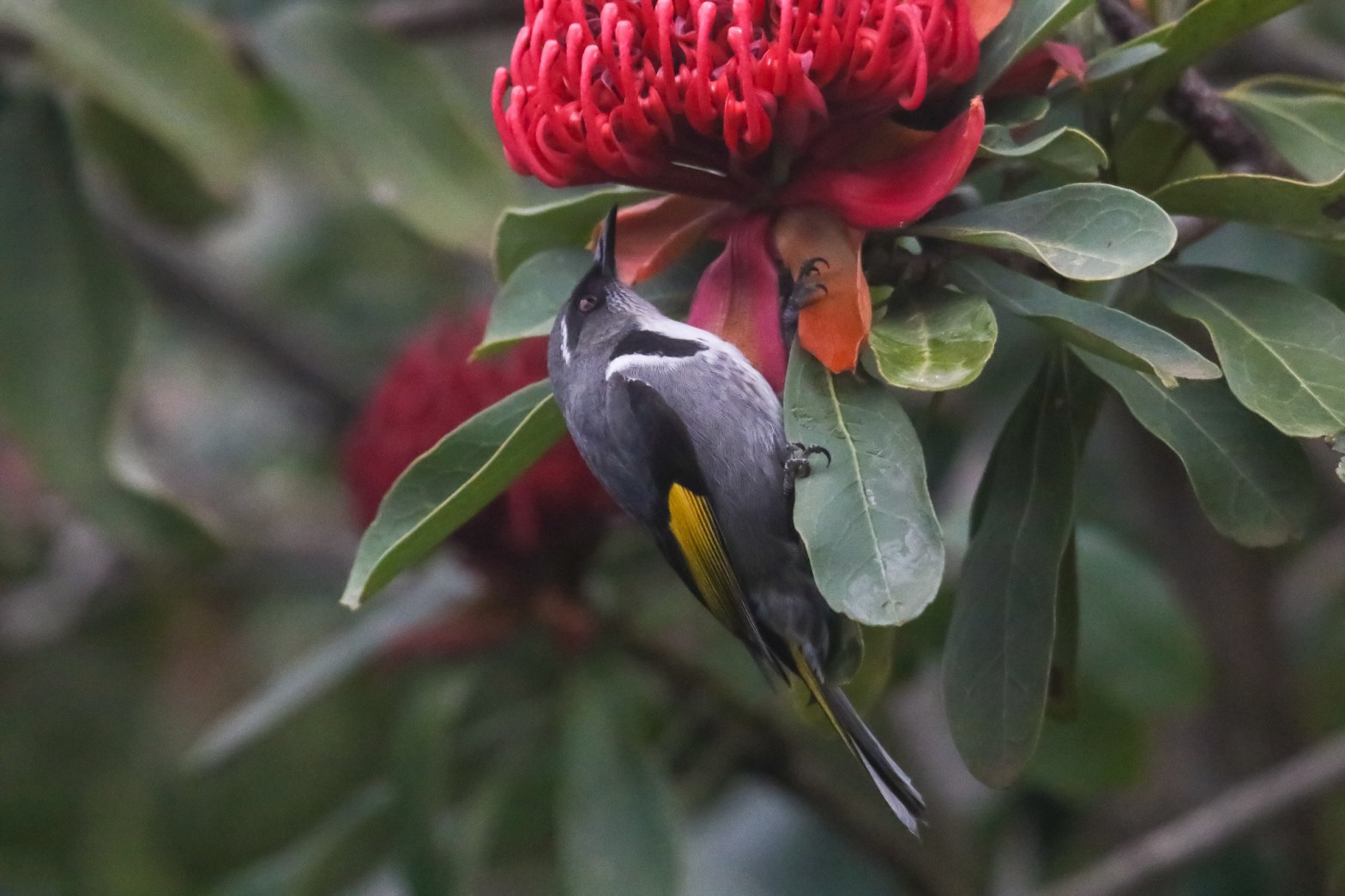
Who is this dashing, elegant bird? Seen & photographed at Gembrook, east of Melbourne VIC by Karen Weil
Size: smallish in their group, but not tiny. Behaviour: feeding at a Waratah, obviously.
Solution:
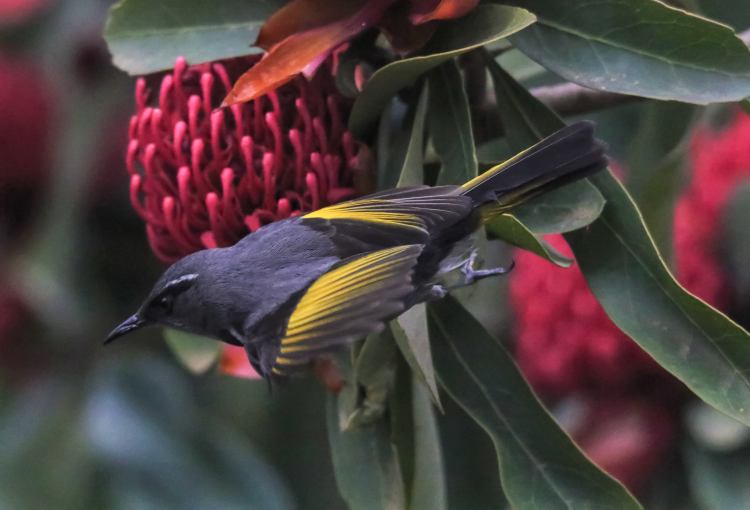
This photo was taken on Saturday September 27, 2020 through my dirty bay window that looks directly on my Waratah bush. I love this time of year when the bush is flowering because I get so many different species coming for a feed from the flowers.
On this Saturday during the course of the afternoon, I had at least 12 species of birds that visited this bush, 7 of them were honeyeaters. This being one of them. I nearly missed him because there were so many New Holland Honeyeaters flitting from flower to flower. And the aggressive Red Wattlebird was constantly swooping the tree, trying desperately to defend its feeding territory. The trigger to my eye which alerted me that this bird possibly was not a New Holland Honeyeater was its eye. The New Holland Honeyeater eye colour in the males is white. This bird had a red eye. Feather colouring and distribution is similar. Black, white breast with yellow on the wings. Very easy to dismiss at first glance. It also does not help that the “chirp” both birds call is similar so any difference can be easily missed.
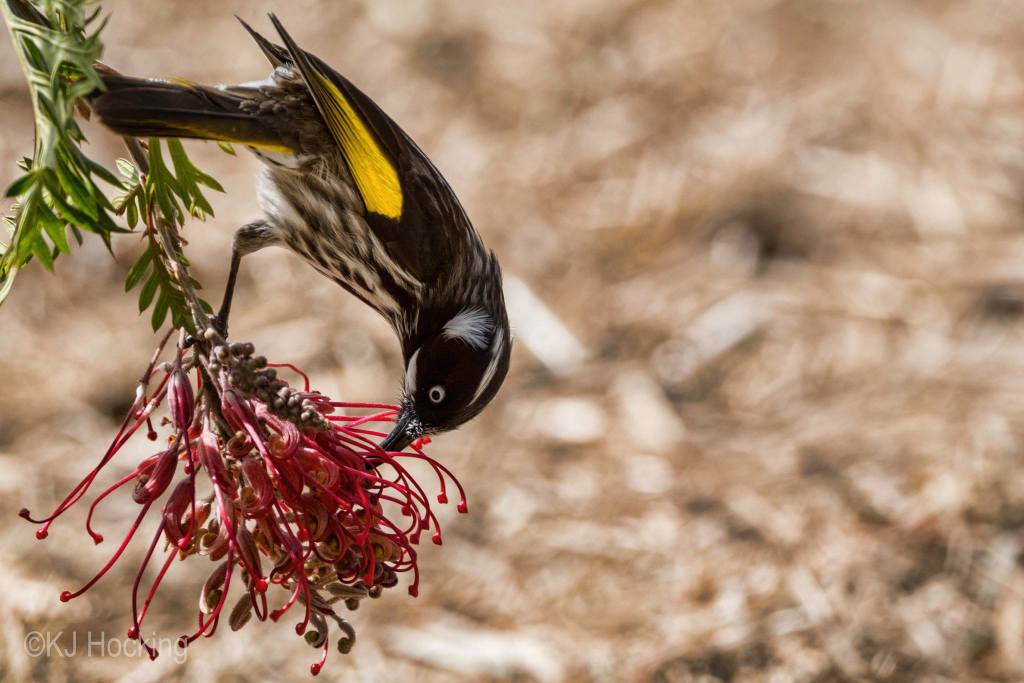
To say the least, I was excited to see this bird and get the opportunity to get a good photograph or two.
This is a male Crescent Honeyeater Phylidonyris pyrrhopterus. Named because of the diagnostic bold black crescent on the sides of the upper breast. The female is not so striking in colour but is shaded more gently in olive-browns and lighter yellow wings. The female has a crescent but not so clearly defined.
Crescent Honeyeaters inhabit moist forest and heath of South-eastern mainland Australia and Tasmania. I have seen this species in the tea tree at Wonthaggi Heathlands and in the semi-temperate rainforests of Victoria. (Sherbrooke, Bunyip and Tarra-Bulga).
See more of this gorgeous bird here: https://ebird.org/species/crehon2
and learn about them here: https://birdlife.org.au/bird-profile/crescent-honeyeater
 Women Birders Australia