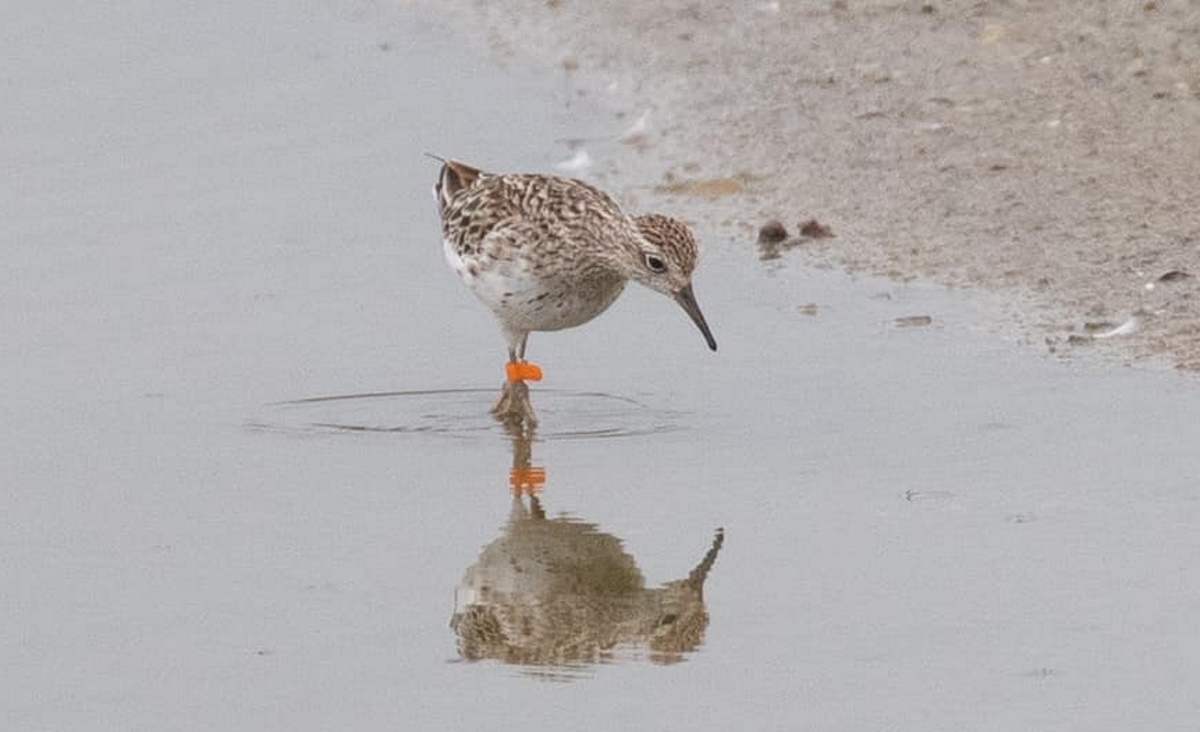
ID CHALLENGE 30 September 2020 P Plate by Karen Dick
This handsome mid-sized wader was seen wandering purposefully in the tidal shallows, searching for food at the Western Treatment Plant in Victoria in February. And it was sporting some bling! Not often seen on their own, it had a few buddies just out of picture.
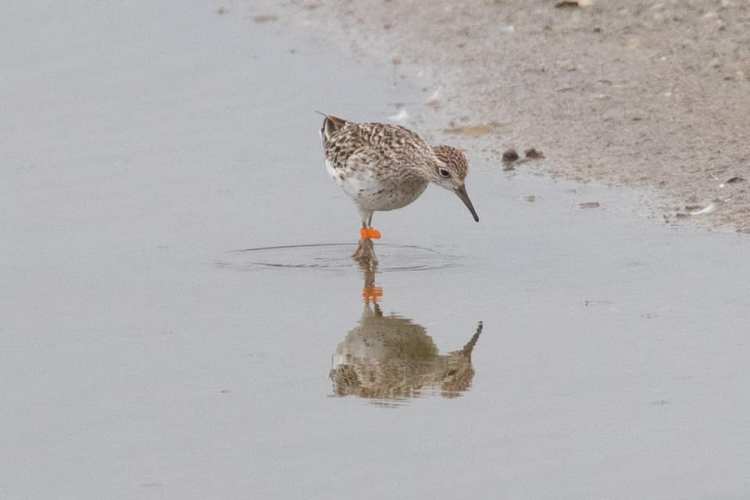
Solution:
This little darling is another of our migratory waders that breeds in the Arctic and then comes south to avoid the intense northern winter.
As with many waders, the key features are the length and shape of the bill, colour of the legs and plumage features.
The bill is not too long and slightly downcurved, so the shorter length rules out Curlew Sandpiper. Also, the rusty tones to the plumage are not good for Curlew Sandpiper either, which would have a greyer tone.
This bird is a Sharp-tailed Sandpiper Calidris acuminata in non-breeding plumage.
The rufous and black-streaked crown and supercilium (eyebrow) that is narrower in front of the eye than behind it are good signs to look for. It is most easily confused with Pectoral Sandpiper, but that species would have a yellow base to the bill and yellowish-green legs, plus a distinct cut off between the streaked breast and cream belly.
See a lovely video and some fun facts here: https://wingthreads.com/meettheshorebirds/sharp-tailed-sandpiper/
See more pics here: https://ebird.org/species/shtsan and read about them: https://birdlife.org.au/bird-profile/sharp-tailed-sandpiper
The single orange band is from Victoria, as Sonja Ross mentioned. It is always fascinating to find out where individuals have been. Here’s a chart of all the colour band combinations in the East Asian-Australasian Flyway: Shorebird Colour Flagging Protocol Chart It’s a bit confusing at first, but keep in mind that most flagged birds have two bands – upper and lower. A few banding locations just have one – in Australia a single green is from Queensland, a single orange is Victoria, a single yellow is northern Western Australia.
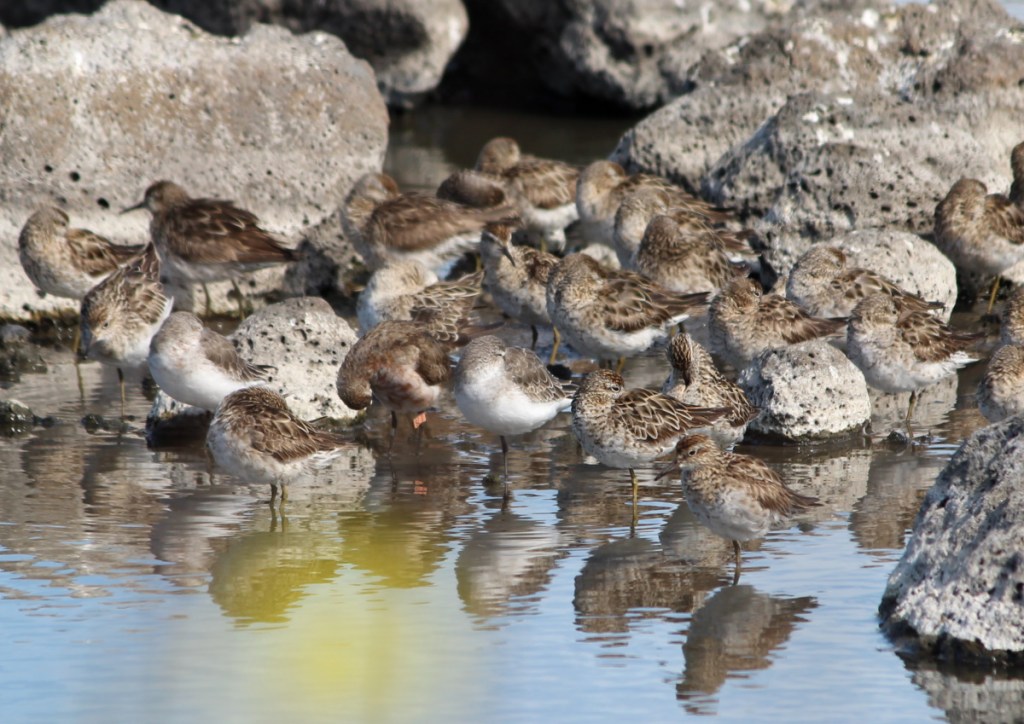
I’ve attached another pic of an orange (Vic) flagged Sharp-tailed Sandpiper at WTP below. There are also some Curlew Sandpipers in the flock.
Or see more here at the Australasian Wader Studies Group: https://awsg.org.au/wader-flagging/
 Women Birders Australia