ID CHALLENGE 21 August 2020 Advanced by Janine Duffy
Raptor Alert!
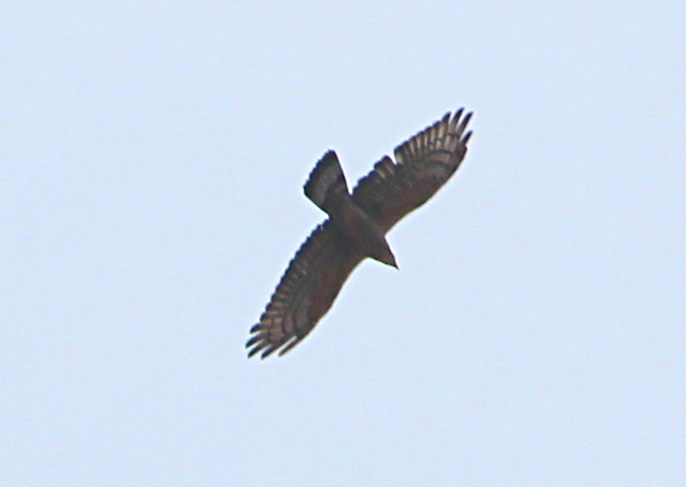
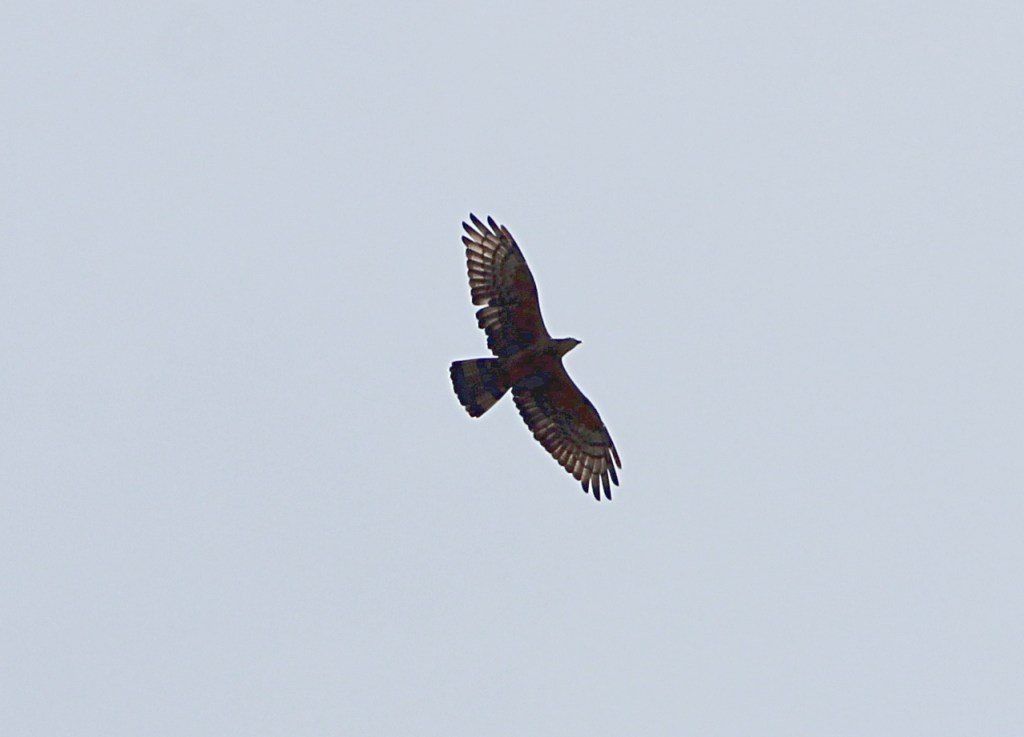
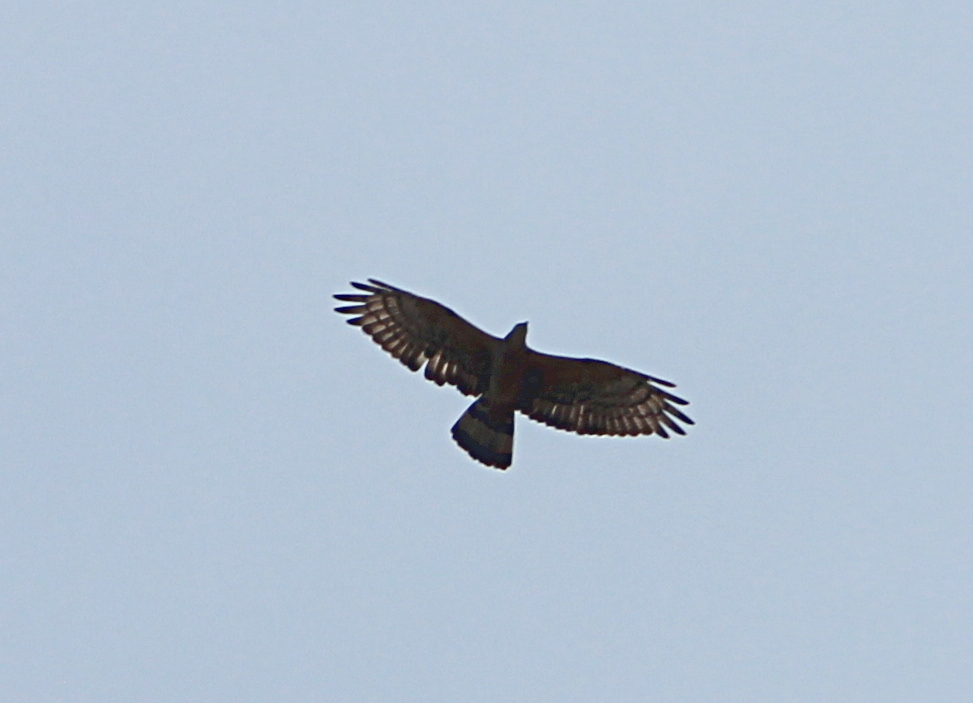
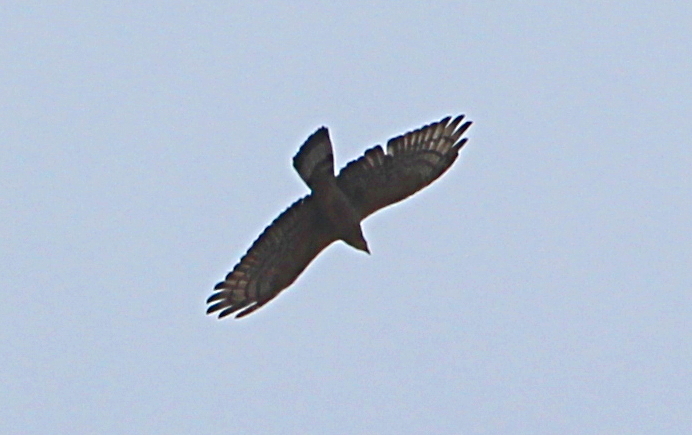
Who is this raptor? Seen at Litchfield NP, Northern Territory Top End in September.
Size: big Behaviour: circling around, high over treetops.
Sorry pics are awful and have been brightened a lot. It was that well-known conflict between getting a great look through binoculars & taking photos to prove id.
Solution:
This was a very interesting discussion, both on and off the page. And I think it’s a really interesting lesson that I had to learn early on. It’s far too easy to see what we want to see!
The most experienced birders in this group were, generally, the most cautious to call it.
Why? Because vagrants are rare, hard to prove and, quite rightly, subject to great caution.
So the question needs to be: not what is right, but what is wrong? It looks like an Oriental Honey-buzzard, but that’s a vagrant so it’s probably not. So what is wrong with that id?
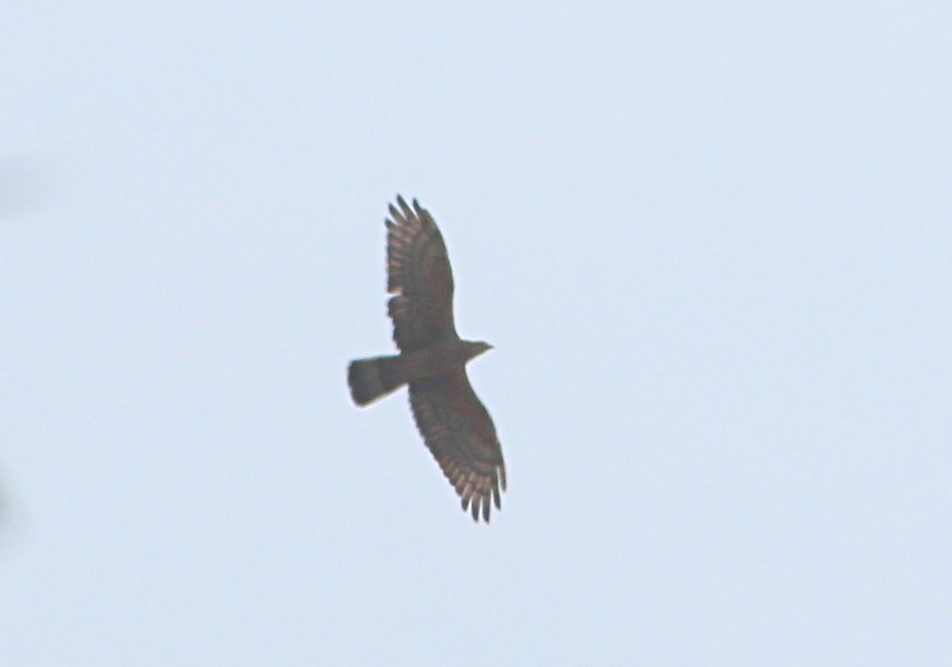
Oriental Honey-buzzards have six fingers on the wing. This bird has five. (see more about this below)
One or two Oriental Honey-buzzards appear regularly in Australia in Perth, in December, January & February. This was September in NT Top End. Wrong time, wrong place.
There’s one report from Broome WA, but that was also February. Then, on eBird, there’s two little purple boxes from Litchfield, NT. And that’s all.
ABG says “may reach Australia more often than current reports suggest.” But there are a lot of good birders in the NT Top End on the lookout for this species – if they haven’t seen it, it’s likely not there very often!
So, why isn’t it a Pacific Baza? They too have a broad black band on their tail, and a smaller band closer to the body. Their primaries are barred too. The secondaries are not barred, in adults, but in juveniles they are. Also they have barred breasts.
But perhaps more importantly, this bird seems too big for a Baza, and its shape is wrong. The wings, tail and head of a baza are nicely in proportion, elegant. This bird has huge wings, huge tail and a small head.
So why isn’t it a harrier? Harriers also have big wings and barred tails. Spotted Harrier have similar colouring, banded tail, big wings but always black primaries. This bird has barred primaries. So how about Swamp? Banded tail in females and juveniles to some degree. But banding is finer. Banded primaries and secondaries, but banding is closer to trailing edge. Importantly again, shape is wrong – harriers have long rectangular wings. This bird has broad, rounded wings. And that tiny head!
So enough suspense… the bird is an Oriental Honey-buzzard Pernis ptilorhynchus!
If you see a bird that is listed as a vagrant, you will have to prove it. Your observation will be scrutinised. You will need pics or a very very good written account. So write it down, then and there. Draw a pic. Date and time. Precise location.
Because you might need to make a BARC submission. I haven’t done that – maybe some here have and can explain?
Turns out, I was lucky. A very experienced birder was there 2 weeks before me, looking for the Red Goshawk that I had seen 2 weeks before that. He saw this bird, got a decent pic, and went through the rigorous process of proving it.
So I showed up, not expecting to see either bird. I knew that two super good local birders had been there four times in the interim looking for it with no luck.
I saw this birdy and had to convince myself it wasn’t the Red Goshawk. It was a mad juggle of binoculars & camera and yelling out to my partner, as the prize disappeared over the next ridge.
Just because it’s in the book, doesn’t mean you can see it. It’s hard, hard, hard, and you have to be lucky, lucky, lucky!!
Please, don’t expect to see vagrants. It happens rarely. In years of birding this is the only land vagrant I have seen*.
- that I can prove.
- But I’ve seen some very cool water vagrants thanks to Eaglehawk Pelagics….
- and the Tufted Duck was lots of fun too….
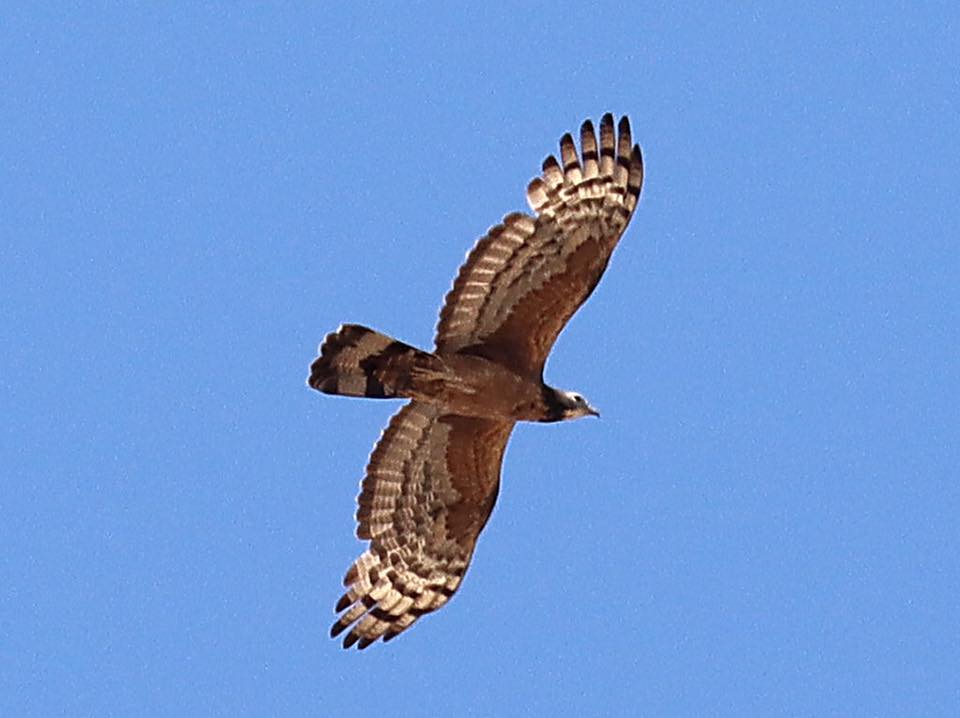
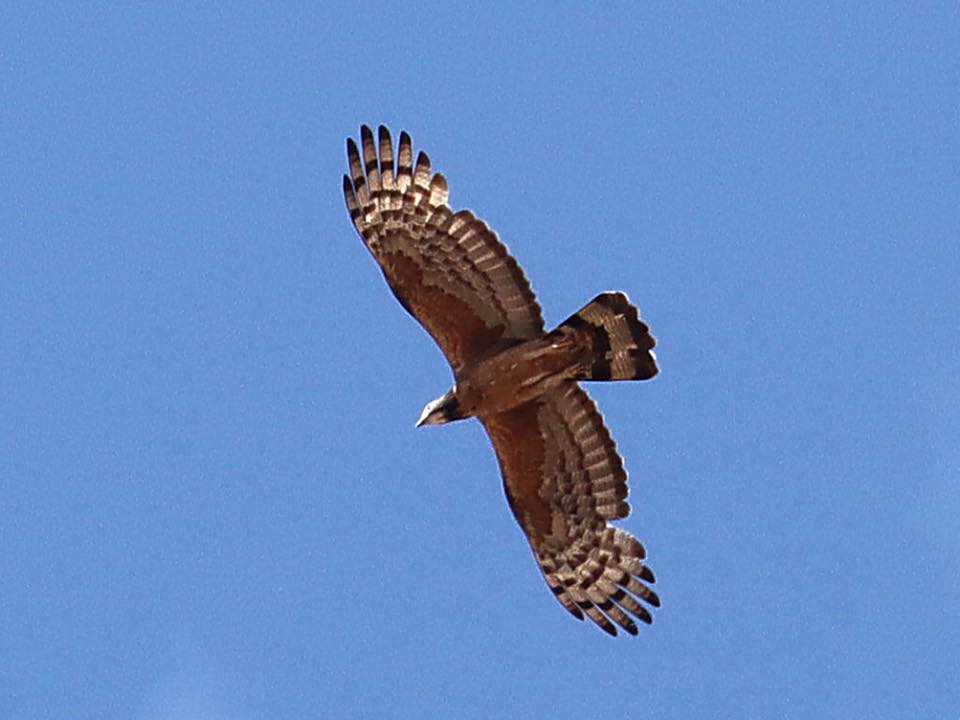
(about the five primaries… the bird was in primary moult at the time it was first seen in August 2019 – here’s Scott Baker’s pic from 30/8/19. P9 and maybe P8 were almost invisible, both wings. When I saw it 2 weeks later moult had progressed so that those feathers looked normal length. All I can think is that one primary was hidden as it was in early stages of growth.)
 Women Birders Australia