ID CHALLENGE 24 August 2020 P Plate by Janine Duffy
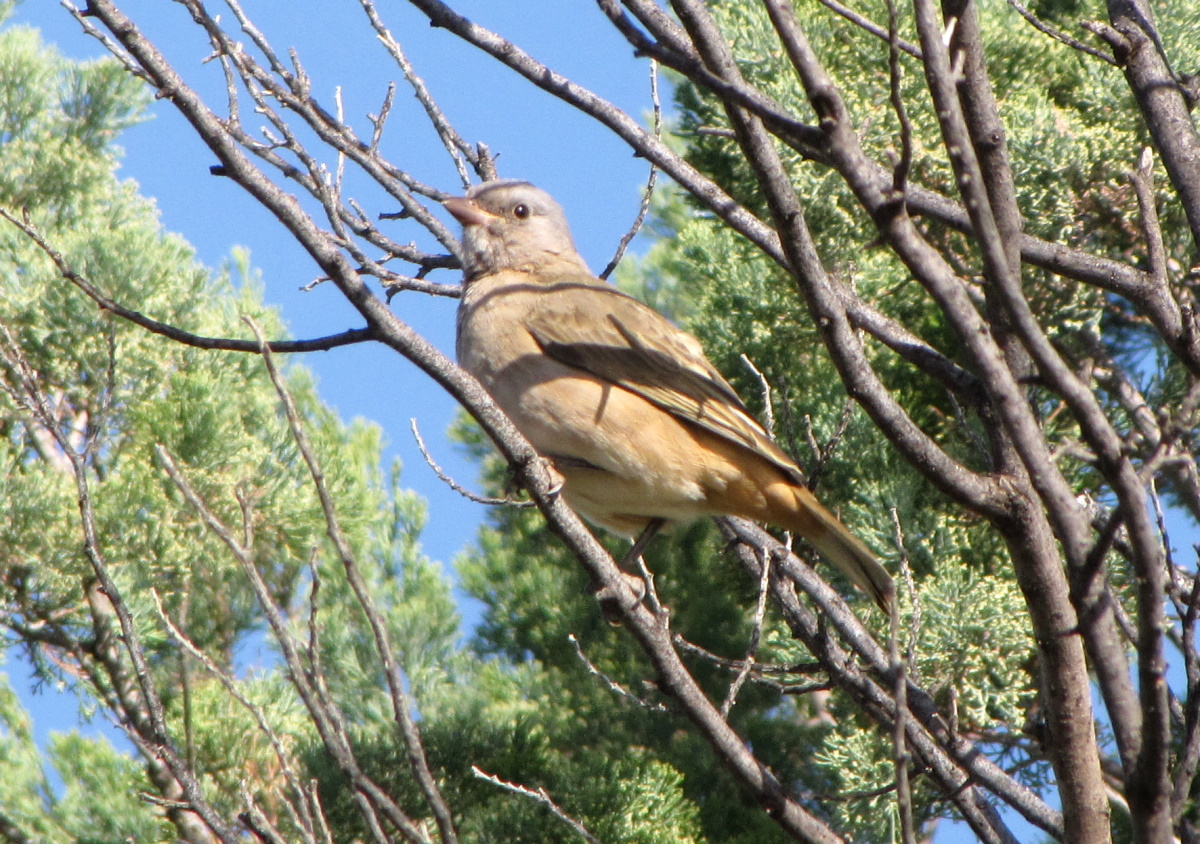
Who is this cutie? Seen around Zanci Homestead, Mungo National Park, southwest NSW in May.
Size: pretty big for a perching bird in this group (not quite as big as a Magpie-lark). Behaviour: quite furtive, near ground and in canopy of small trees. Not singing (from memory, at least not a distinctive breeding song).
Solution:
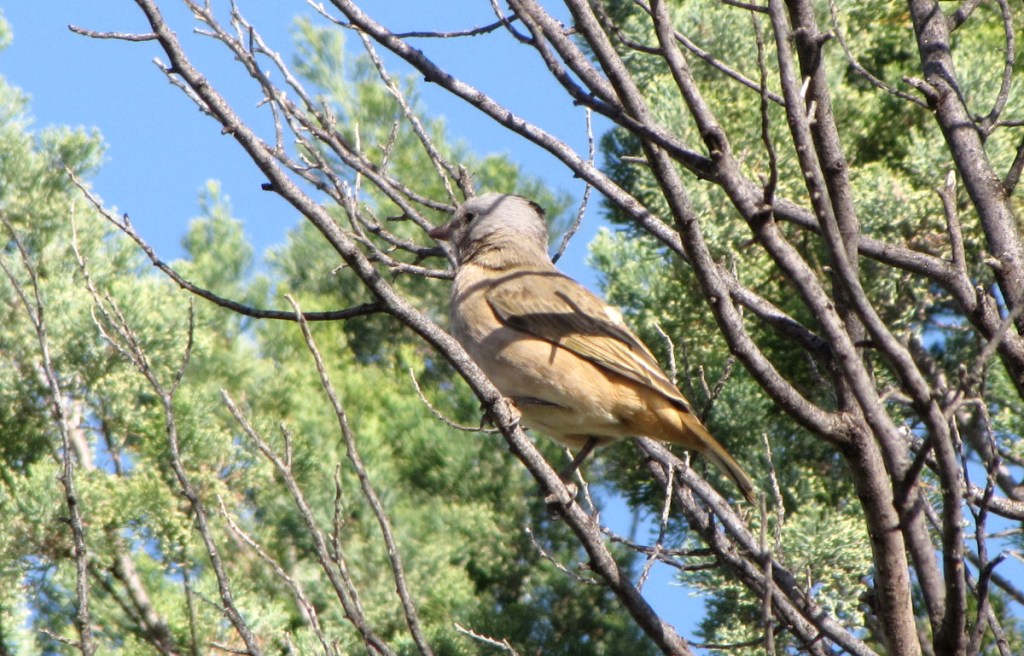
Crested Bellbird Oreoica gutturalis
These wonderful birds are best known for their song throughout the inland. They live in all states except Tas, but in the drier parts, rarely reaching the coast except in WA & SA.
They are the only one in their genus (monotypic), and one of only three in their family Oreoicidae (Australo-Papuan Bellbirds). The other two are also called bellbirds – the Rufous-naped Bellbird Aleadryas rufinucha and the Piping Bellbird Ornorectes cristatus both of New Guinea.
Graeme Chapman’s site says that their closest relatives are the shrike-thrushes; and eBird places them between whipbirds/wedgebills and shrike-tits, with shrike-thrushes and whistlers next.
https://www.graemechapman.com.au/library/viewphotos.php?c=10&pg=1
Picking this as a bellbird from the similar Grey Shrike-thrush and female Gilberts/Golden Whistler is mostly down to size of the bird and shape of bill.
As Sally Sheldon summed up: “It wasn’t a Shrike-thrush. Only Grey down in that location… and that bill shape all wrong anyway, too stubby by a mile even allowing for the photo angle… plus plumage colours wrong for Grey.”
Grey Shrike-thrush is bigger, greyer and their bill is longer and grey. Whistlers have smaller bills, and are much smaller birds. Golden Whistler is a bit unlikely in this habitat, but possible. Gilberts is much more likely, but females are greyer and juveniles are streaky.
And of course, there’s that black crest/crown-stripe. It’s not really noticeable, but you can just see it in one pic. They have it in all plumages, but its mostly always flat on their head. Look for that if you can.
In adults, the really light-coloured iris is a giveaway (“ the telltale Bellbird eye” thanks Sally) – none of the possible whistlers or shrike-thrushes have that (though Red-lored & Gilbert’s males do have dark red-brown eyes.)
As for age and sex: it looks like an immature bird to me, based on – eye is dark, bill has pale base, overall body colour is a warm brown and wing feathers are edged buff. (they almost look yellow-edged in this photo)
If I’m right, I don’t think its possible to tell the sex at this stage, at least not from these pics. Elke Link mentioned a hint of black feathering on the bib, but even looking at the original pics I can’t be sure it’s not shadow. I had a search through eBird for pics of immature males, to see whether the black feathering is before or after the lightening of the iris and darkening of the bill, but there wasn’t enough there to help much.
More pics here: https://ebird.org/species/crebel1
 Women Birders Australia