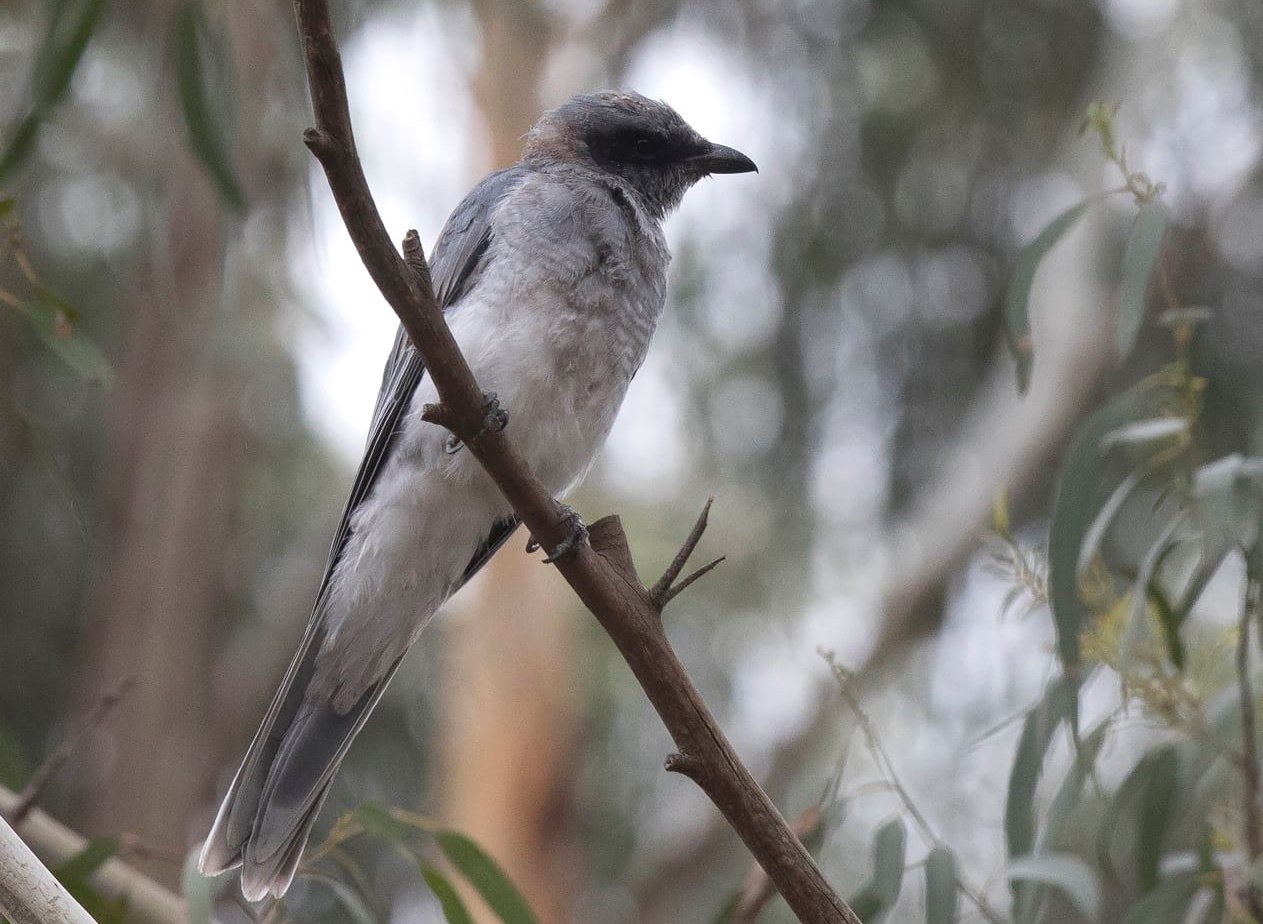
ID Challenge September 24, 2020 P Plate by Sonja Ross
Another widespread bird which can be tricky to identify at times despite being fairly distinctive.
Solution:
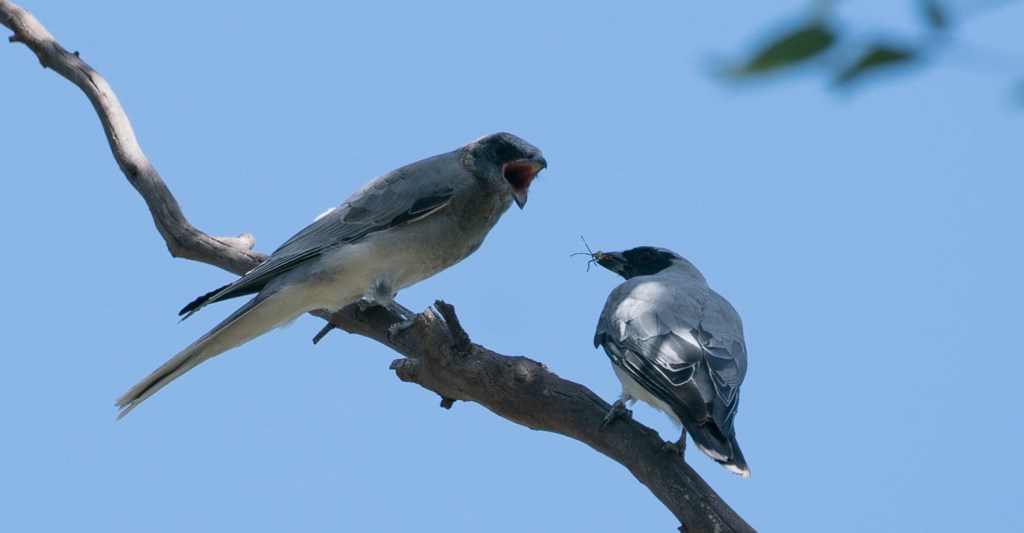
Again well identified everyone as this is a young Black-faced Cuckoo-shrike Coracina novaehollandiae.
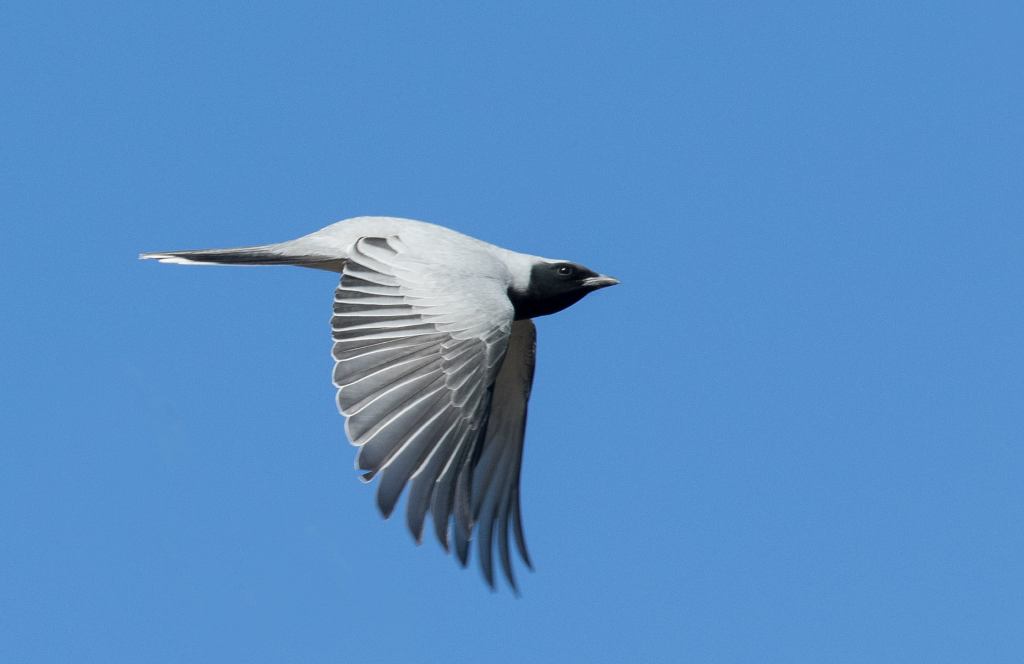
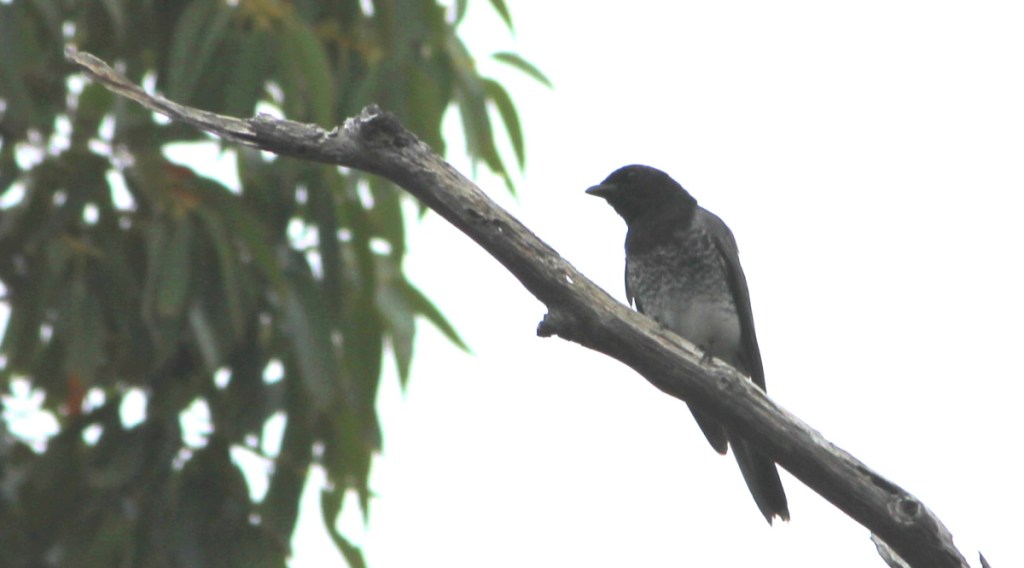
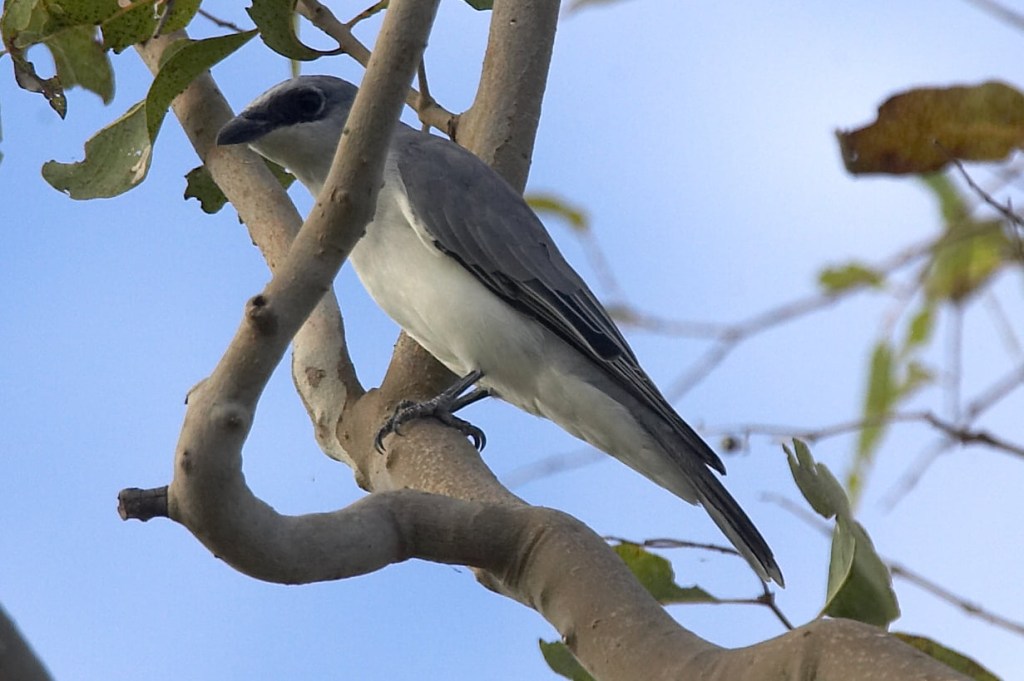
It still shows some brownish feathers on the head which a juvenile bird would show, but is starting to look like an adult so I guess would be classified as a young immature. The black reaches behind the eye which is the diagnostic feature to tell it from the White-bellied Cuckoo-Shrike shown in the last photo. That species is a smaller one.
For those newer to birding and not very familiar with Cuckoo-shrikes, I think 3 features help to identify them from other species.
When they land, the tend to shuffle their wings before they settle at a perch, which is distinctive for that family.
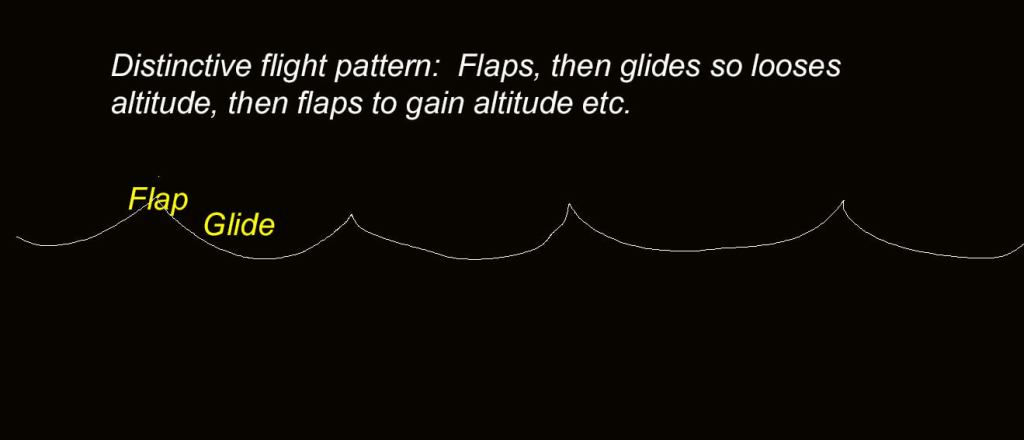
Then their flight is distinctive. I’ve tried to illustrate it with the diagram. This makes it easy to identify them if they are distant or the light is poor.
Their call is also quite distinctive and worth learning as it will help you to be aware that they are in the area, often before they can be seen.
Just one thing to keep in mind, is that there is a dark morph of subspecies robusta, of White-bellied Cuckoo-shrike, which has a dark face and breast, so at a quick glance might be thought to be a Black-faced Cuckoo-shrike, but the black extends further down, and there is dark mottling lower down the breast too, and it is a smaller bird.
Comments:
Penelope Lind:
That’s totally their flight pattern!! When I see it while birding I know I can ignore them since they are backyard birds for me. What I find so interesting about them is that the ones down the road from us in a park hang out with the Spangled Drongos! Perching so close together on the same branches! I asked some birders once about this and they reckon outs because Drongos act like sentinel birds since they are so aggressive and vigilant and will call/attack if there is danger.
 Women Birders Australia