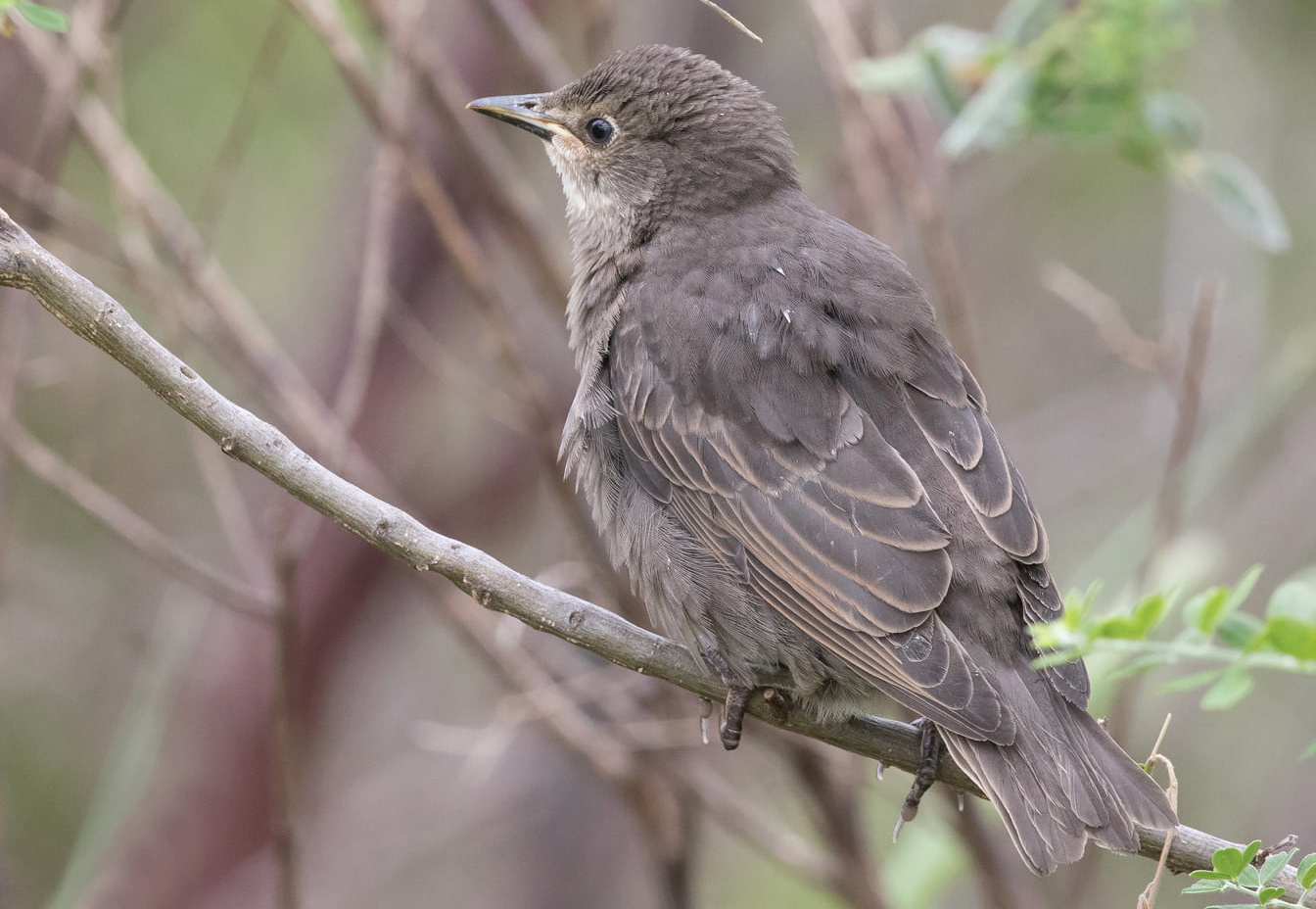
ID CHALLENGE 17 September 2020: Advanced by Sonja Ross
Although this species is quite widespread, we don’t usually see it in this form. No more hints, as it’s a while since we’ve had something more challenging from me.
Solution:
Well done to those who had a go, and especially to those who worked out that it was a juvenile Common Starling Sturnus vulgaris.
I can’t do better than post Janine Duffy’s reasoning:
‘I first looked at juvenile reed warbler, but the tail was too short, the rump was not yellowish, bill was not fine enough and something else was bothering me. Then I checked juvenile Common Starling, and I reckon that’s it. Size is hard to judge but this bird does look more starling-size than reed warbler size. The tail is short, the bill is deep and triangular, the colour is right for a young un, the wing length compared to the tail length is right.’
A couple of things to add as general comments. There was a large group of these young birds in the shelter of a group of trees and bushes in the open lawns of a suburban park, so I wonder if maybe they gather together in creches while their parents are out hunting for food for them. Does anyone know?
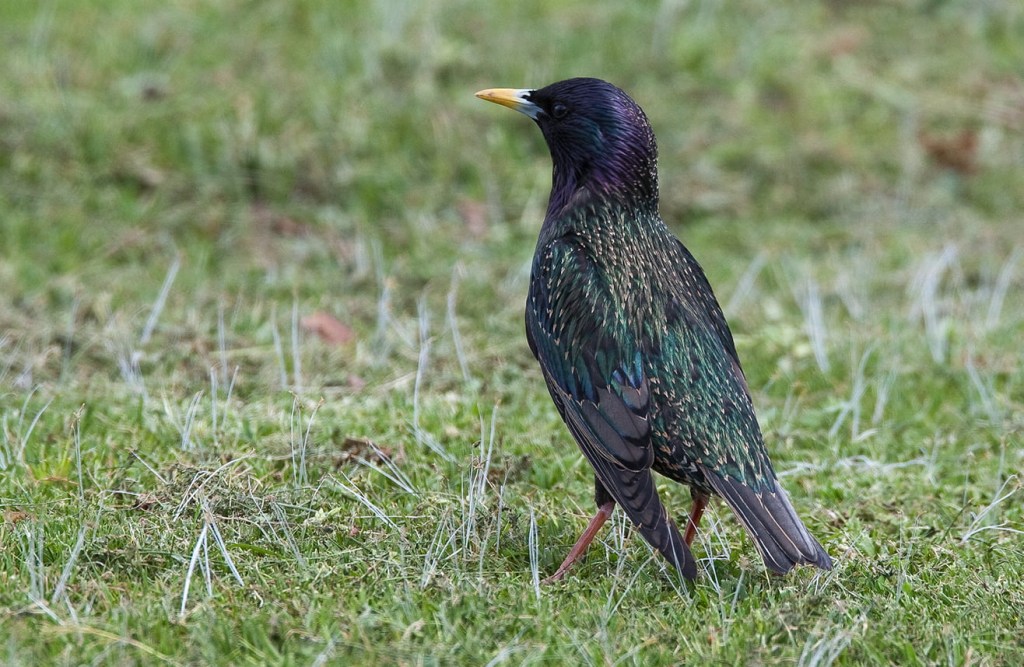
The second photo is a handsome adult in fresh plumage. They are introduced to Australia and do cause problems as they nest in tree hollows so are competition for some of our native birds. They seem to be disliked wherever they have been introduced.
The other thing of note in relation to Common Starlings is that in the UK and some European cities, like Rome apparently, they roost communally after the breeding season, and before they settle for the night, they create those wonderful flock patterns known as murmurations.
Comments:
Julie McLennan:
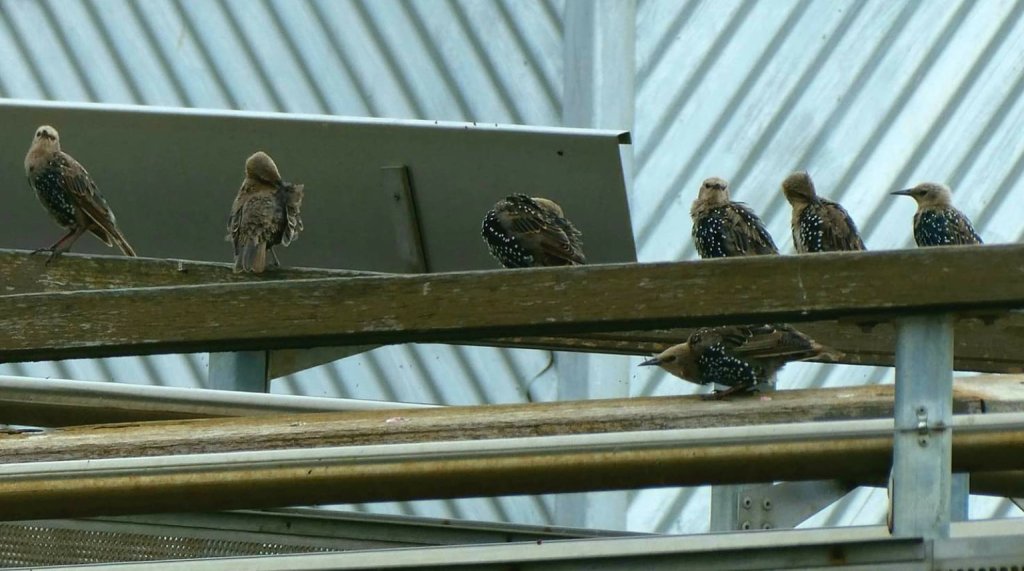
I photographed young starlings, but they must’ve been a bit older to look like this.
Cheetham Wetlands Observation Tower in February.
Sonja Ross:
Yes, these would be immature birds, Julie, already moulting into adult plumage. Thanks for sharing that, as this stage is probably more often seen.
Sonja Ross:
We probably need to be able to recognise them at least, and if you see one in W.A. you have to report it to the authorities as so far the Nullabor has formed a barrier preventing them spreading over there.
Here’s a link to contact details to report starlings seen in Western Australia: https://birdlife.org.au/projects/starlings-in-western-australia
 Women Birders Australia