ID CHALLENGE Friday 18 September: Kindy
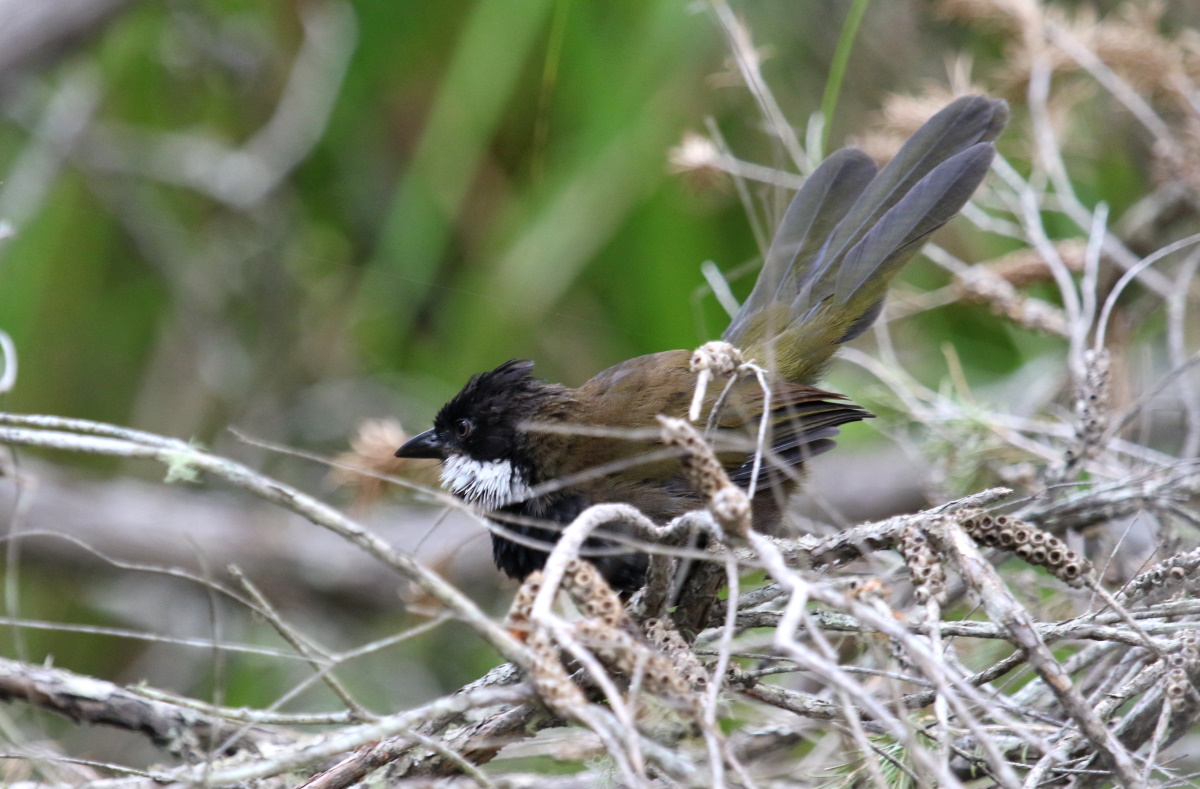
Who is this cutie? Seen in wet forest in Mallacoota, East Gippsland in January.
Size: medium Behaviour: amongst thick vegetation, near the ground most of the time. There’s something very very distinctive about this species. Almost everyone who lives near them knows them, birder or not.
This is a kindy, because even those that don’t live where they occur may have heard about them.
Hint: the thing that makes this bird so well known is not their looks, it’s their call!
Rosemary Kennedy:
Their call is very distinctive. Involves female and male birds making the whip noise.
Karen Weil: I had one for the very first time in my backyard this morning
Susie Lycett:
Might be Kindy to identify, but professional level to photograph!!
Marg Slessar:
Beautiful bird and sound. I used to lay in my bed early morning as still as a mouse and watch them hop around on the grass outside my window at our rented holiday house at Tathra many years ago. Such a delight!
Solution:
Eastern Whipbird Psophodes olivaceus
You can hear this bird over and over without ever seeing it. They are masters of staying deep in the undergrowth! But if you stay in accommodation in Gipsy Point or Mallacoota, with a thick mature garden, they will pop out frequently giving you great views.
Their whip-crack call is one of the most distinctive sounds of the eastern forests. Go to this link and click Listen: https://ebird.org/species/easwhi1
They have a little frontal crest that can be seen even in the juvenile. They can lay it a little flat, but you can usually see it if you watch for a bit. Adults are unique: black front with big white cheek patch, dark olive back, wings and tail. The tail is long, the posture is low and flat – it’s such a ‘forest ground-bird’ look. Bristlebirds, Scrub-birds and Pilotbird have this look as well.
Sonja Ross:
If you can’t go that far, it’s worth trying around Kinglake.
At Ev:
Love their call, so special, especially with the answering female!
Sue Sorrell:
Also seen regularly on Neumann Track in Dandenong Ranges National Park
 Women Birders Australia