ID CHALLENGE 11 September 2020: P Plate by Janine Duffy
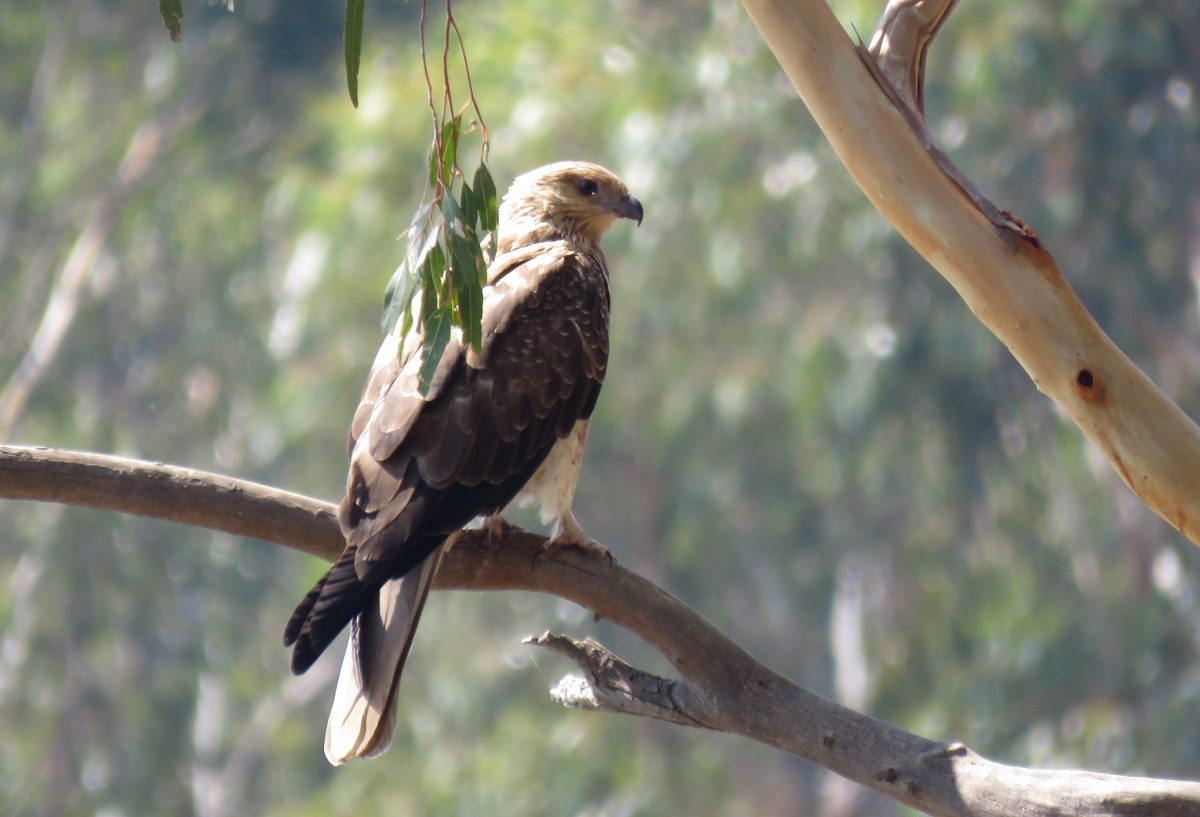
Who is this raptor? Seen at Serendip, at Lara just west of Melbourne VIC.
Size: medium Behaviour: Perched in a big tree near a wetland.
This is P Plate because raptors are hard until you get used to them. (When you do, though, this one will be easy).
Solution:
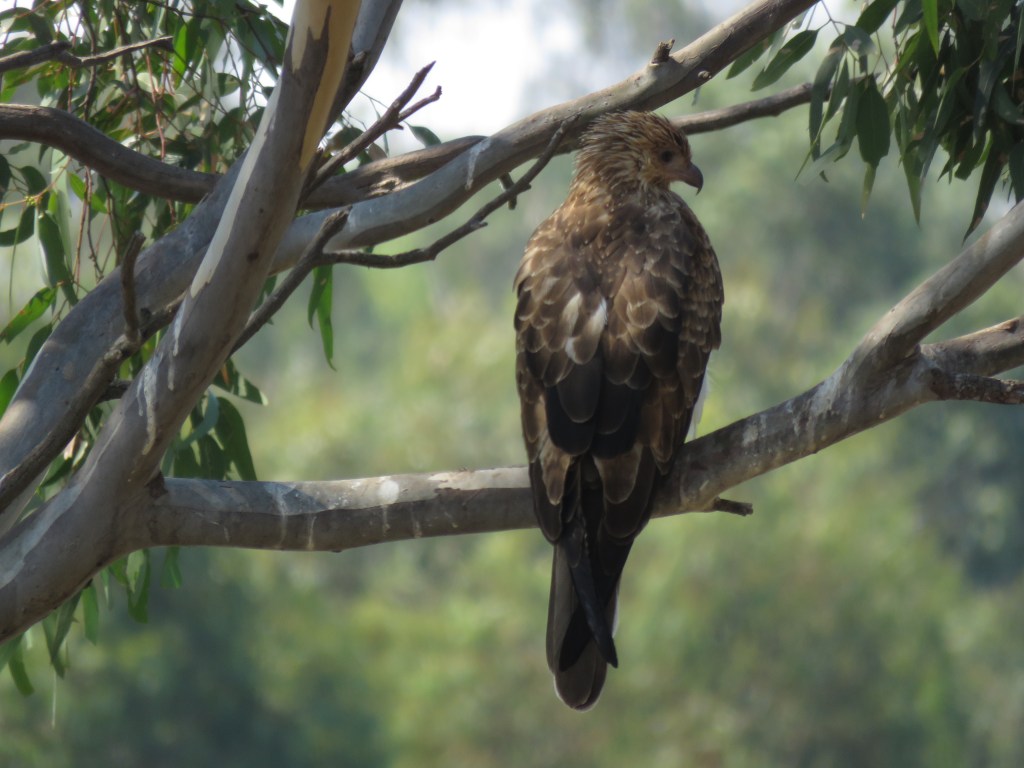
Whistling Kite Haliastur sphenurus
I’m not going to go on about the features that make this a Whistling Kite. Because it’s a ‘look’ and when you’ve seen a lot of them, you just know.
So what makes the look, and how do you see it? For me, Whistling Kites look like golden-maned birds. They have a halo of golden-ginger, slightly shaggy feathers like a lion’s mane.
They have rather pretty dark eyes, that are not too big, and a sweet, harmless look about them. I think that’s due to the fairly small bill, and the lack of any severe dark eyebrow.
But all this is subjective, and you might see it differently. So what I suggest is – look at lots of pics. Use the fabulous eBird library. Type Whistling Kite into Explore Species, and scroll down to Top Photos – View All. Just look. After pic number 82 you’ll have formed an impression of the bird. (Haha it might not be #82 for you, it might be #4, or #400). Try it and tell me if it works. Here’s a link:
https://ebird.org/media/catalog?taxonCode=whikit1&sort=rating_rank_desc&mediaType=p®ionCode=
(tip: you can filter for regions and seasons too – very helpful if you’re looking for a certain subspecies or plumage. You can also filter for sex and age, but that is more patchy as most pics haven’t nominated that detail, and not everyone gets it right. A good reason to fill in the sex and age box when you upload media!!)
..
Comments:
Sonja Ross:
Thanks, Janine. They do have “a look” and I tend to think of them as slightly scruffy-looking compared to most other raptors which seem to be quite neat and tidy-looking.
Ruth Wilson:
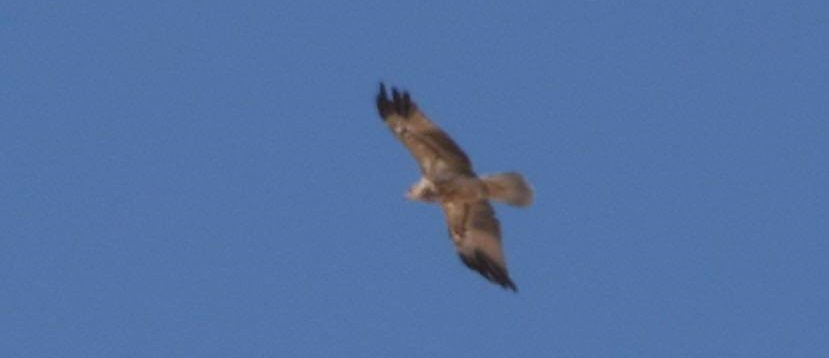
I made a discovery recently. After my son and I poring over a photograph my husband took of a soaring raptor for some minutes, we eventually decided it could be nothing but a Whistling Kite, despite two different experts proclaiming it first a Juvenile Brahminy Kite and then a Little Eagle. The defining features that made us decide it had to be a Whistling Kite were the long blonde rounded tail (even though it had a shadow at the end) and the underwing pattern which has a sandy pale colour along the length of the leading edge all the way to the shoulder and (this seems to be quite unique to Whistling Kites) the outer primary flight feathers are black and the inner are pale. Most other raptors have primaries that have two colours on the feather. Here’s an ebird pic to illustrate: https://ebird.org/species/whikit1
Notice the bi-coloured primaries on the Little Eagle in this link: https://ebird.org/species/liteag1/
And the bi-coloured primaries on this Immature Brahminy Kite (the illustration of the immature is on the actual page: https://ebird.org/species/brakit1/
So this was the photo we had to ID and you can see after an exhaustive effort, it’s a Whistling Kite
Sally Sheldon:
Great challenge and comments – also shows how the range of ID features is useful for birds in different poses (eg flight vs perched). I 100% endorse the two ID features Ruth Wilson has pointed out here for Whistling Kite – at least when viewed in flight. I used to see juvenile Brahminys a lot, in same territory as Whistlings, and I taught myself the primary feather point of distinction. Then my partner one day said simply, “long blonde tail, has to be Whistling Kite” and I thought, oh, of course, why didn’t I think of that? And it is true: not always perfectly visible, but nothing else has a tail uniformly blonde and long (cf Little Eagle). Together, those two features help me heaps when ID’ing diurnal raptors on the run, underneath birds high up.
 Women Birders Australia