WADER CHALLENGE 9 September 2020: by Karen Dick
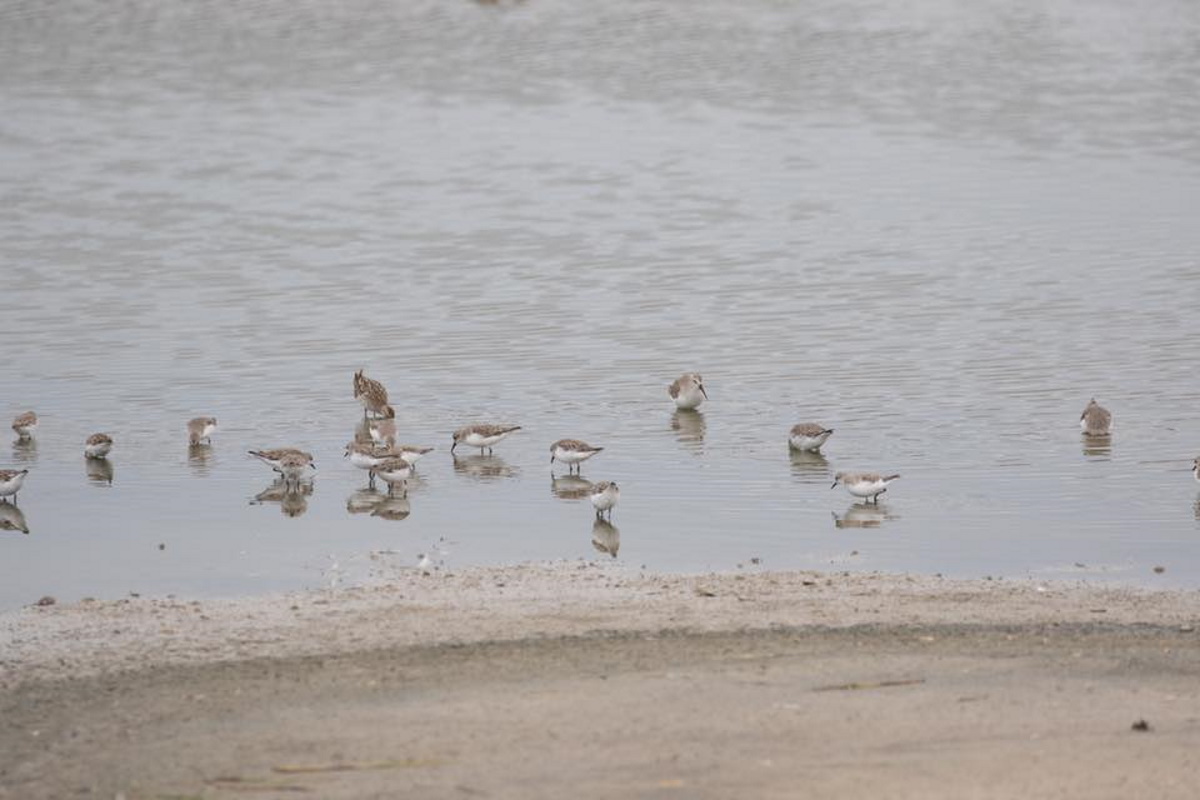
This is a fairly common situation to be faced with when you are watching waders – a bunch of birds feeding in the shallows. So today’s challenge is to see how far you get with this situation. Can you tell how many species are in the scene, and can you identify any species?
This pic was taken at the Western Treatment Plant (WTP) in Victoria in February.
The advice you will receive from any old-time wader counter is “look at EVERY bird”. Have fun.
Solution:
Well, that was fun (mostly)! Well done to everyone that had a go. The first point that I would make is that the less than perfect views of several of the birds is fairly typical when you are watching a group of feeding birds. In the real world you have the advantage of watching until each bird gives you a better view, but with a photograph you are stuck with all those annoying heads under the water!
So, how did we do? Well done to those of you who picked out the Curlew Sandpiper 4th from the right, facing us. The long, downcurved, tapered bill is a bit of a giveaway, along with the plainer, greyer plumage on the upperparts. See pics of this bird here: https://ebird.org/species/cursan/
The other large wader, to the left of the Curlew Sandpiper at the back, was correctly identified as a Sharp-tailed Sandpiper. The discreet, chestnut crown and strongly mottled upperparts are your clue here. See more pics here: https://ebird.org/species/shtsan
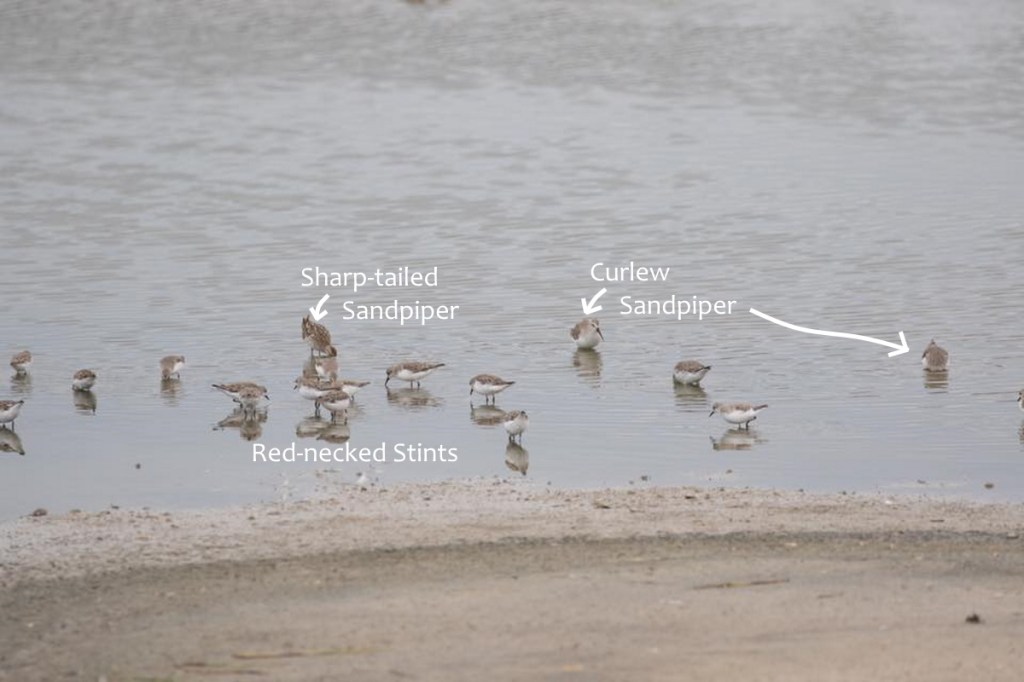
All of the smaller birds are Red-necked Stints, our most common small wader. Size, clean white underparts, short black bill and distinct collar are key features here. These are in non-breeding plumage – they do actually have a red neck in breeding plumage and breed in Siberia and Alaska. They arrive in Australia from late August and leave again in March and April. My favourite fact about these little migratory powerhouses is that they weigh about the same as a Tim Tam! See more here: https://ebird.org/species/rensti/
Several of you picked up that the far right-hand bird with its head submerged, looks to be larger than a stint, and more sandpiper-sized. This is also a Curlew Sandpiper – the plumage is too plain for a Sharp-tailed. Pectoral Sandpiper would have been in the running for this bird but in another photo is the series the head is visible, which lacks the yellow bill-base and the strong demarcation of the chest that would show in a Pectoral Sandpiper.
 Women Birders Australia