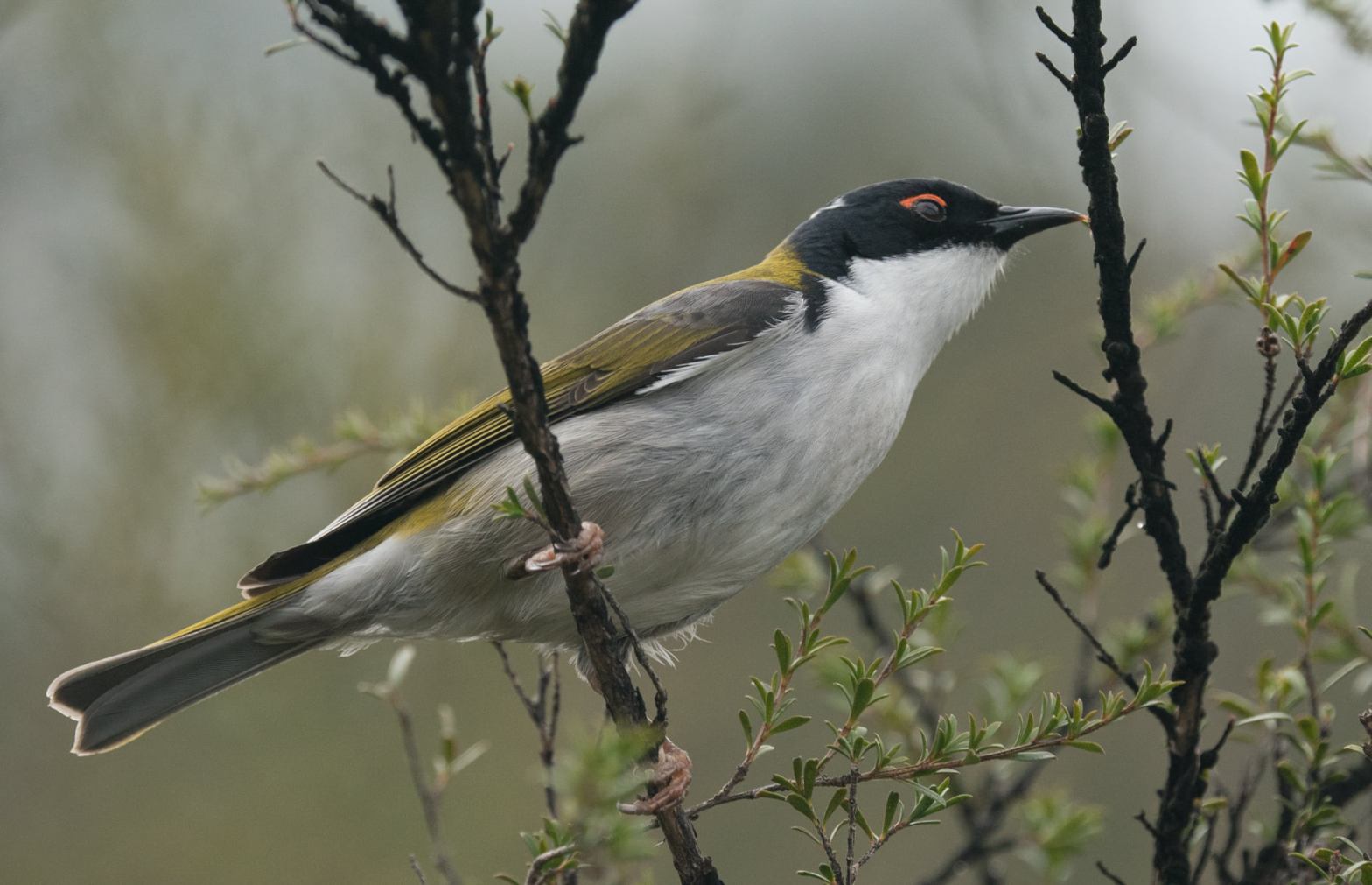
ID Challenge, September 3, 2020 L Plate by Sonja Ross
Seen in north-east Melbourne feeding in a small group in tea-tree scrub, but often in eucalypts. Seen in a broad band “coastally” from about Adelaide to well up into Queensland.
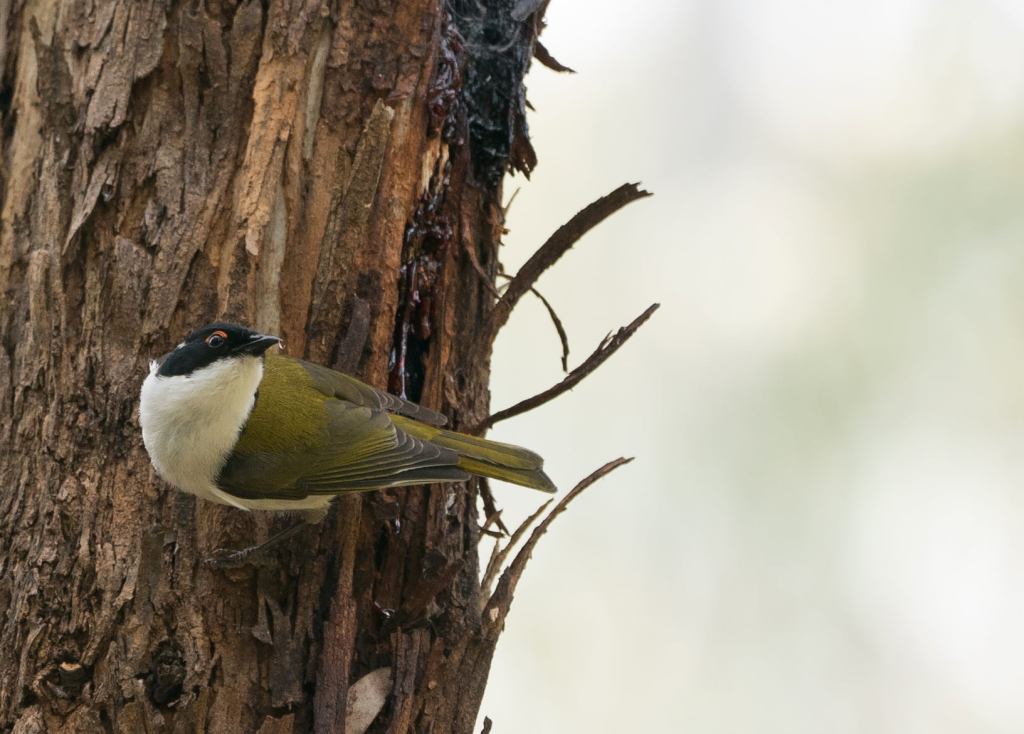
Solution:
Obviously this bird is a well known one as most members knew what it was, and is a White-naped Honeyeater Melithreptus lunatus
They tend to be in groups foraging in foliage for insects but also eat nectar and honeydew. Sometimes they do hunt of the rough bark of trees as the second bird was doing here. Their call is distinctive, and locally I do find them quite often with Yellow-faced Honeyeaters.
Gilbert’s Honeyeater in W.A. was until relatively recently a sub species of this one, but has been split to it’s own species. See them here: https://ebird.org/species/whnhon3/
Similar species are White-throated Honeyeaters of Eastern Queensland, but the skin above their eyes is white. https://ebird.org/species/whthon1/
Black-chinned Honeyeaters can look similar if you don’t get a good look, but in Eastern Australia, the skin above their eye is blue. Check them out here: https://ebird.org/species/blchon2
With young birds, White-naped Honeyeaters have a more brownish colouring on the head and back with yellowish eye skin, and so might be confused with Brown-headed Honeyeaters, but adults of that species have a black bill while the young White-naped has a yellow bill. Juvenile Brown-headed Honeyeaters have bluish eye skins.
See Brown-headed Honeyeaters here: https://ebird.org/species/brhhon1/
 Women Birders Australia