Wader Wednesday ID CHALLENGE 12 August 2020 – P Plate by Karen Dick
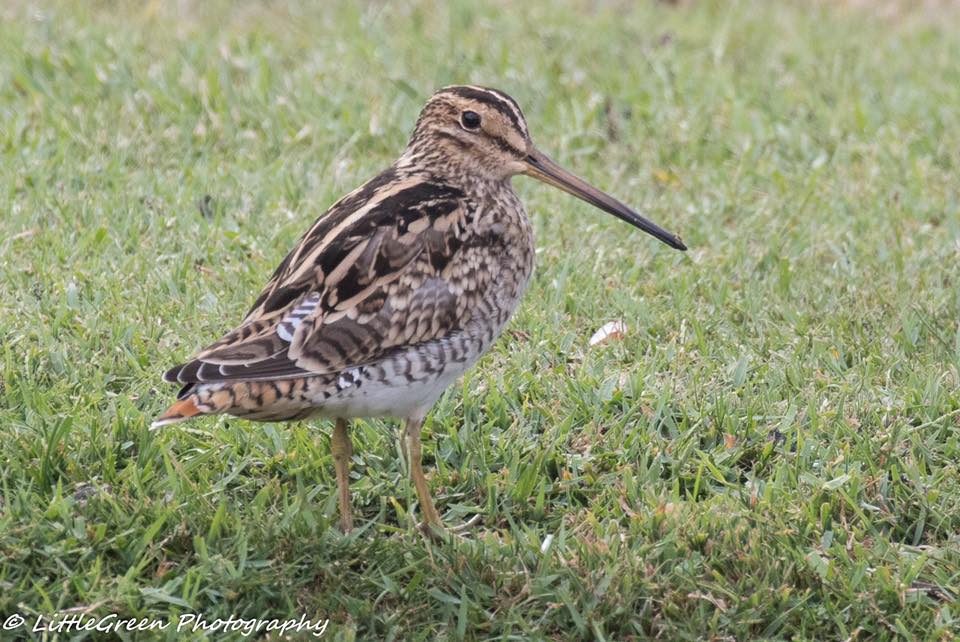
An unusual grassy location for this wader that was seen in Northwest Tasmania in January 2018, and is more often seen in muddy freshwater habitats. This cryptic coloured bird with the long bill is a migrant from Asia, during our summer. The plumage and bill shape are pretty diagnostic for the group, although getting to species, particularly in northern Australia can be problematic.
Solution:
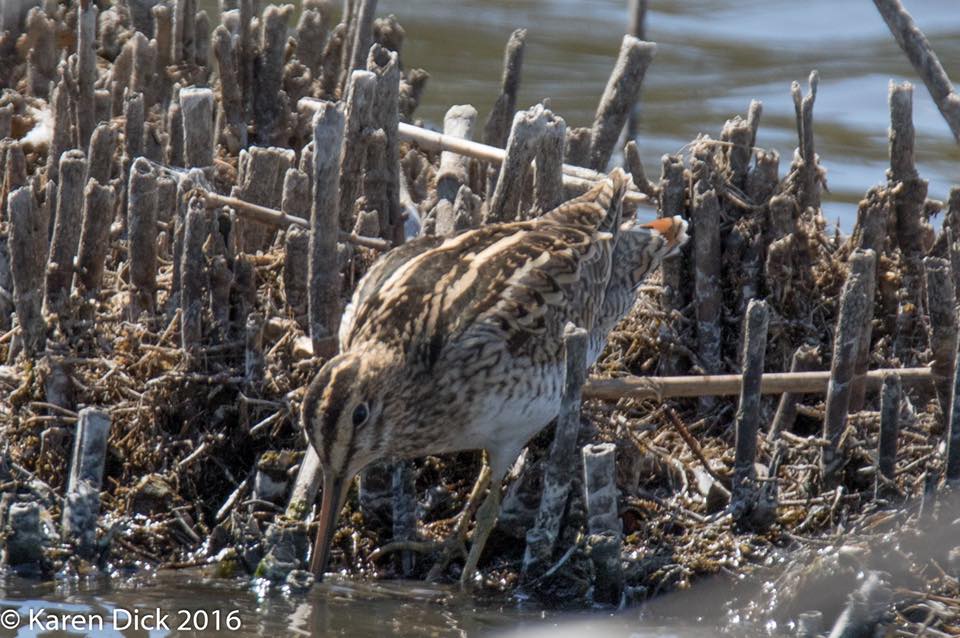
Well done everyone for identifying this as a Latham’s Snipe Gallinago hardwickii. There are no records of the other snipe in Tasmania, so once you got to snipe from the plumage and bill, location was the key to narrowing it down to Latham’s. They are shy, unobtrusive waders of the muddy fringes of freshwater lakes and dams. Picture 2 shows a snipe in a more typical habitat and shows how well their camouflage works.
Janine mentioned the state of the plumage in the secondaries. I’m not sure what is going on there and I couldn’t find a reference for moulting times in these snipe. January seems a little early to me for moulting into breeding plumage.
More information about this bird here: http://www.birdlife.org.au/bird-profile/lathams-snipe
And threats to their future here. It’s interesting, the loss of habitat that most threatens this bird does not only occur in Asia, it is ongoing in Australia as well: http://www.environment.gov.au/cgi-bin/sprat/public/publicspecies.pl?taxon_id=863
Comments:
Janine Duffy Yes I agree with those that have said Latham’s Snipe, based on location mostly. The others are unlikely and fiercely difficult to tell apart I think, unless you see them fly. I’m interested in those new bright pale secondary & tertial feathers – an adult starting it’s pre-breeding moult?
Sally Sheldon And yes, that is really interesting, Janine, on this bird! I wish I had the experience to offer a first-hand informed view (I don’t), but I showed it to Martin and discussed with him and yes, agree that is most probably what is going on with this individual – I do wonder about the change in the colour of the tertials as they age… fascinating! Thanks for picking it up and drawing attention to it.
 Women Birders Australia