ID CHALLENGE 10 July 2020: P Plater by Janine Duffy
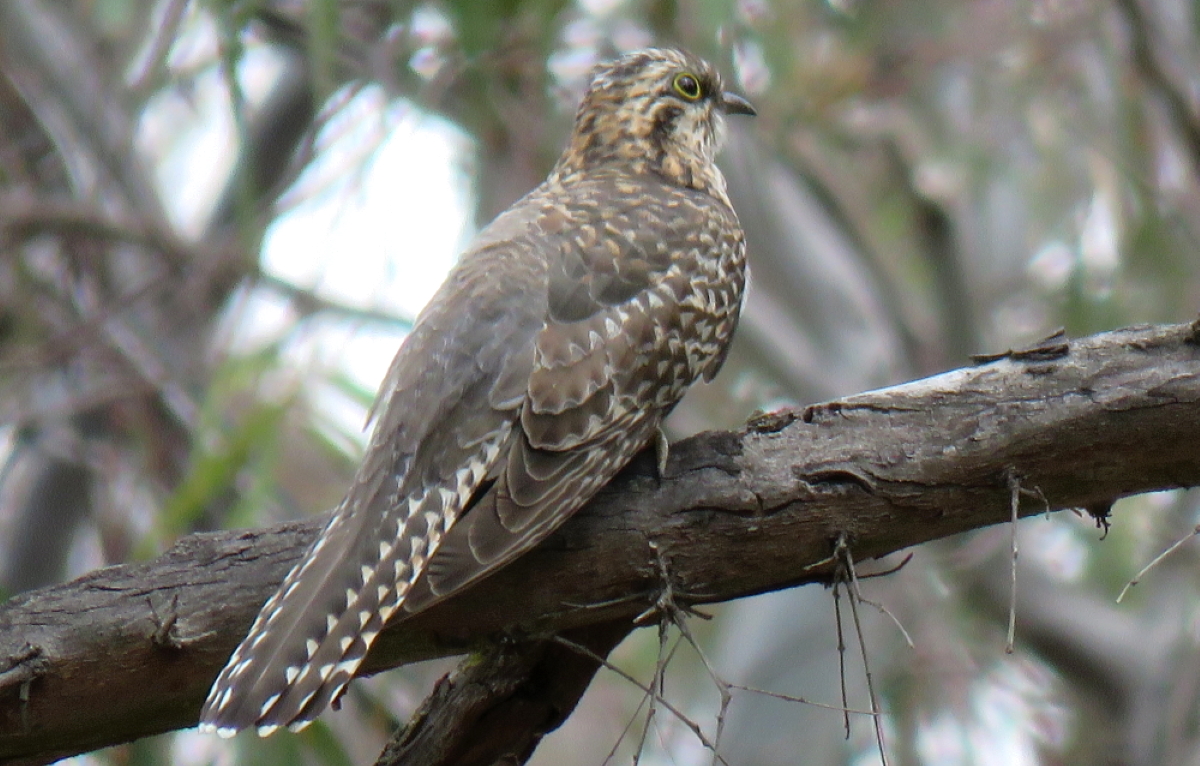
Who is this lovely bird? Seen at the You Yangs, near Melbourne VIC in November.
Size: medium for this sort of bird. Behaviour: staying still on a perch.
Try to get as close as you can – name the group if you can’t get the species. If you can, give us the age, sex and morph too.
Solution:
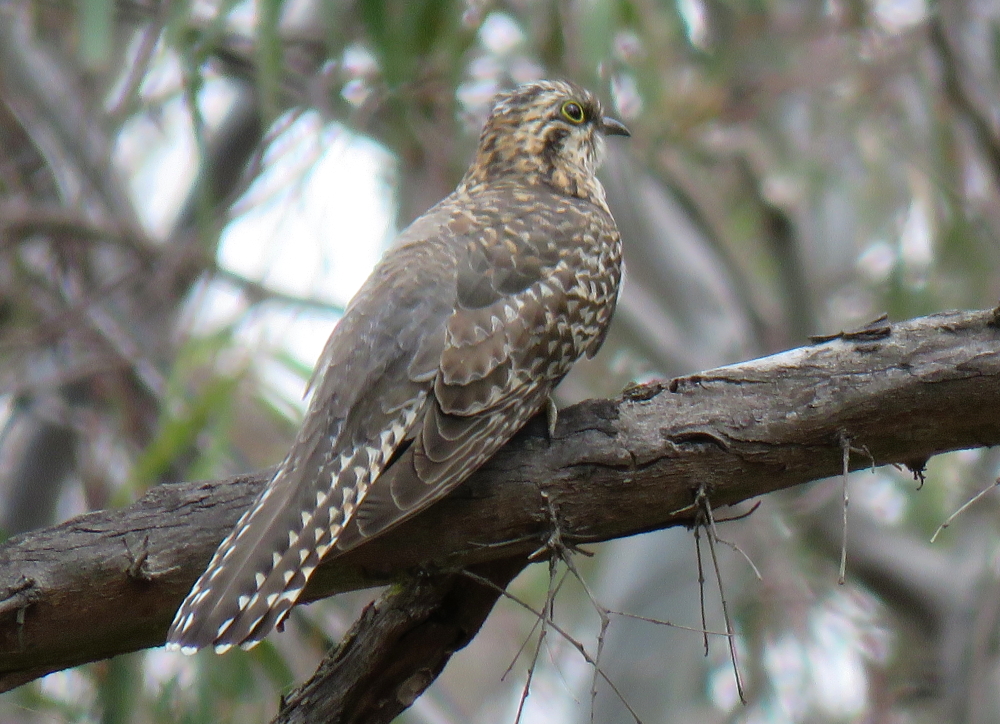
Pallid Cuckoo.
Firstly, you all guessed right that she’s a cuckoo. There’s just something about them, isn’t there? That long tail, that curved bill, big eye, eye ring – and they have a furtive look about them. Like they’re wishing you didn’t see them.
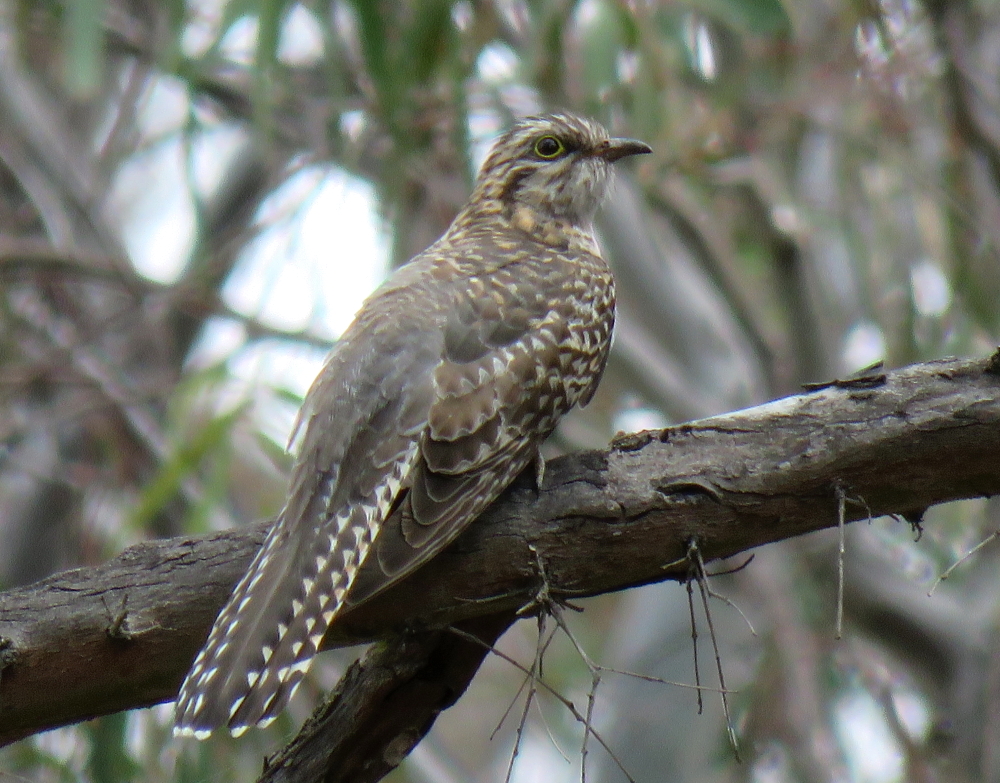
Most of you got that she’s a Pallid Cuckoo Cacomantis pallidus too. The dark line from the bill through the eye and down onto the cheek is diagnostic amongst the long-tailed cuckoos. (BTW: as for size – the largest cuckoos are the coucals and Channel-billed, which are massive. So this bird is medium-sized in the group).
..
But now, is she an adult or a juvenile? For many years, I’ve wrongly thought that this streaky spotty plumage was a sign of a juvenile bird. In many birds it is, but in this one, it’s not.
Juvenile Pallid Cuckoos are really black and white. They have a black chin and throat, and a mostly white ‘shoulder’ with thin black lines, not the star-spotted upperwing that this bird has. Also juveniles don’t have the rufous neck that this bird has.
Check out some great images of juvenile Pallid Cuckoos here on eBird: https://ebird.org/media/catalog?taxonCode=palcuc1&mediaType=p&q=Pallid%20Cuckoo&age=j
So this is an adult female, but there are two morphs (colour variants): dark rufous and light rufous. Dark rufous have reddish neck/mantle and sides of neck and some reddish under the chin. Also the star-spotted back feathers have some rufous tint. The breast has some barring (but you can’t see that in this pic).
The light rufous morph has a pale, unbarred breast, few or no rufous feathers on the back, and much reduced rufous on the neck and chin.
So this bird is an adult female dark rufous morph Pallid Cuckoo.
Here’s an interesting article about colour morphs in birds – why they occur: https://ornithology.com/avian-color-morphs/
 Women Birders Australia