Advanced ID CHALLENGE – Tuesday 23 June 2020 by Karen Dick
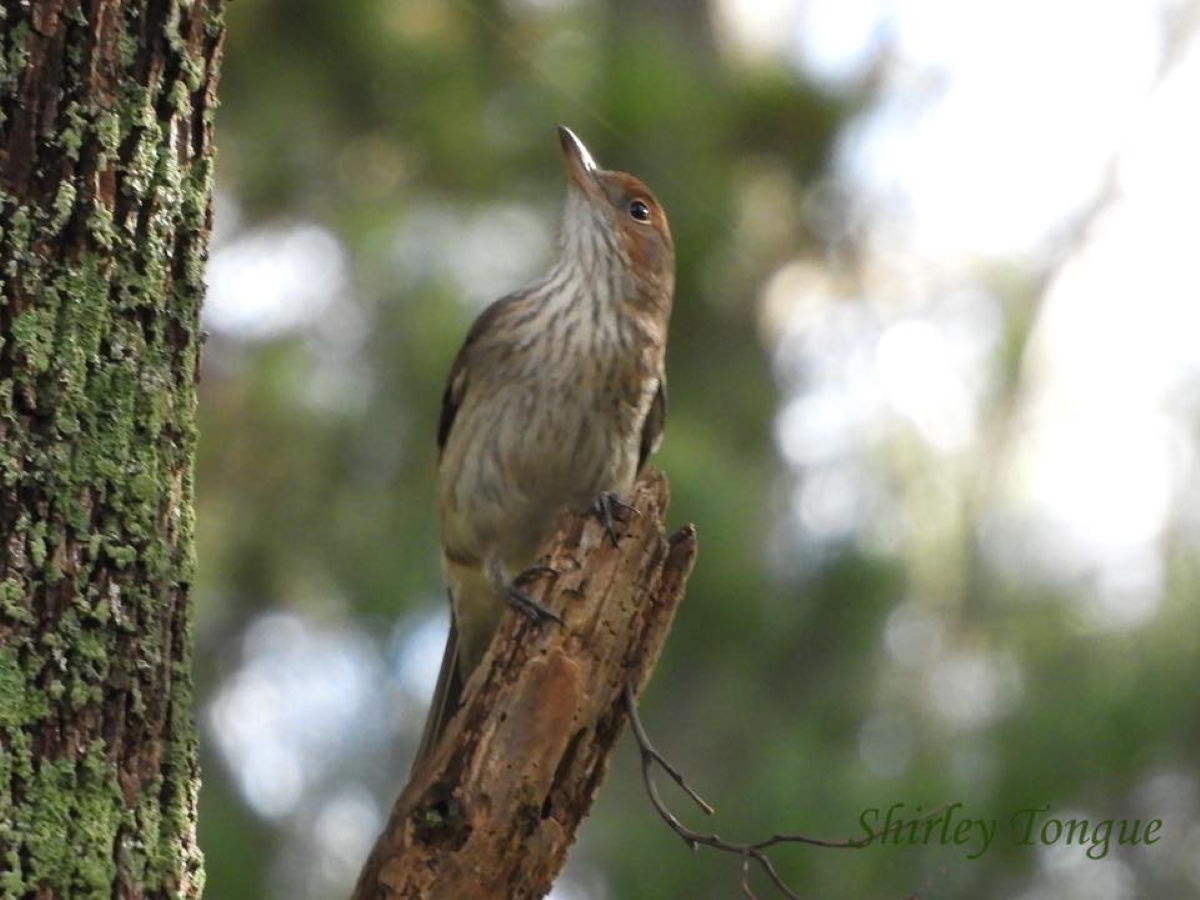
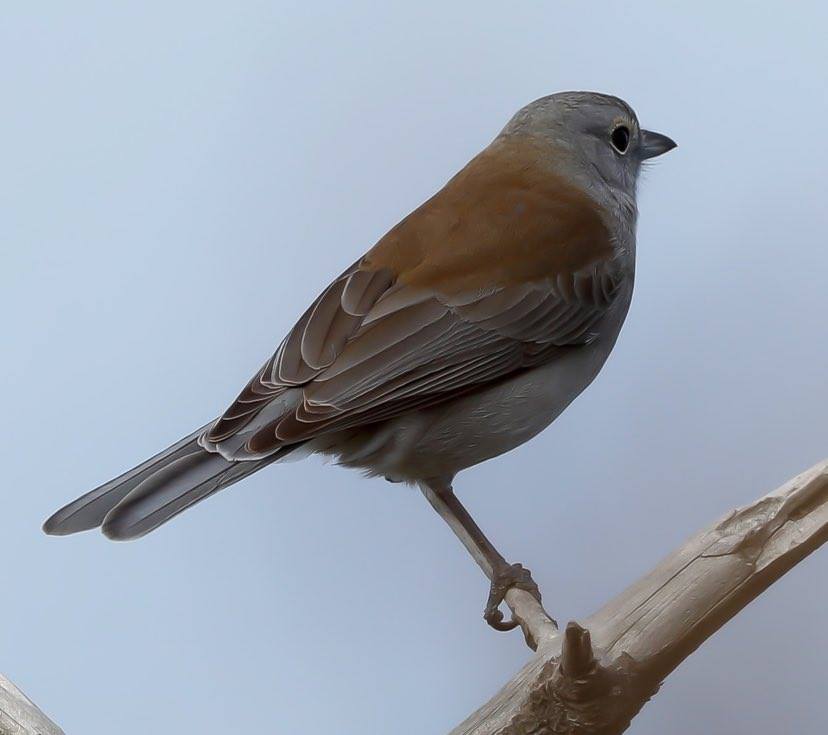
This photo comes courtesy of our member Shirley Tongue, who took it on her local patch besides the Don River in Northern Tasmania.
This medium sized bush bird can be seen fossicking on the ground, on lookout on fence posts or often searching for food in trees.
One of five subspecies known, your challenge is to identify the age and subspecies of this bird.
Solution:
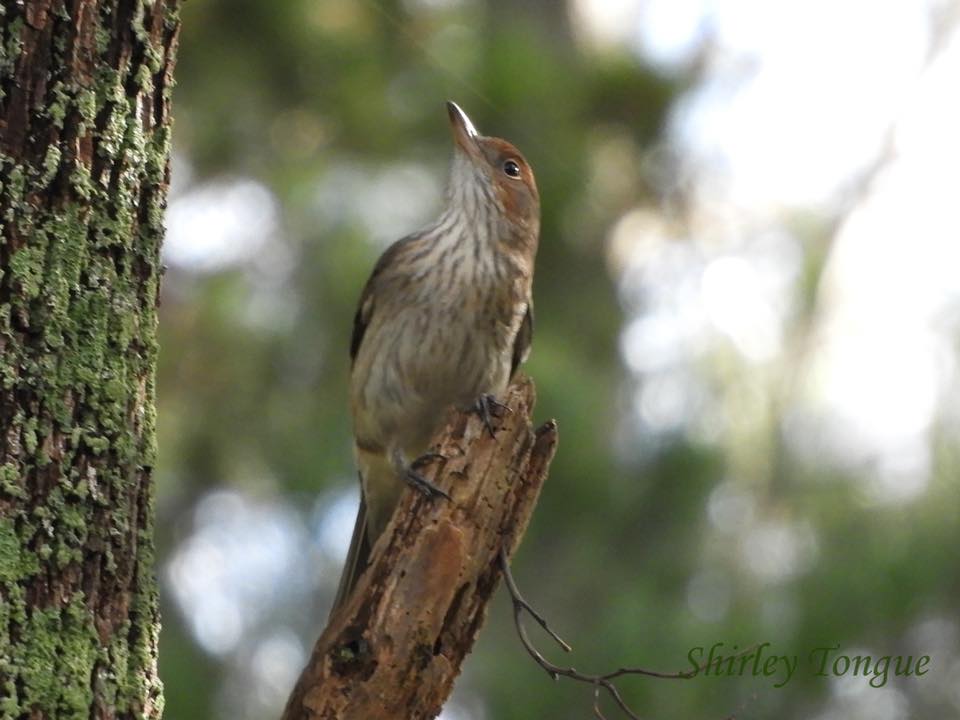
This photo presented an interesting angle for this bird, but nothing to stop you ladies getting spot on with the identification. It is indeed a Grey Shrikethrush, Colluricincla harmonica, a common bush bird, a predatory passerine (songbird) with a beautiful song and a less beautiful habit of preying on nestlings of other birds, among other large invertebrates.
There are four species in the group and this species has five subspecies over its widespread range over most of Australia. Based on the fact that it was seen in northern Tasmania, we assume that it is ssp strigata. It is a juvenile bird, as recognised by the strong chestnut eyebrow, and the extensive heavy streaking. The streaking will reduce in extent and also in heaviness as the bird matures.
Comments:
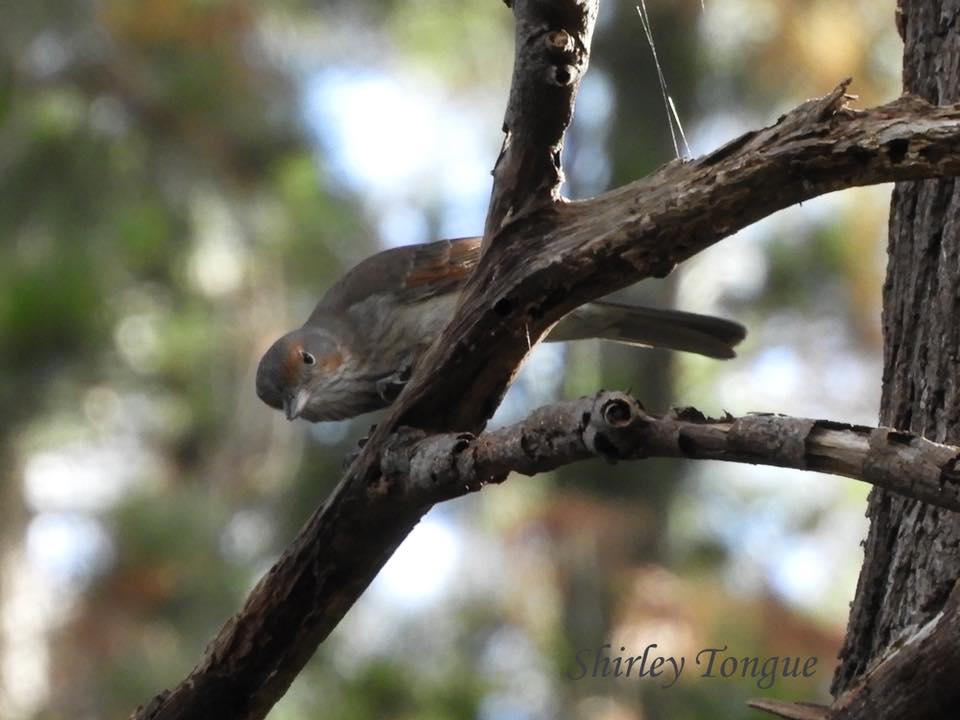
Pamela Keil: Juvenile GST ssp strigata (spp. given by location)… juvenile because of the heavy streaking and amount of rufous around the eye as well as the pale gape. GST based on the overall shape and the size/shape of the bill. Potential confusion would be with some of the whistlers, but plumage and location narrow it down to GST.
Sue Gadsby Lee: Heavy streaking of throat to belly, wide rufous brow & a small grey patch to the ear covert area. & grey lores. I think this is a juvenile transitioning to early immature Grey Shrikethrush ssp strigata as this bird has grey lores, but the supercillium is still heavy rufous. The lower mandible is still pale, indicative of juvenile.
Jo Wolff: Adult looks so different in this photo (below):
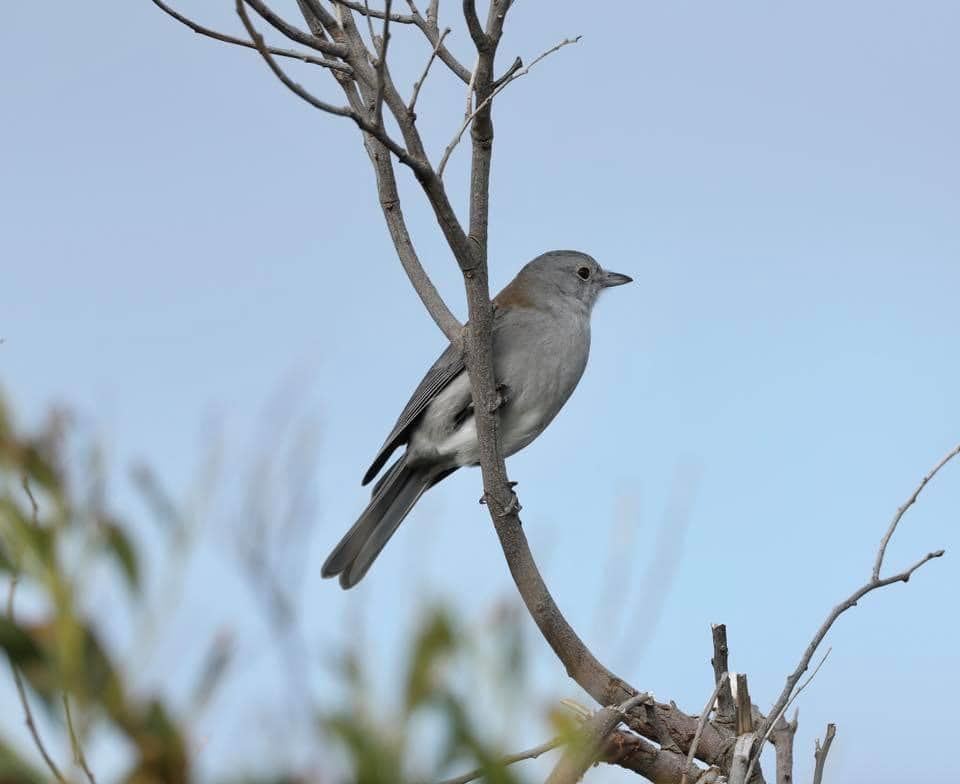
Kris Bernard: “Looks a bit like a friend of mine who came to visit here and play with leaves a few years ago. So I am going for GST as well, one reason being that rufous colour seen above the eye.
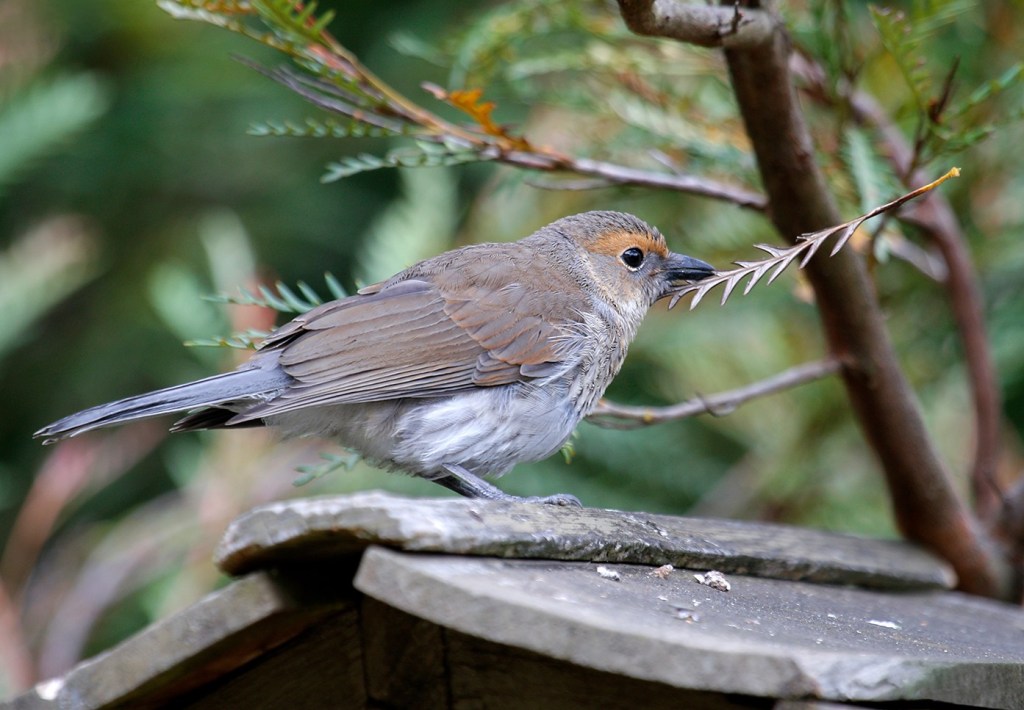
He was playing on the roof of the bird feeder near our house, and not at all afraid Picking up those dry leaves and then tossing them around and then picking up again. A very lucky magic moment and great opportunity to get some photos too.
Also some months (or more) later a male GST took to calling on the back veranda and I would whistle back to it. (though with my whistling skills I am sure he thought it very funny) He would strut around and it seemed like to hear the echo of his call on the veranda!
Then sometime after that a male started coming in when we were getting dog food ready to nip a bit of meat and now he comes back regularly, but only about 6 months of the year I think.
He just started to came back now and I think it comes when courting and nest building and raising chicks and then disappears for months afterward – I think while they teach the chicks life lessons. We see a female sometimes, but she is not so trusting and they build their nest in our back shed.
I have often wondered if the male who comes to visit now was that same trusting chick back in 2015!”
 Women Birders Australia