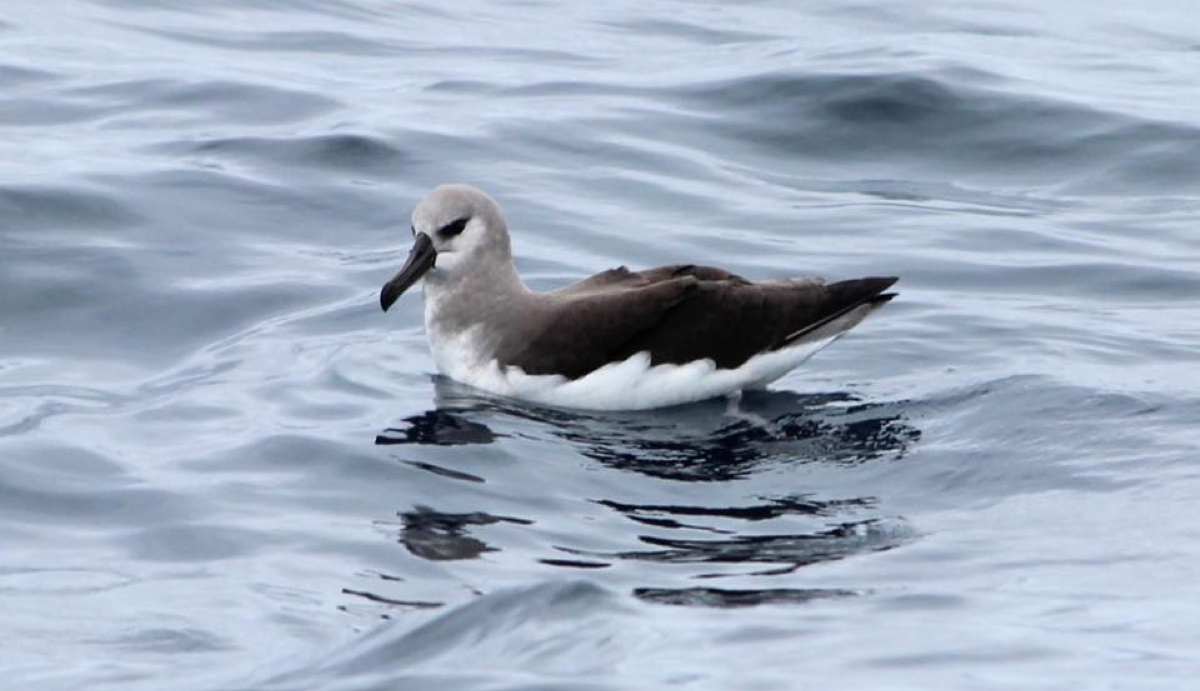
Advanced Seabird Sunday ID CHALLENGE 21 June – by Karen Dick
This seabird was seen and photographed by Janine Duffy in June on a pelagic from Port Fairy.
Solution:
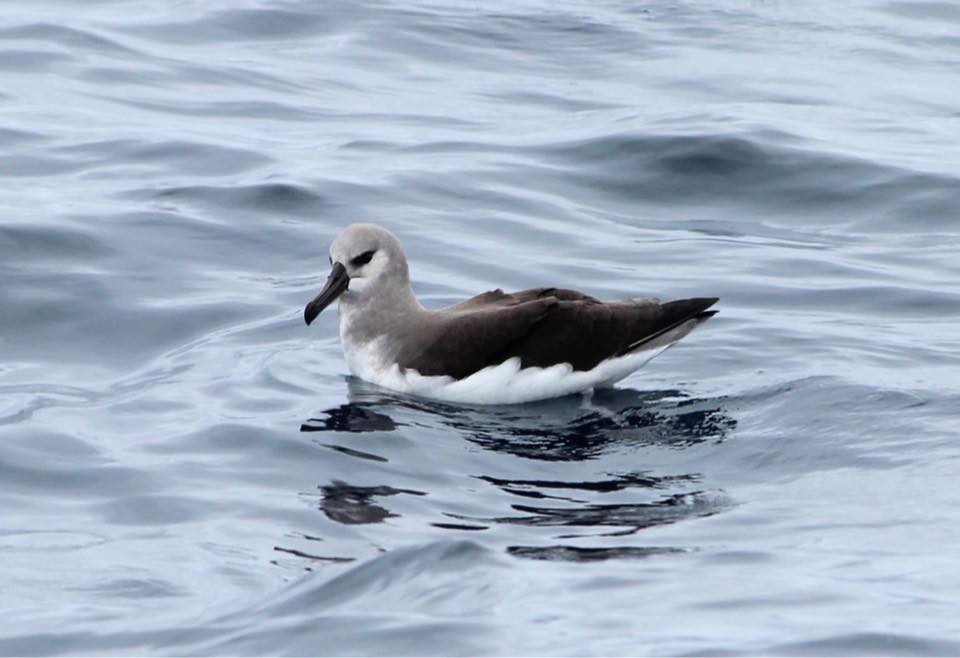
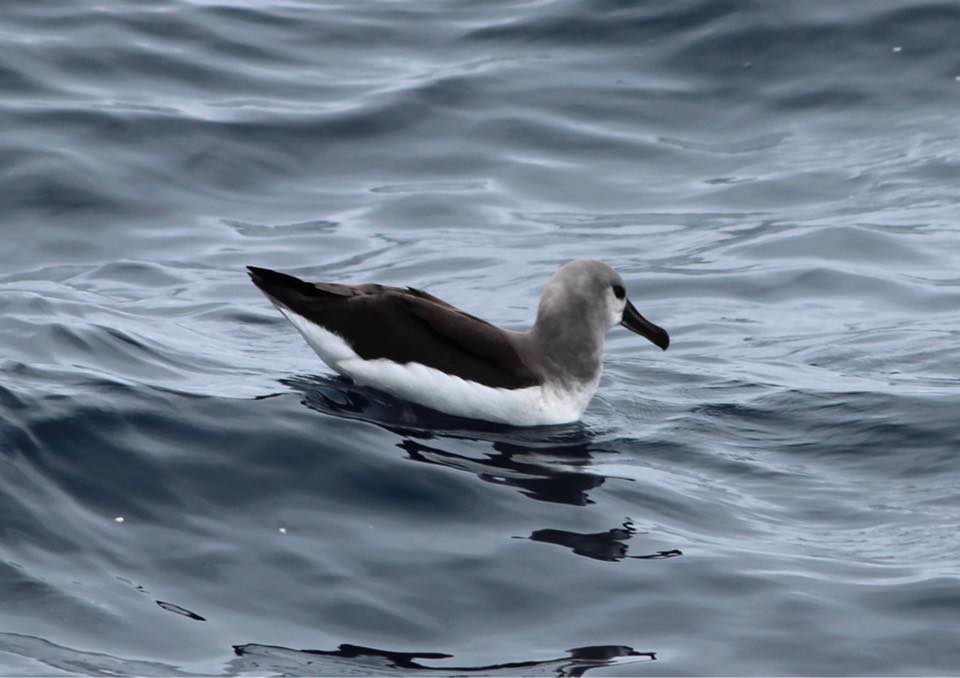
In honour of World Albatross Day on Friday 19 June 2020, today’s challenge brought you an albatross, arrived at by the size and shape of the bill of this bird.
This bird has a distinctly black bill and full grey head with white around the face. There are a few species in our waters that would show a black bill – juvenile Black-browed/Campbell Albatross, juvenile/immature Grey-headed Albatross, immature Buller’s Albatross and juvenile Yellow-nosed Albatross. Other species have bills that are different colours.
Juvenile Black-browed/Campbell, (which can’t be separated in the field at this age) have grey heads but also have a pale mark behind the bill tip. As you can see in this pic, the bill is solid black along the whole length, so our bird is not this species.
Juvenile Yellow-nosed have a full black bill, which starts to develop a yellowish tip as it reaches immature stage, so this bird could only be a juvenile. However, the head of a Yellow-nosed is predominantly clear white, so this bird cannot be this species.
To be a Buller’s Albatross, this bird would be an immature, as juveniles have a paler bill. However, although the face of a Buller’s is grey, the cap is white and our bird has a full grey head.
So that leaves us with this bird being a Grey-headed Albatross Thalassarche chrysostoma. This one is either a juvenile, or a fresh (new plumage) immature. The combination of dark grey head, and dark bill are the key features, and the lack of a white cap, are pretty diagnostic. In the second photo it is possible to see the mark on the base of the bill.
Grey-headed albatrosses are rare visitors to mainland Australian waters, and uncommon visitors in Tasmania during winter. They breed on subantarctic islands, including Macquarie Island, and range right around the southern Ocean, moving further north outside of the breeding season.
Read more here:
Tracking Grey-headed Albatross juveniles to slow the decline: https://www.birdlife.org/worldwide/news/nobody-knows-where-juvenile-grey-headed-albatrosses-go-until-now
IUCN Red List: Endangered Grey-headed Albatross
Comments:
Elke Link: I’m taking a guess here. I hit the ABG and searched through the albatross pages because of the bill shape. I searched for one with a dark bill in combination with dark around the eyes. I found the best was the immature Grey-Headed Albatross. The illustrations show a dark eye patch with white underneath the eyes and around the cheeks. Also the bill is quite dark and does not yet have the yellow ridge. The head is greyish and belly white and the wings look black-brown. So, I may be totally wrong, but this is my best guess. I have never seen an Albatross in my life but would love to one day.
Penelope Lind: First thought was Albatross but I don’t know names/species. So got out my trusty ABG. After lightening up the photo I think it’s possible that there is a pale mark on the ramicorn. But with that facial and head colouring, lack of white cap, and since the bill is quite dark and no yellow along ridge I’m going to say it’s a fresh Immature Grey-headed Albatross.
Sally Sheldon: No field experience at all of Albies, so when I thought “Grey-headed Albatross”, it was based on a fair bit of time now spent drooling over pictures in books, etc. I wondered about lack of yellow on bill, so turned to ABG to check my intuitions. And from there, my thinking went as per Penelope Lind’s. Agree fresh imm Grey-headed Albatross.
Penny Gillespie: My first thought albatross. If it is, it’s a sub adult grey headed albatross. The grey on the neck is transforming from grey though patchy white before adult colouration. Bill is dark. Can’t see if there are any lighter parts
 Women Birders Australia