Kindy ID CHALLENGE on Women Birders Australia 25 June 2020 by Janine Duffy
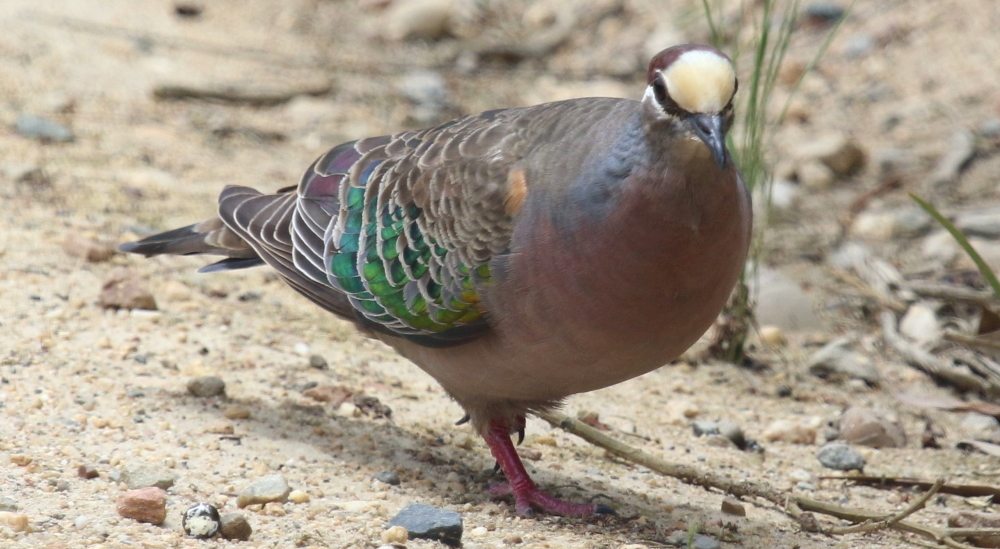
Who is this handsome bird? Seen at Raymond Island, East Gippsland VIC in December (but could be seen all year round).
Size: big for this sort of bird. Behaviour: walking around foraging on the ground.
This is a Kindy challenge because it’s a bird that most of you would have seen, is fairly common in gardens (outside of inner city), and thus is fairly well known. But for those new to birding, or who don’t yet have a comprehensive field guide, knowledge of this bird’s name and features might be a challenge. If that’s you, please take a guess and tell us why.
Solution:
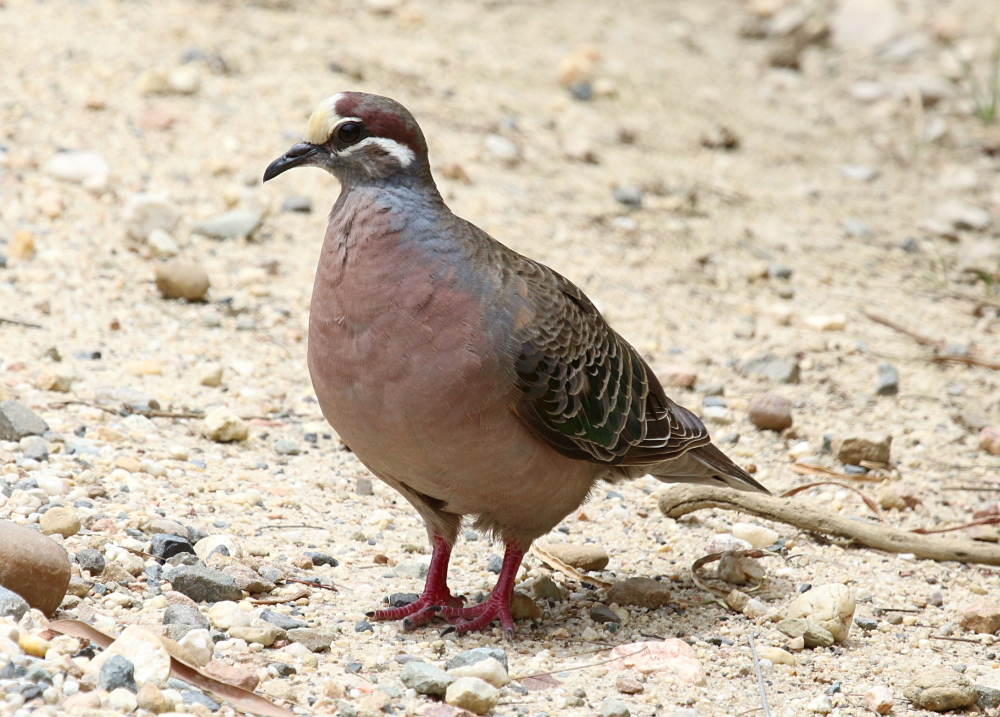
Common Bronzewing Phaps chalcoptera
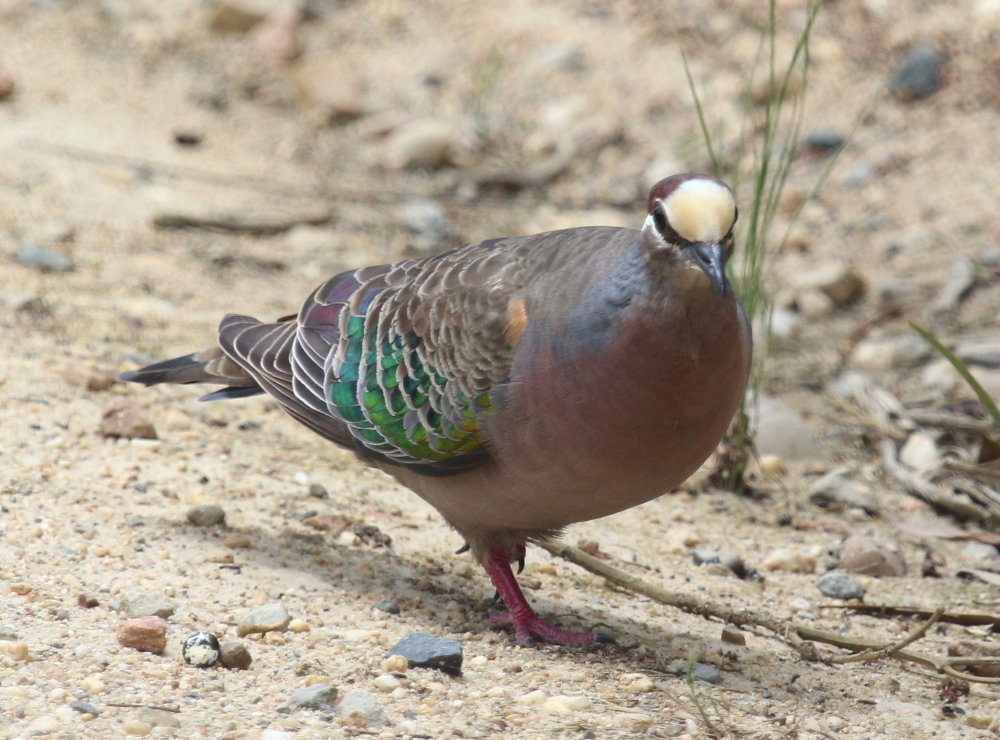
This is a very beautiful male bird, showing off his gorgeous plum-purple crown, buff-cream forehead, dusky pink chest and blue-grey neck.
This large native pigeon lives throughout most of Australia, except western Tasmania. They are common in Australia’s south-east, but less common in northern Australia.
The really distinctive thing, and the reason it’s called a bronzewing, is the rainbow-iridescent sheen on the wing (these feathers are called coverts). It can be hard to see in shadows, but usually when the bird moves you’ll see it. Common Bronzewings have a lot of iridensence – it covers so much of the wing.
It is one of three ‘bronzewings’ in Australia – the others are the Brush Bronzewing and the Flock Bronzewing. But in some ways you could add the Crested Pigeon/Crested Bronzewing Ocyphaps lophotes and the 3 closely-related Geophaps: Spinifex, Partridge & Squatter Pigeon, which also can have a bit of iridescence in their wing coverts.
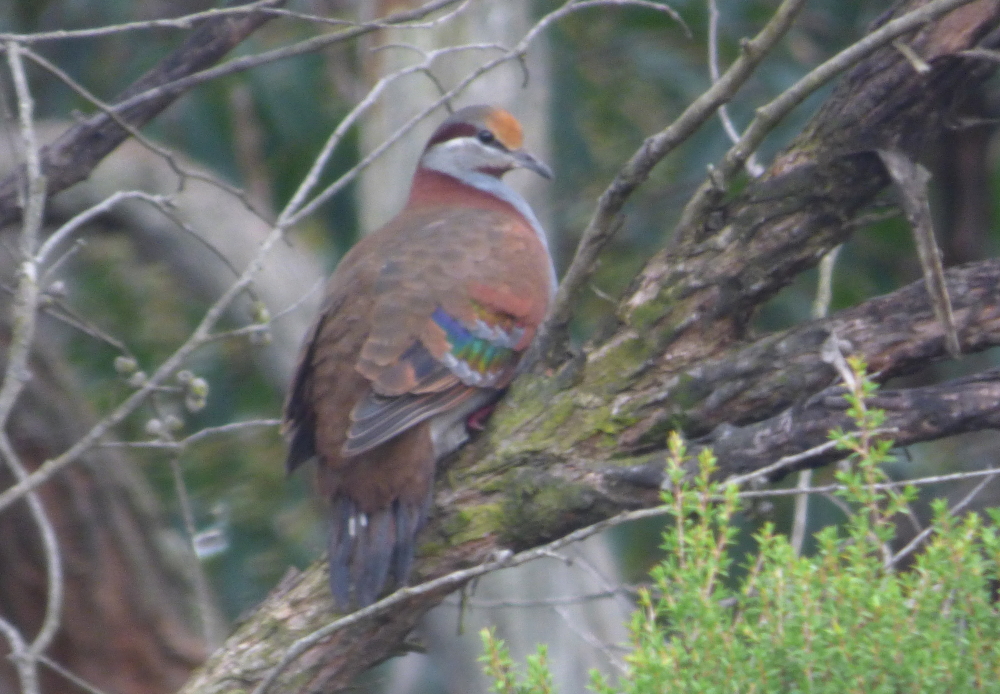
In the southwest and southeast you could confuse this bird with the Brush Bronzewing. They have less of a scaly pattern on the back, a dark chin/throat, chestnut primaries (wing feathers) in flight, and the male has a red-brown mantle (the upper back). The females and juveniles can be hard to tell apart, but look for the scaly pattern on the back of the Common Bronzewing. Habitat is really helpful – if you see a bronzewing deep in the bush, in thick scrub, that is really wary – it could be a Brush. If you see it in a garden, or walking along through open forest – its probably a Common. But take a photo if you’re not sure. Their calls are really different too!
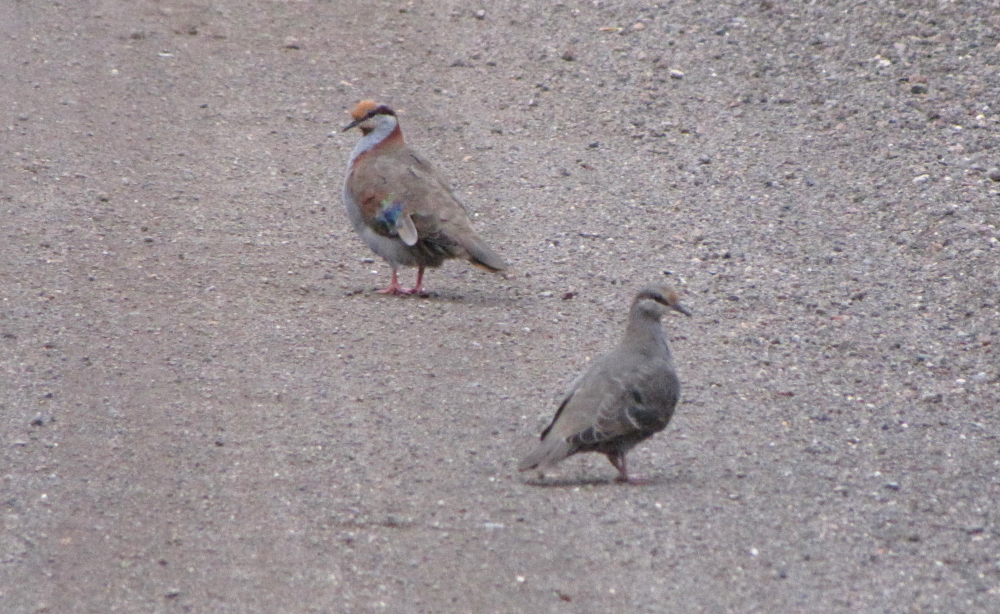
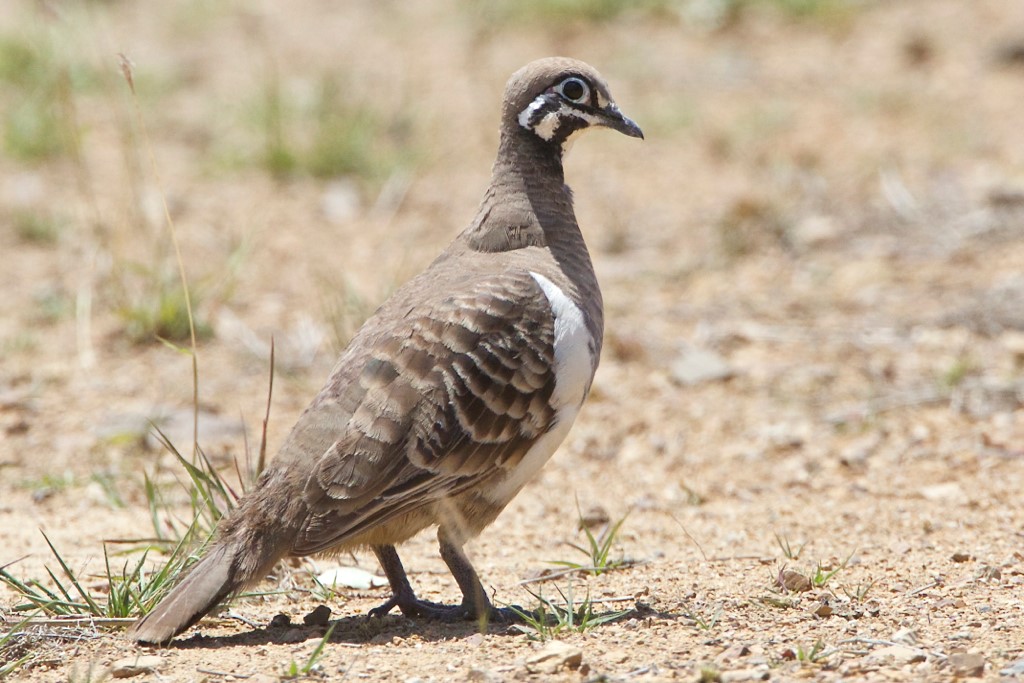
Elsewhere in Australia there are no other bronzewings you could really confuse them with. Flock Bronzewing is much rarer, usually in big flocks in the inland, and has no iridescence in the wing. Squatters in Qld and Partridge in NT/Kimberley have really funky face patterns (even as young ‘uns).
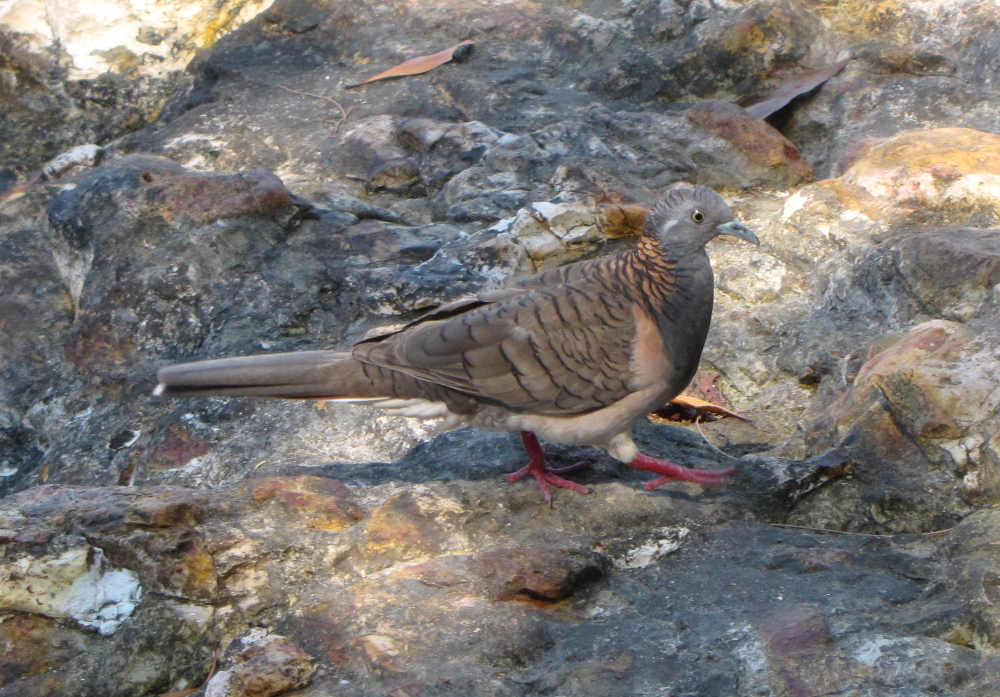
The one surprisingly similar bird in the Top End is the Bar-shouldered Dove. As a juvenile it has similar eye markings, scaly back and overall colour. It does not have iridescence in the wing. It also has a much longer tail, and is a fair bit smaller. But the Top End Common Bronzewing is also much smaller than the SE one, which has caught me a few times.
Comments:
Pamela Keil: “I love looking at the tracks of these birds in the sand… they really do wander as they forage. Looks like they’re a bit lost as they loop around and meander all over the place.”
 Women Birders Australia