by Janine Duffy
What is this bird?
..
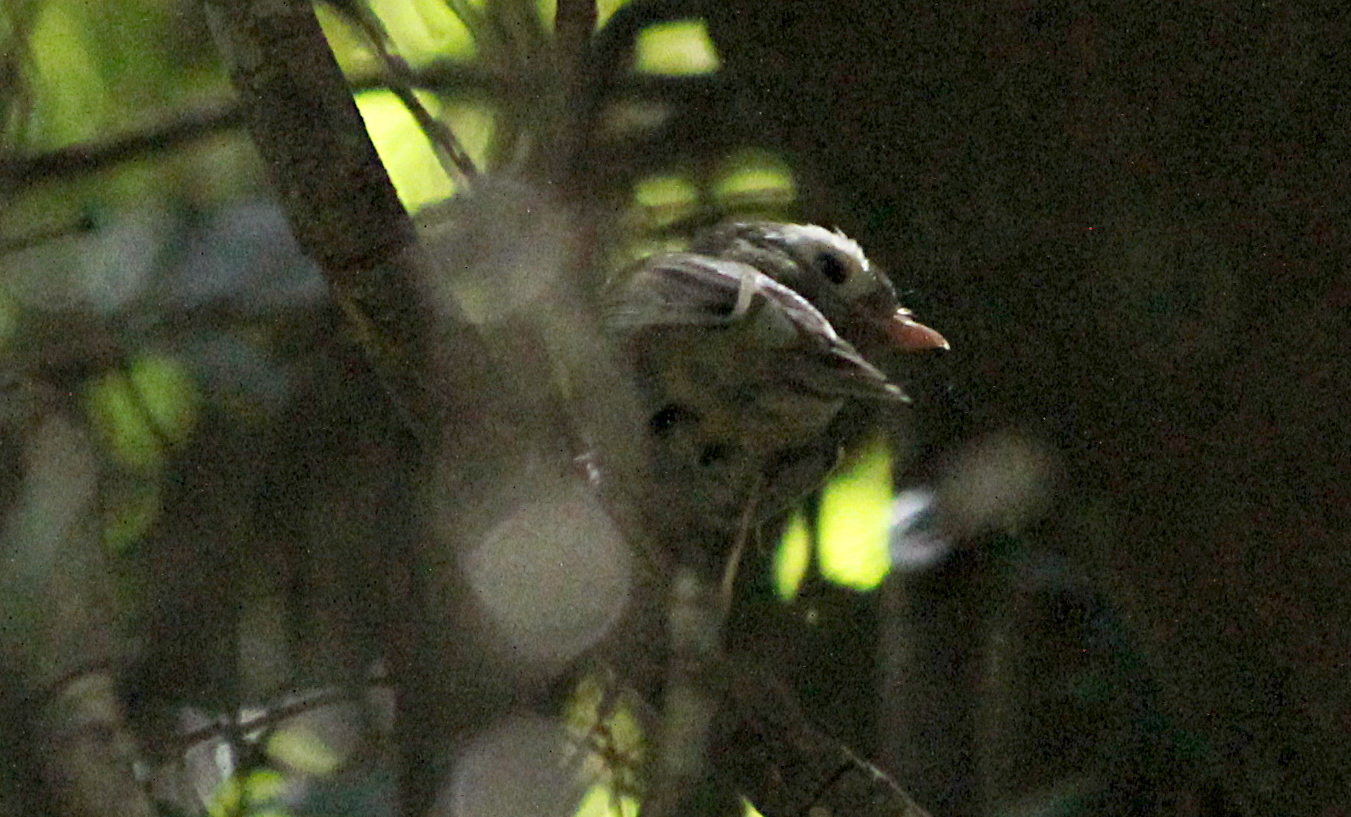
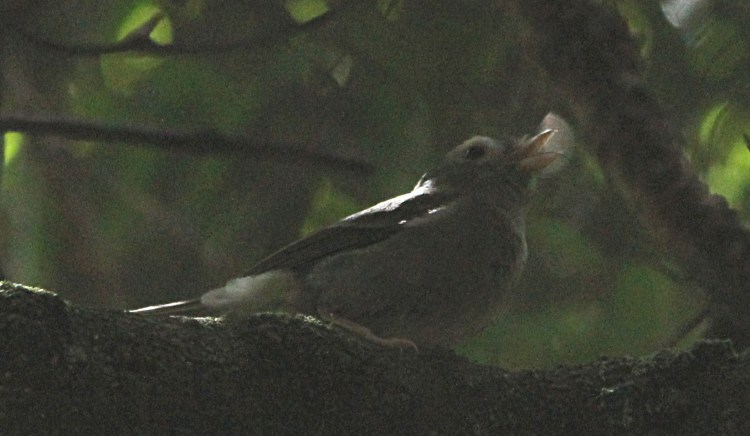
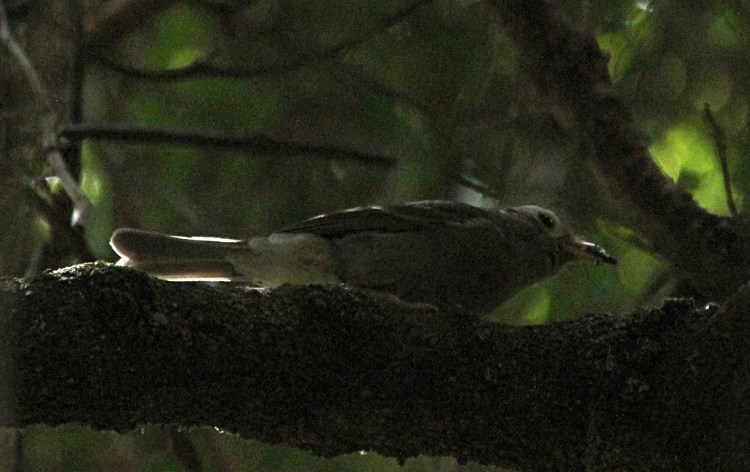
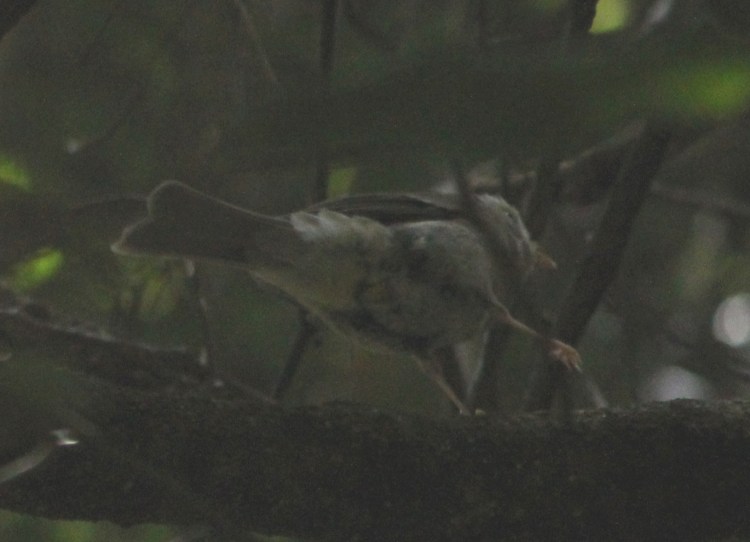
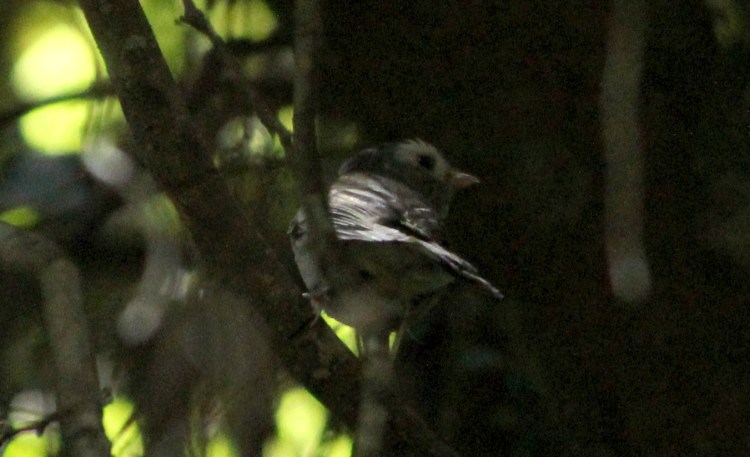
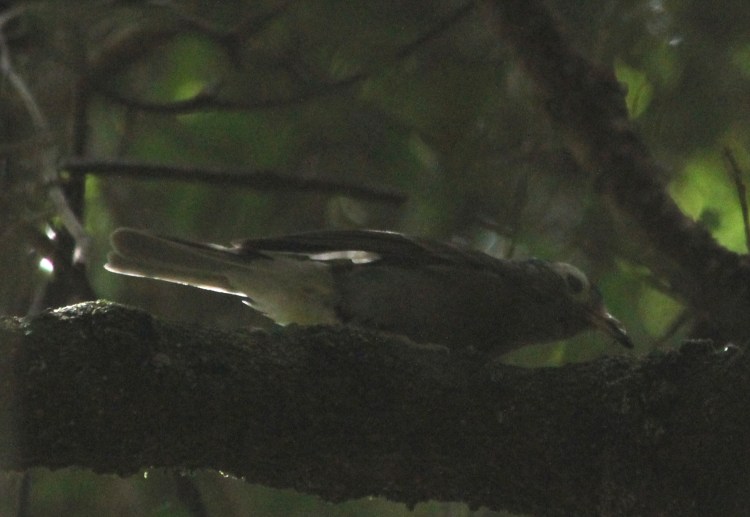
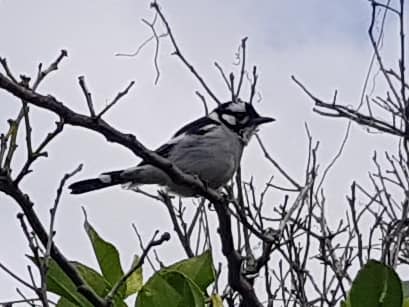
This bird appeared above me under the canopy of thick warm temperate rainforest north of the inlet at Mallacoota, eastern Victoria in December 2019. The area is rarely visited, underbirded and home to a few rainforest plants at the extreme southern limit of their range (ie Sandpaper Fig, Yellow Elderberry).
It hopped around the branches, catching insects, in the near dark for some time, while I juggled binoculars and camera, thinking “WTF is that?”
..
Size was not too small – larger than scrubwrens/thornbills. Smaller than Golden Whistler.
Jizz like a Black-faced Monarch. But clearly not that.
Before this a bird was calling that I couldn’t identify, but I couldn’t record it.
This was an Advanced identification challenge on Women Birders Australia 29 March 2020.
..
Bird clearly is not a Black-faced Monarch – as far as I know at no stage do they have a white or grey underbelly. Nearest vagrant is Spectacled Monarch, but they have a rufous chest and throat. The light was poor, but the bird did not have even a hint of rufous or buff.
White-eared Monarch was ruled out almost immediately, as it would be 500km south of its range. However it does share some features with this bird: black and white head pattern, size, jizz, grey belly, white undertail coverts.
Some good images of immature White-eared Monarch here: https://mdahlem.net/birds/21/whearmon.php
And here: http://tytotony.blogspot.com/2018/03/young-monarch-shows-up-but-white-ears.html
Near relatives: other monarch flycatchers. Leaden & Satin both occur. Both have white bellies, but females and immatures have rufous throat. Very young juveniles have a completely different plumage to adults. A juvenile Leaden is the closest possibility. The only pictures online I can find are these very young, fluffy juveniles:
http://tytotony.blogspot.com/2017/11/flycatcher-flurry-of-feeding-for-lucky.html
Both birds already have dark beaks though. I really felt that this bird was bigger than a Leaden, and more stocky.
Whistlers: the beak is quite whistler-shaped. Rufous, Golden & Olive all occur there. Rufous is streaky in young ages, Olive is very large, leaving Golden the only possibility. They do have pale beaks when young (as this bird does), and grey-pale bellies. The Victorian subspecies does not have much (or any) yellow on the vent.
See a collection of Golden Whistler images on Graeme Chapmans excellent site: http://www.graemechapman.com.au/library/viewphotos.php?c=559&pg=5
Problem is it just doesn’t look like a Golden Whistler. It has too much contrast around the head-face.
I had run out of options. So I let this birdy sit in my photo file, unknown and unresolved.
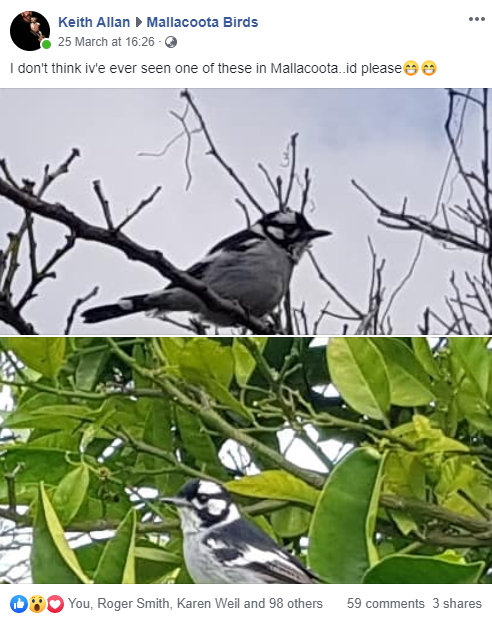
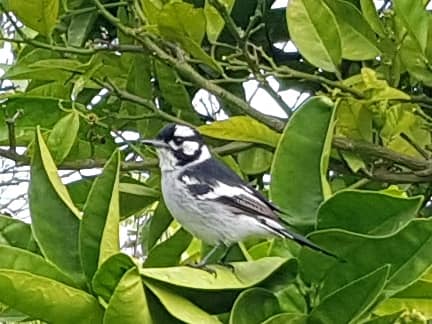
Then to add to the fun, an unmistakeable, undisputable White-eared Monarch (or two) showed up in Mallacoota in March 2020 and pics were posted on Mallacoota Birds.
..
Will it be resolved? Let’s see what the Women Birders come up with!
..
Women of all ages, race, ability and gender diversity are welcome to join Women Birders Australia. The group is set up to share and discuss wild birds in Australia.
 Women Birders Australia