by Janine Duffy
What is this bird?
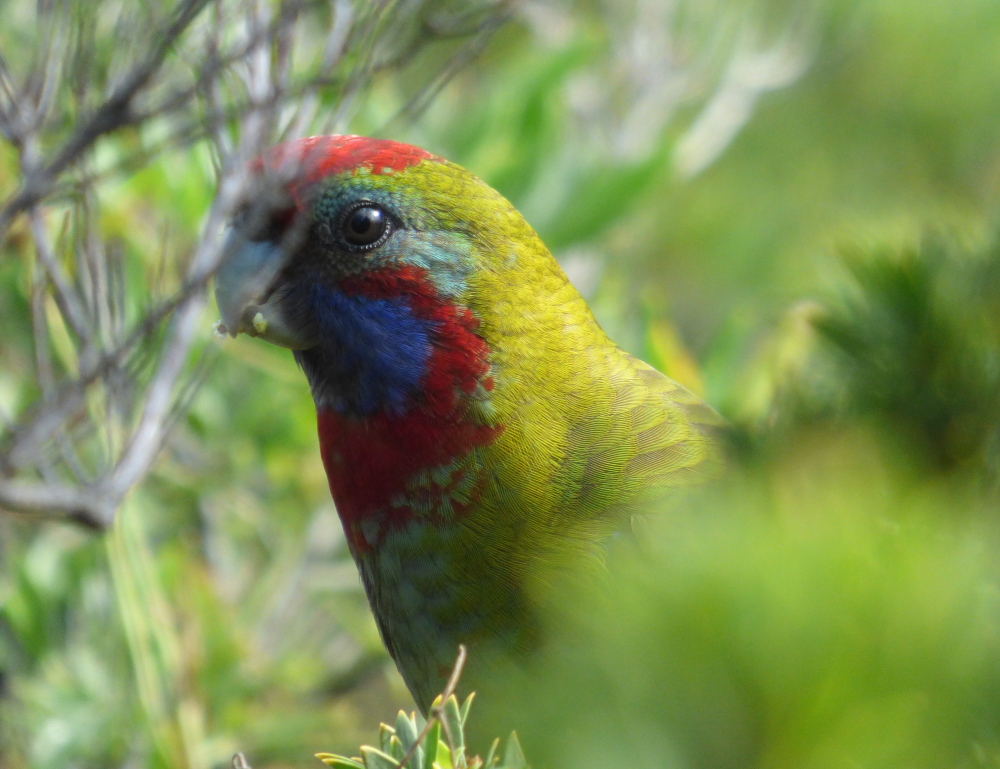
This is a common bird in the south-east, but there’s something different about it that confuses many who are new to birding. Please tell us what you think the bird is and what makes it different from ‘bird book normal version’.
Pic taken Great Ocean Road.
This was an L plater ID Challenge on Women Birders Australia facebook group 27 March 2020.
..
The bird in the picture is a young Crimson Rosella Platycercus elegans.
Crimson Rosellas are very famous and well-known birds in south-eastern Australia. But most people see the red – adult- version, and are confused by the green version. I have heard people say the green ones are all females, but that’s not true.
Many species of birds have different plumages (feather patterns & colour) at different times of their life. Some have different plumages based on sex, others change plumage several times a year.
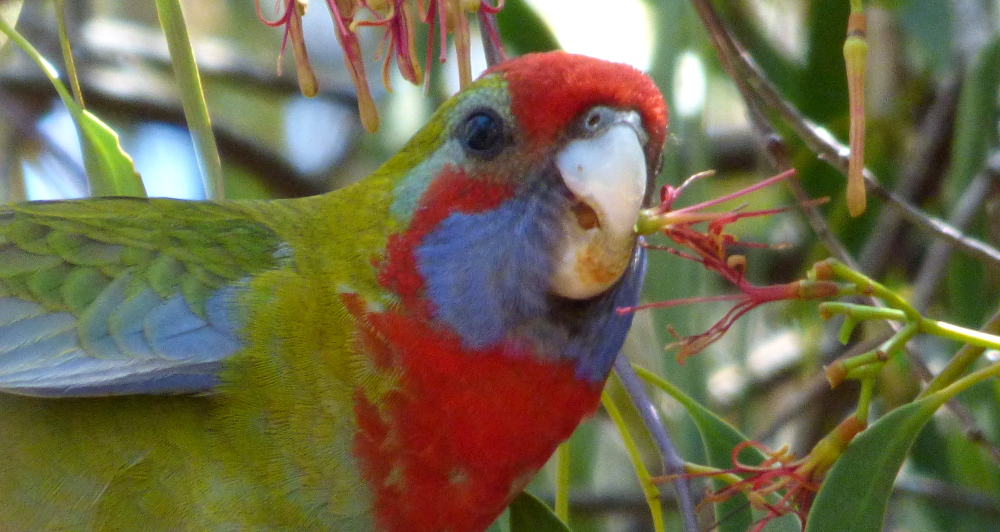
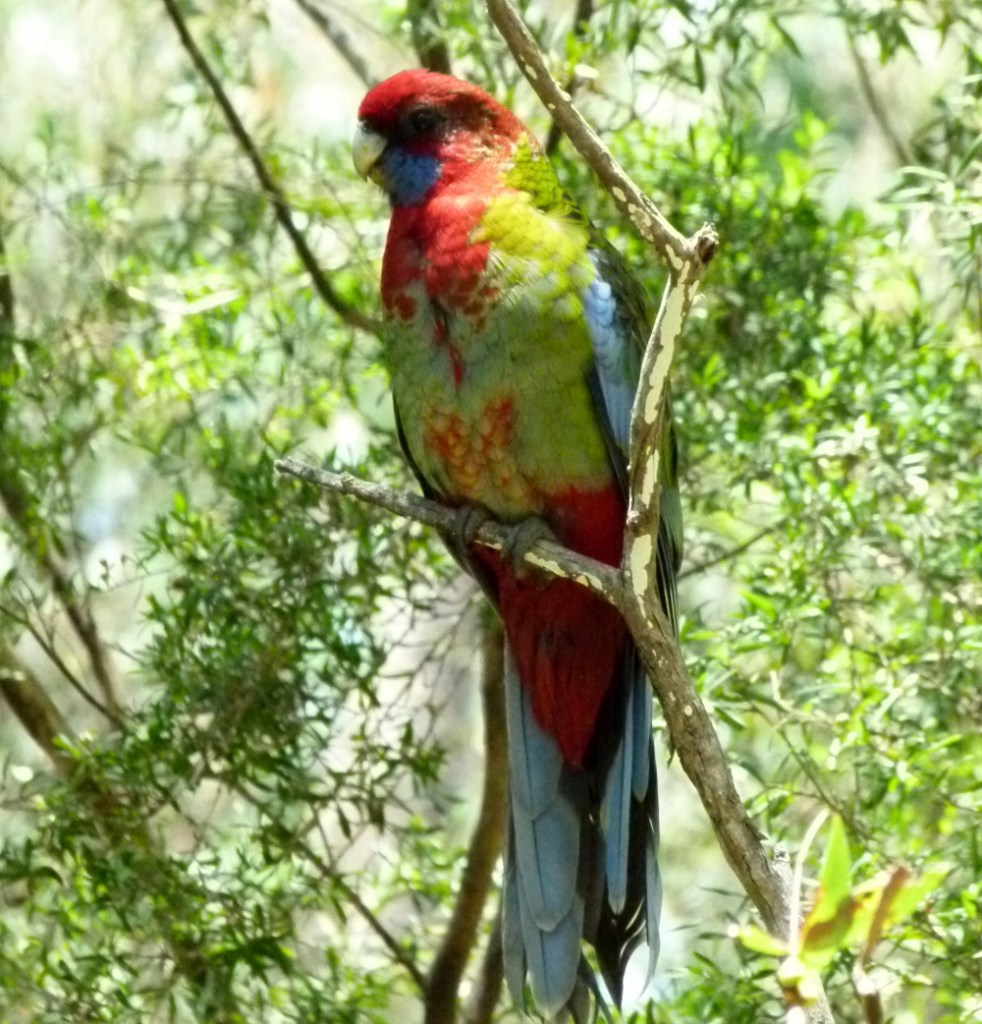
Crimson Rosellas basically have a juvenile plumage and an adult plumage. As they are transitioning, they develop an immature plumage that is somewhere in between.
..
Juvenile plumage is green except for the blue cheek, red crown, red bib/throat and red vent (under-rump).
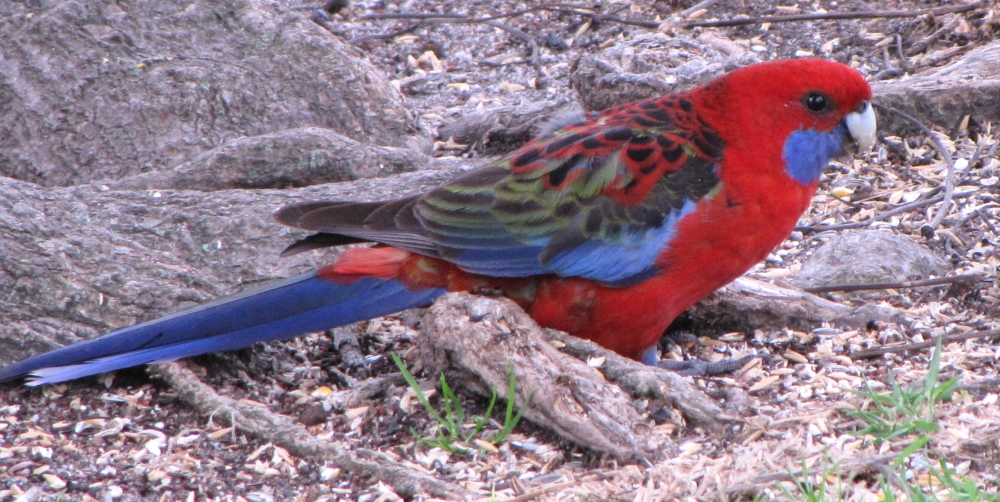
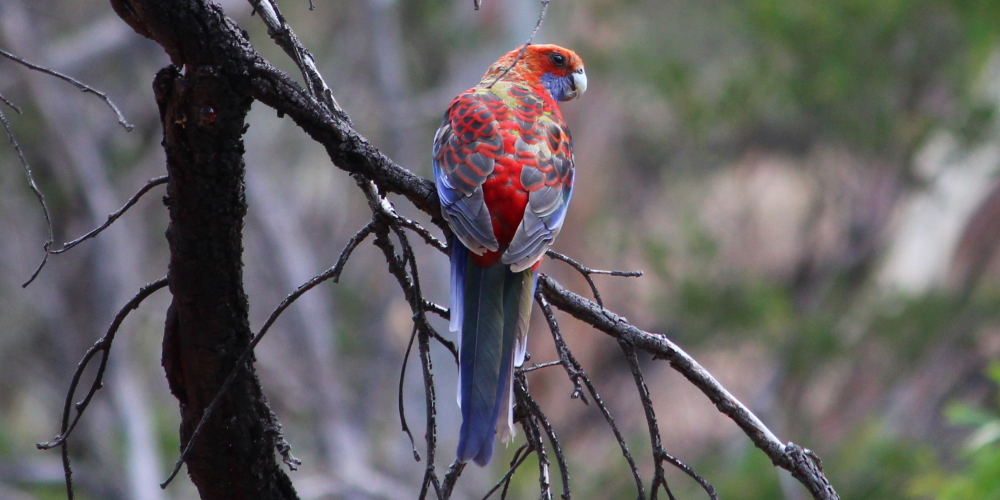
As the young bird grows older more red replaces the green – starting with the chest and crown. In time the whole head, breast-belly and rump becomes red. The last feathers to retain their green seem to be the back feathers – see this pic.
..
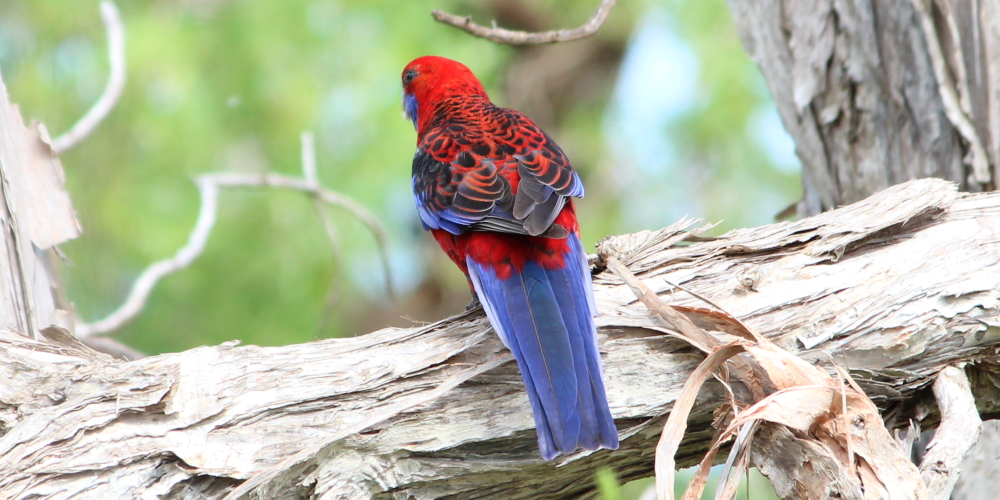
Adult female Crimson Rosellas retain some green-edged back feathers all their lives. They also have a greenish tinge to their tail feathers. Adult males have blue tails, and all their back feathers are black with red edges.
..
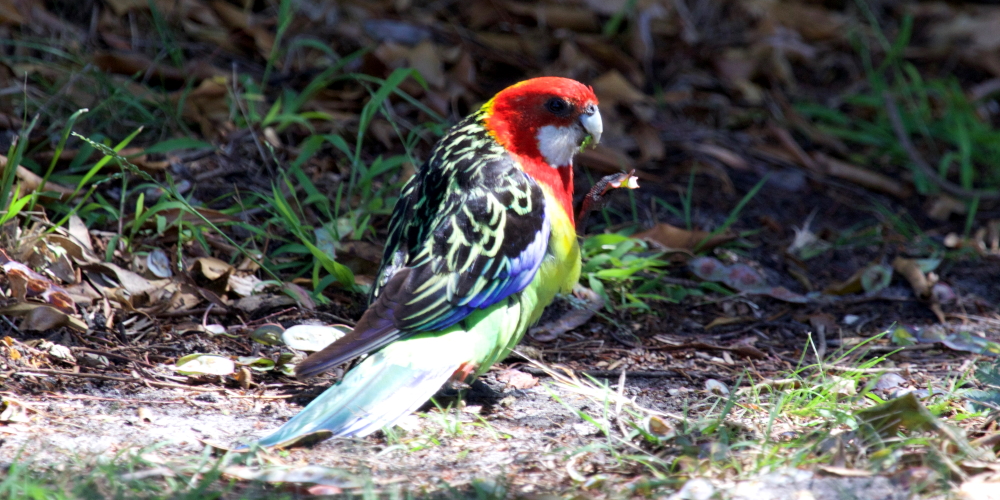
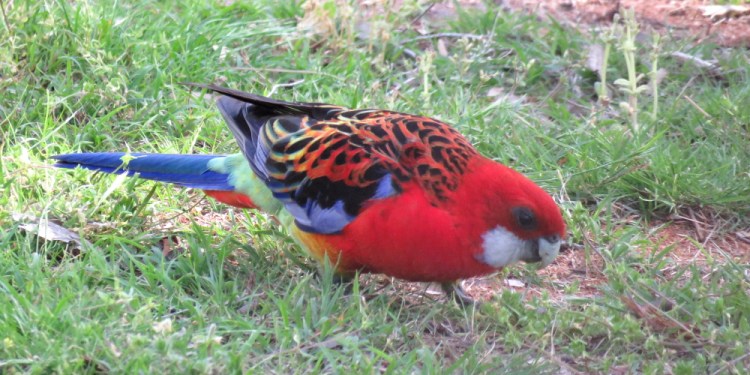
One thing that Crimson Rosellas always have, at every stage of life, is a blue cheek patch. Eastern Rosellas have a white cheek patch.
..
So that’s all sorted, right. What’s this bird then? Answer in the comments!
..
Women of all ages, race, ability and gender diversity are welcome to join Women Birders Australia. The group is set up to share and discuss wild birds in Australia.
 Women Birders Australia